By Krista Halling DVM DACVS
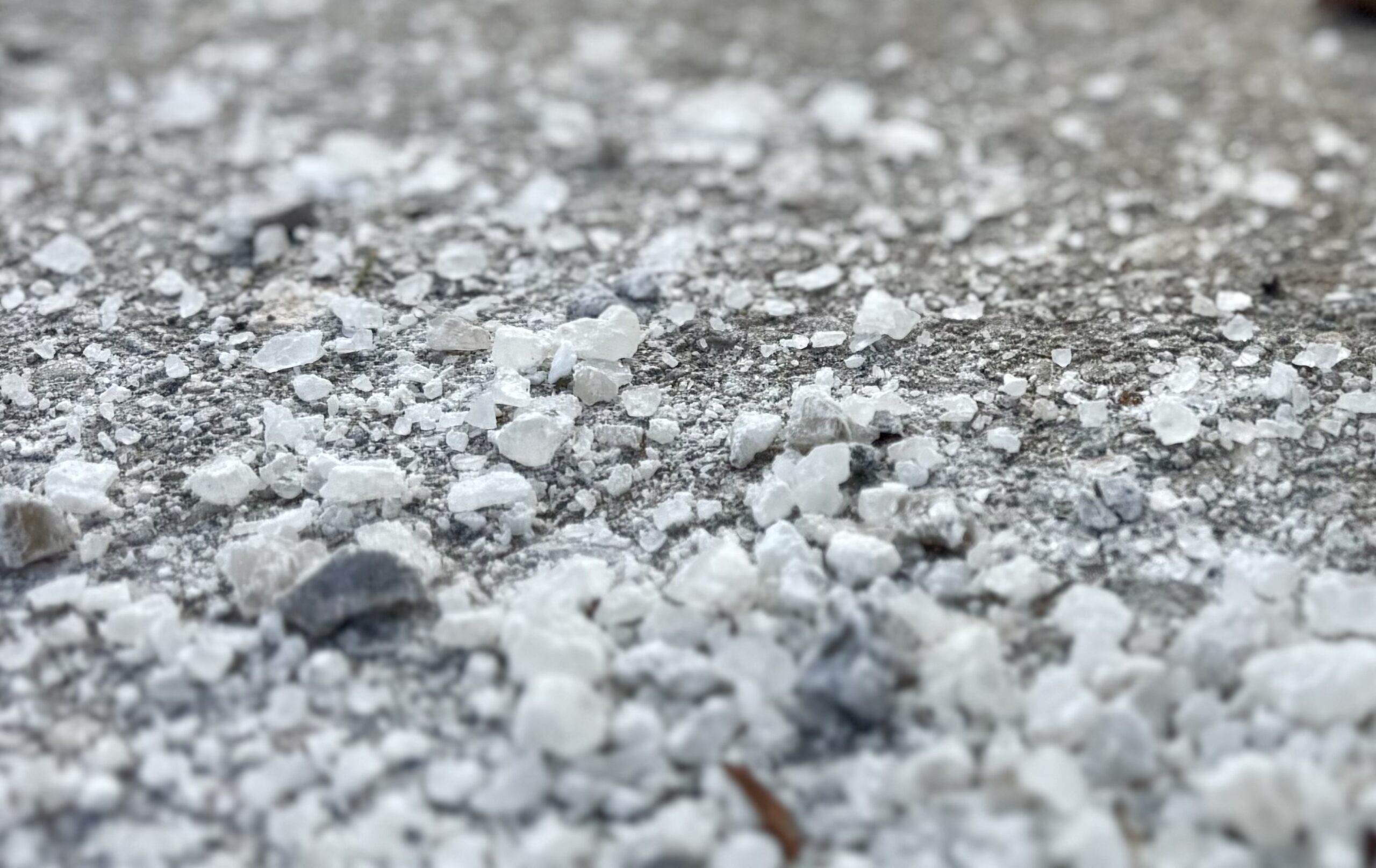
On a winter walk, you might notice you dog lift their paws. City sidewalks and roads are often treated with de-icing products. These ice melts make walking safer for people — but they can harm your dog’s paws, and are toxic if ingested. Here’s what ice salt does, why your dog lifts up their paws, and the best prevention.
What are ice melts made of?
Common commercial de-icing products include:
- Sodium chloride (aka rock salt)
- Calcium chloride
- Magnesium chloride
How rock salts and ice melts harm dogs
Dog footpads protect the foot from their environment, including harsh temperatures. They contain a rich blood and sensory nerve supply, as well as an outer protective layer of thickened keratinized skin (for more on footpad anatomy and care see this article) which needs to remain supple and intact in order to provide protection. When footpads become dried or cracked, they lose their shock-absorbing compliance and wounds can easily develop, reducing their protective role. De-icers contribute to these effects.
Here’s how sidewalk rock salt and other ice melts can harm your dog:
Osmotic irritation
Salt is hypertonic — meaning that it draws water out of surface skin cells. In addition to drying the skin, this can cause stinging or irritation to footpads, especially if the pads are already damp from snow. Hypertonicity is also part of what makes these salts toxicity (more below).
Chemical burns
Chloride salts can irritate tissue and nerve endings, particularly if small cracks are already present in your dog’s skin and footpads. If ingested, the lining of your dog’s mouth and GI tract can also be irritated and ulcerated.
Mechanical wounds
Salt crystals and grit can be very sharp – easily abrading your dog’s footpad and causing small cuts.
Toxicity if ingested
If ingested by your dog, salts and ice melts can cause vomiting and diarrhea and in some cases, life-threatening seizures or kidney damage. Ingestion can occur from your dog eating salty slushy snow, or from licking their feet after coming in contact with salts and ice melts. If your dog has ingested salts and de-icers, contact your veterinarian or your local poison control centre.
Why some dogs react to salt more than others
When exposed to salts and ice melts, the degree to which your dog might be affected depends on the duration of exposure, the concentration of de-icer, and whether any wounds or ingestion occurred. While brief exposure to paws usually causes transient irritation, further exposure can dry the pads and contribute to cracks and wounds.
Sensitivity varies based on:
- Paw hydration
- Presence of wounds or small surface cracks
- Individual nerve sensitivity
- Salt type and concentration
- Duration of exposure
One patch of heavily treated ground may cause discomfort, while another area doesn’t. Salt distribution outdoors is typically uneven. Brief paw irritation from salt usually resolves quickly after rinsing and wiping. If irritation or limping persist, it’s best to consult your veterinarian.
Preventing salt irritation
1. Avoidance
- Walk on untreated trails, grass edges, or packed snow if it’s not too icy.
- Reduce exposure in heavily salt-treated urban areas.
2. Dog booties
Well-fitting booties are a great way to protect your dog’s feet in the winter. They physically prevent exposure to:
- Salt crystals
- Salty meltwater
- Abrasive grit
- Ice balls
Booties are the only barrier option that truly protects your dog’s paws from salt contact on salted terrain.
3. Paw wax
Wax-based paw balms such as Musher’s Secret can:
- Improve skin hydration
- Reduce dryness
- Offer a mild barrier
While paw waxes are great for footpad health and offer some level of protection compared to bare footpads, they don’t create a complete barrier against salt exposure.
4. Post-walk rinse and dry
If your dog’s paws get exposed to salt, prompt rinsing and towel-drying removes salt residue and reduces tissue drying and crack formation.
5. Trim excess paw fur
Keep your dog’s paw fur trimmed short enough to prevent matting of the hair between their toes and footpads and to decourage salt and ice buildup.
6. Choose sand for traction
If you’re looking for an alternative to de-icers, sand offers an inexpensive and pet-safe alternative to provide traction on icy surfaces.
Commercial de-icers labelled as “pet-safe” usually have rounded edges and contain urea instead of salts. While they are arguably a safer alternative to regular de-icers, they still can cause GI problems if ingested.
Knowing the dangers to your dog from winter salt and de-icers will go a long way to prevent exposure. For most dogs, winter salt exposure can be managed with basic paw care, route selection, and bootie protection when needed.
About the author
Krista Halling is a veterinarian board-certified with the American College of Veterinary Surgeons and creator of Dogpacking.com. She is also certified in the Human-Animal Bond and in Canine Physical Rehabilitation. Krista loves travelling and adventuring with River, her mini goldendoodle sidekick.


Leave a Reply