By Krista Halling DVM DACVS
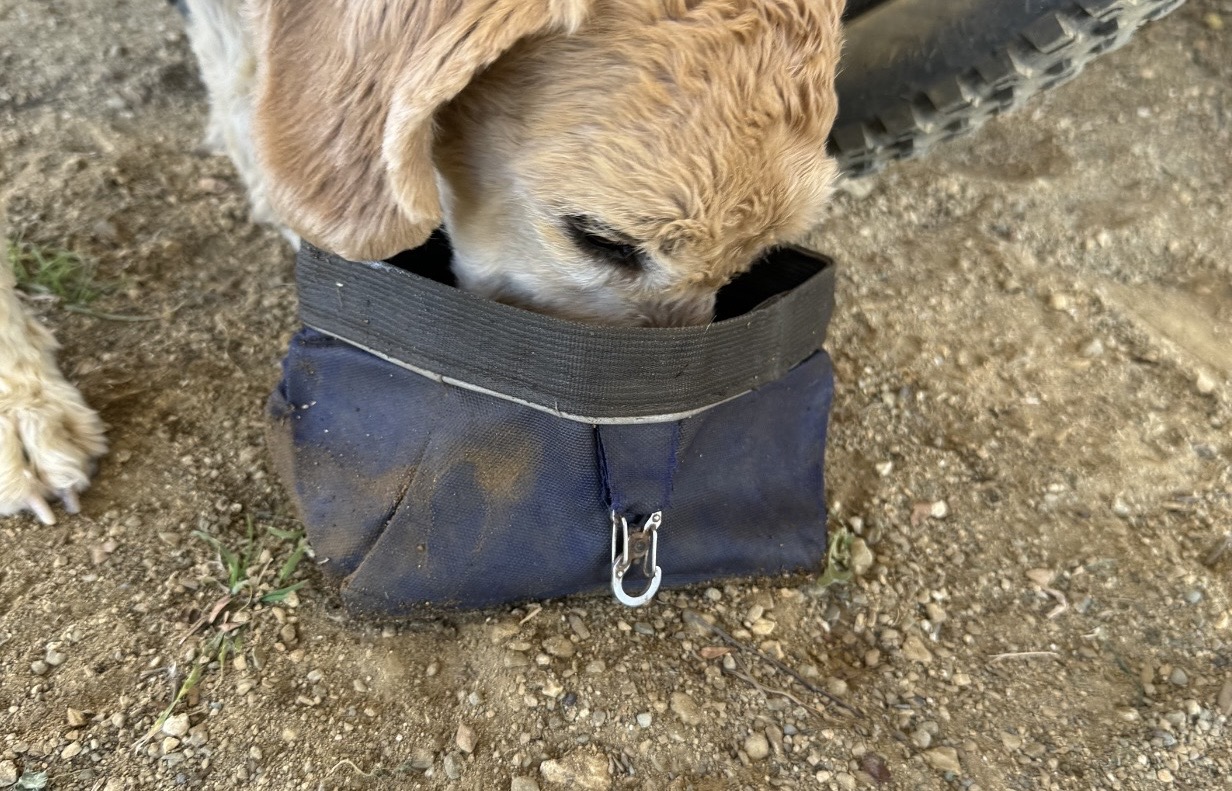
Despite visually appearing clean, your dog’s food and water bowls can harbour bacteria, mold, and biofilm, creating a health risk to them and to you. Here’s what the bacteria are up to, and how to keep your dog’s dogpacking bowls clean.
Bacteria and biofilm
When your dog eats or drinks, their saliva mixes with food particles and fats. Those protein and fats create an ideal surface for bacteria to attach and feed from. Within a day or two, a microscopic layer called biofilm can begin forming on the surface bowl’s material. Biofilm usually isn’t visible and doesn’t smell. But it makes bacteria much harder to remove with a simple rinse or a quick clean.
That slick feeling you sometimes notice in your dog’s bowl? That’s biofilm. Biofilm forms fastest in warm, moist, enclosed systems – such as portable pet water dispensers (more on that below).
The science around pet bowl contamination consistently shows that bowls not washed daily accumulate significantly higher bacterial loads. The biggest contributors are saliva, water, food residue (especially fats and sugars), and surface roughness. This is why bowl shape and material also matters.
Effects of bowl characteristics
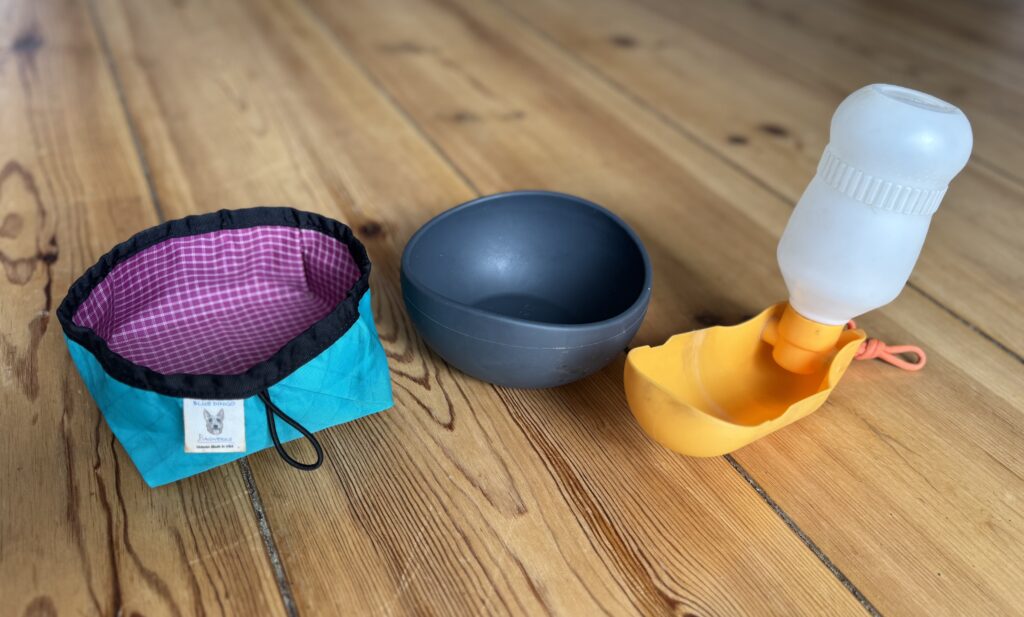
From a keep-cleanable standpoint, the smoother and non-porous the better since bacteria have a harder time sticking to it. Stainless steel remains a gold standard. It’s non-porous, durable, and resists microscopic scratching. Silicone is good since it’s smooth and heat-resistant. Plastic works, but over time it scratches, and those scratches create tiny niches that are harder to clean thoroughly. Fabric: waterproof laminated fabric is fairly easy to keep clean, as long as it hasn’t become delaminated. Bowls with tight edges, such as slow-feeders, are trickier to keep clean. Once a bowl becomes funky, cloudy, rough, or cracked, its cleanability drops — and that’s when replacement makes sense.
The key to bowl hygiene
- Physically remove food residue and reduce bacterial counts
- Mechanically disrupt biofilm
- Dry thoroughly
- Discard bowl if surfaces are visibly scratched or no longer intact.
How to clean your dog’s bowls
- Use a pet-dedicated cloth or brush to wash food and water bowls daily with soap and (ideally hot) water, then rinse and place upside down or in the sun to dry
- Raw-meat requires stricter hygiene because pathogen loads (such as Salmonella and Clostridium) are typically higher. Wash bowl after each meal.
- If the items are dishwasher safe, a dishwashing cycle (daily or at least weekly) with hot water is usually more effective than handwashing.
- If you don’t have access to a dishwasher, after scrubbing with soap, try a vinegar soak (20 minutes in 1:1 white vinegar:water, then rinse with water and place upside down to dry).
- When traveling, always dry bowls thoroughly before packing them
Kibble travel bags
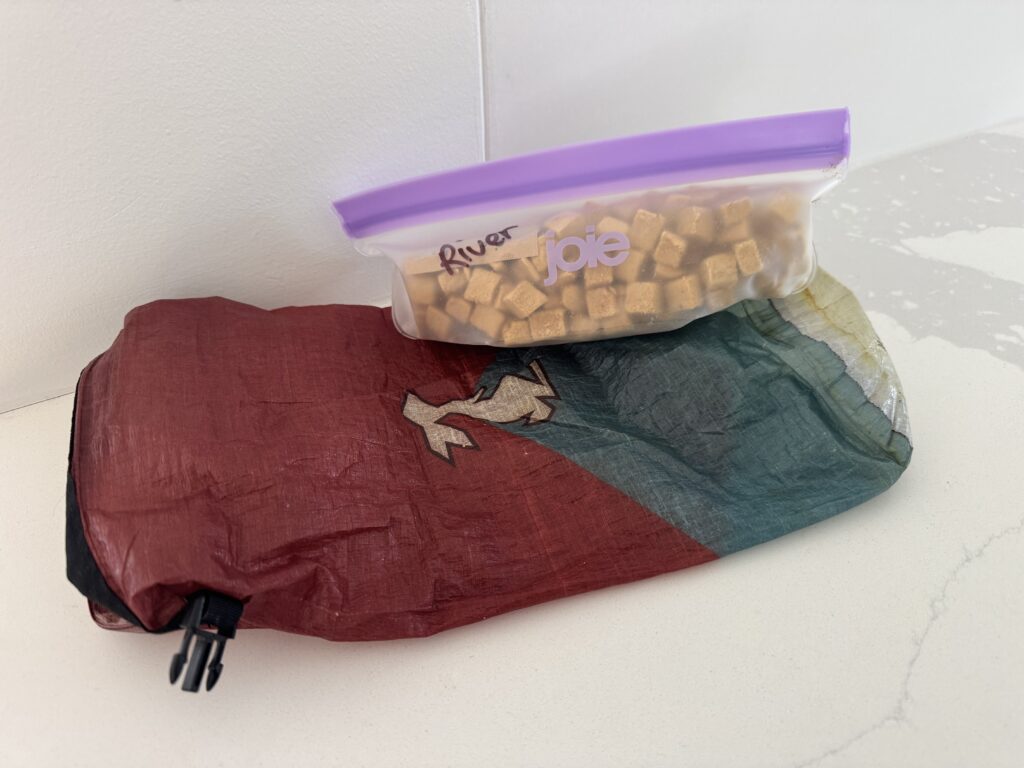
A regular deep clean is also a good idea for any dog kibble travel containers. Microscratches can easily occur to the lining and rancid fats can accumulate. On dogpacking trips, I keep River’s kibble in reusable and dishwasher-safe PEVA zip-top bags inside a rolled-up dry bag. This way, the kibble doesn’t directly contact the lining of the dry bag, and I give the Joie bags a deep clean (dishwasher-safe) before refilling them. I also place a packet of silica gel in each food bag to keep kibble dry.
Portable water dispensers
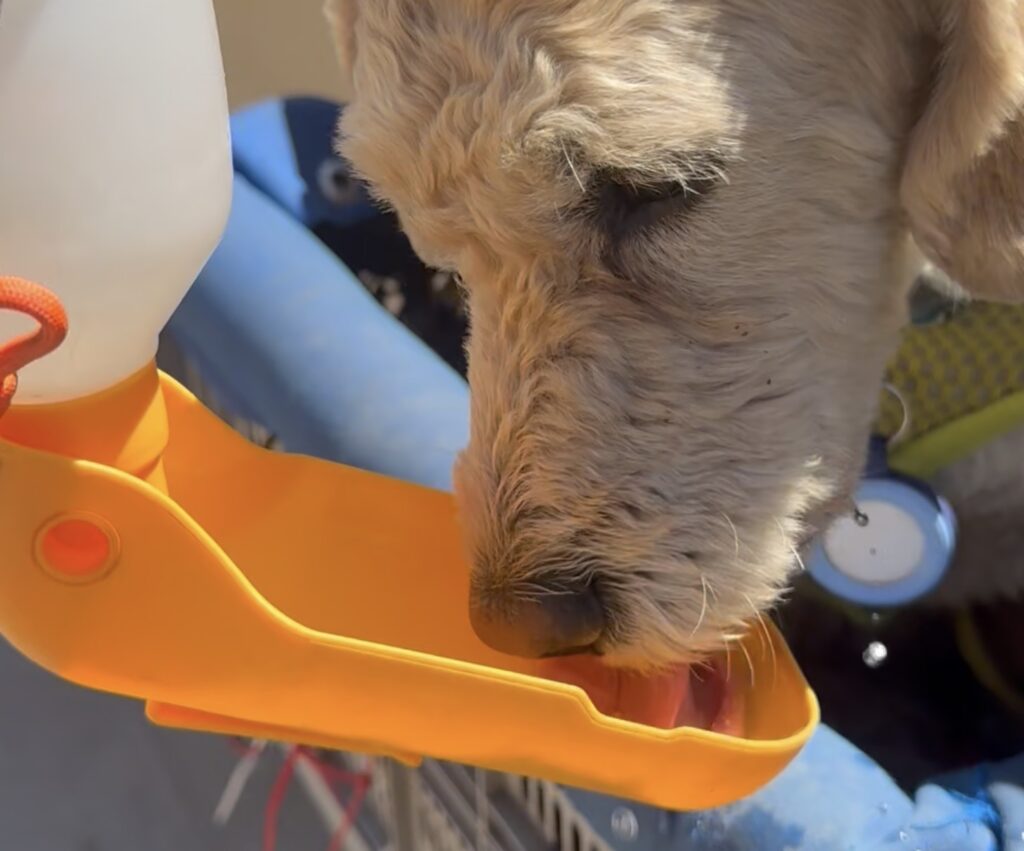
Convenient as they are, portable dog water dispensers are highly vulnerable to microorganism accumulation. Bacteria and molds love them! Here’s why:
- They sit in warm environments.
- They’re often only partially emptied and repeatedly refilled.
- Many designs allow your dog’s undrunk water to backflow into the main reservoir.
- The spouts and silicone seals are harder to access and dry completely.
To help keep these dispensers clean:
- Empty the reservoir bottle at least daily wash it and the drinking tray with soap and warm water using a pet-dedicated cloth or brush
- Disassemble the lid or spout if possible.
- Let everything dry fully.
- If the items are dishwasher safe, a dishwashing cycle with hot water is usually better than handwashing (in some cases the reservoir opening may be too narrow for the dishwasher to do an adequate job).
- A weekly or monthly 20-minute soak in 1:1 water-vinegar helps as well.
- If possible, avoid dumping water your dog didn’t drink back into the reservoir bottle.
Bowl and dispenser longevity
Most pet water dispenser bottles don’t fail because of age, but rather due to surface degradation and gunk buildup. The silicone gasket gets tacky. The threads trap residue. The interior becomes scratched and funky. If you can clean it thoroughly, treat it well, and dry it fully, this will prolong its use.
While we’re on the topic, our human water bottles could do well with this daily cleaning ritual too.
Enjoy your travel bowls and bottles – and remember that a quick daily cleaning goes a long way hygiene-wise for you and your dog.
About the author
Krista Halling is a veterinarian board-certified with the American College of Veterinary Surgeons and creator of Dogpacking.com. She is also certified in the Human-Animal Bond and in Canine Physical Rehabilitation. Krista loves travelling and adventuring with River, her mini goldendoodle sidekick.
References
Raspa F, Schiavone A, Pattono D, Galaverna D, Cavallini D, Vinassa M, Bergero D, Dalmasso A, Bottero MT, Valle E. Pet feeding habits and the microbiological contamination of dog food bowls: effect of feed type, cleaning method and bowl material. BMC Vet Res. 2023 Dec 7;19(1):261. doi: 10.1186/s12917-023-03823-w.

Leave a Reply