By Krista Halling DVM DACVS
When people ask me how much they should exercise their puppy, they’re usually looking for a number. A certain number of minutes, a certain number of walks. But the answer is actually more nuanced than that. As deeper guidance, here’s a science-backed framework for safely adventuring with your puppy.
The 5-minute rule?
There’s a commonly-quoted guideline in the online dog world of 5 minutes of exercise per month of age of a puppy. Some people quote once a day, while others say up to twice a day. For instance, that rule suggests that a 3-month-old puppy can have 15-30 minutes of structured exercise per day. I’ve used this conservative guideline myself as well, with the idea being to start low and gradually increase duration as the puppy ages.
While it’s a good starting point, where this rule falls down is that (1) I haven’t found an actual evidence-based source of this dogma; (2) it’s (perhaps intentionally) likely conservative; and (3) “exercise” means many different things to different people. Does that mean running? Jumping? Hiking? On-leash? Off-leash? And this is where problems and confusion can arise.
When it comes to puppies, exercise isn’t just about running around and burning energy. It’s about shaping a developing body—bones, joints, coordination, and even their brain. What your puppy does during this stage doesn’t just affect them today. It can impact how your puppy will move and feel for years to come.
So we need to consider the type of exercise in addition to the duration.
The shift: from “fitness” to “development”
Exercise offers many benefits for a dog of any age:
- Fitness: see below
- Enrichment: offering a diversity of mental and physical sensory experiences
- Bonding: deepening your connection through a shared physical experience
- Training: working on desired skills and behaviours
Fitness, the main benefit that we associate with exercise, has 5 core pillars:
- Strength: building core and limb muscle mass through resistance training
- Balance & proprioception: training the nervous system’s sensation and co-ordination ability
- Endurance: increasing cardiovascular capacity through increased exercise aerobic exercise duration
- Flexibility: preserving joint range of motion
- Mental fitness: building cognitive resilience, stress tolerance, focus, social skills, and emotional regulation
Since a puppy is not a small adult dog—many of their systems are still developing—we have to be careful imposing all of the above 5 fitness pillars. Puppies have, for instance, open growth plates on their bones and a nervous system that is still learning how to coordinate movement.
Growth plates are thin layers of cartilage near the ends of bones. They are responsible for the growth of your puppy’s bones and can be damaged by trauma, high-impact activity, or intense strength training. Since an injured growth plate can result in a broken, shortened, or crooked bone, it is important to try to avoid high impact to these sensitive areas. The timing of growth plates closure is approx 12-13 months of age, but this varies with the bone, the breed, and the age of spay/neuter, so check with your veterinarian about when your dog will likely be skeletally mature.
This means the goal of exercise at the early stage is not overall fitness—it’s enhancing puppy development through exercises that promote balance and co-ordination, desired behaviours, and mental enrichment.
This is generally best achieved through easy, low-impact activities that progress in keeping with your puppy’s stage of development, and is intended for puppies without orthopedic problems. The following is largely based on Dr. Chris Zink’s Fit for Life Puppy Exercise Guidelines as well as the other references cited below, and my own canine orthopedic education.
One to four months
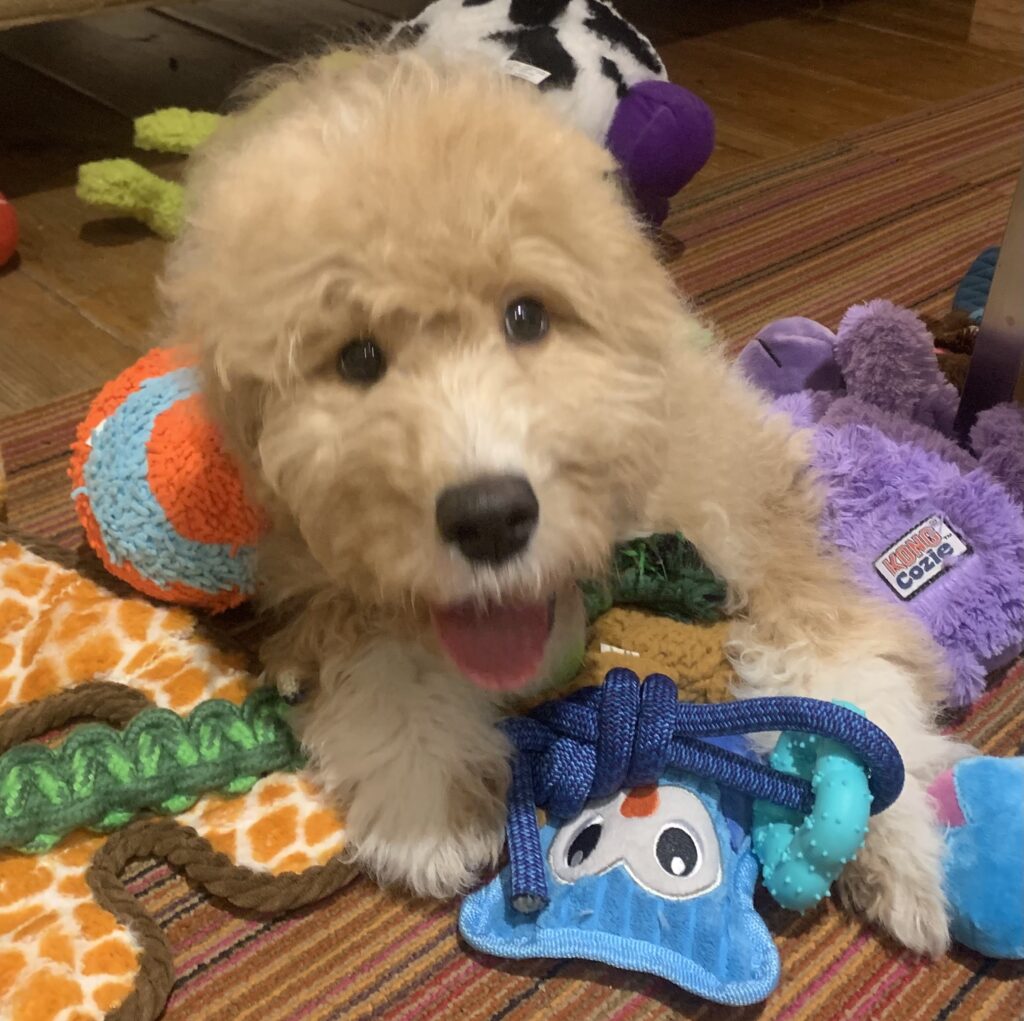
In the earliest phase, so much is new and your puppy is developing their brain, co-ordination, and muskoloskeletal systems. What they need is intentional exposure to the world—different surfaces, textures, environments, and movement patterns. This is how balance, coordination, and confidence form.
Focus on co-ordination and skill training:
- Free play and natural movement: this allows muscle mass to build gradually not forcefully, gives them a sense of agency, and reduces risk of repetitive injury since they can naturally vary their movements and pace
- Exploring grass, trails, and varied types of surfaces
- Short, positive interactions with the environment
- How to play with people and how to interact with other household pets (avoid interactions with non-household dogs until your puppy has been fully vaccinated; ask your vet about this timing)
- Gentle introduction to basic training
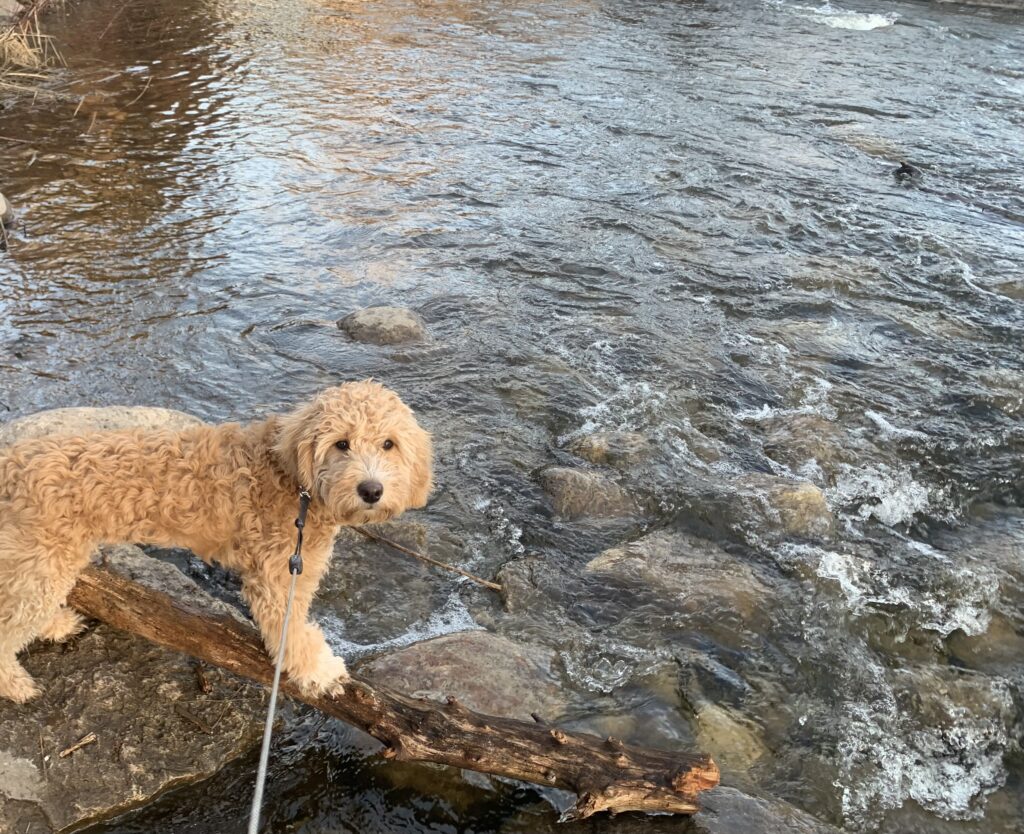
- Wading in water (<5 min sessions) and short swims if they show interest
What to avoid:
- Strength training (no dedicated resistance work yet)
- Agility training (no fast twisting and turning at speed)
- Endurance work (no long-duration aerobic work yet)
- Flexibility (don’t try to stretch their muscles or joints)
- Repetitive, high-impact activity (including jumping down from heights or running/trotting on hard surfaces). In breeds at high risk of developing hip dysplasia, there is suggestion that doing stairs should be avoided or performed cautiously in puppies < 3 months of age.
As your puppy gets older, they will appear more capable—and it becomes tempting to do more. But internally, they are still developing.
This stage is about layering in skills and coordination, not increasing physical workload. You can introduce slightly more complex environments and short, purposeful activities, but the emphasis stays on exploration and varied movement.
Juvenile phase: four to six months
This is another stage where puppies may unintentionally be pushed a bit too far. They look like young adults. They’re faster, stronger, and more coordinated. But their growth plates are still developing, and their tissues are still adapting. They’re not yet ready for strength or endurance training.
Continue focussing on co-ordination and skill training:
- Free play and natural movement
- Exploring grass, trails, and varied types of surfaces
- Short, positive interactions with the environment
- Walking forward and backward over varied terrain
- Walking over rungs of a ladder that’s lying on the ground
- Fetch and retrieve
- Wading in water and swimming (5 min sessions). Swimming is excellent low-impact exercise.
- How to play with people and how to interact with other pets
- Continue basic training: commands (sit, stand, come, “No”), some tricks
What to avoid:
- Strength training (no resistance exercises yet)
- Endurance work (no long-duration outings yet)
- Flexibility (don’t try to stretch their muscles or joints). “Downward Dog” is okay to teach.
- Repetitive, high-impact activity (including jumping down from heights or running/trotting on hard surfaces)
This is a critical window where overuse doesn’t always show up immediately—but can affect long-term soundness.
Adolescence: six months until growth plates have closed
During this stage, you can begin to introduce more structured activity and start strength training—but it needs to be gradual and intentional. This is where controlled challenges—like hills or uneven surfaces can strengthen core and limb muscles, and improve coordination.
Focus on continued balance and skill training, and add strength training:
- Free play and natural movement
- Exploring grass, trails, and varied terrain
- Gradually longer walks, hikes, and running, including hills
- Walking forward and backward, do ladder work and add wobble board or standing on cushions
- Longer fetch and retrieve
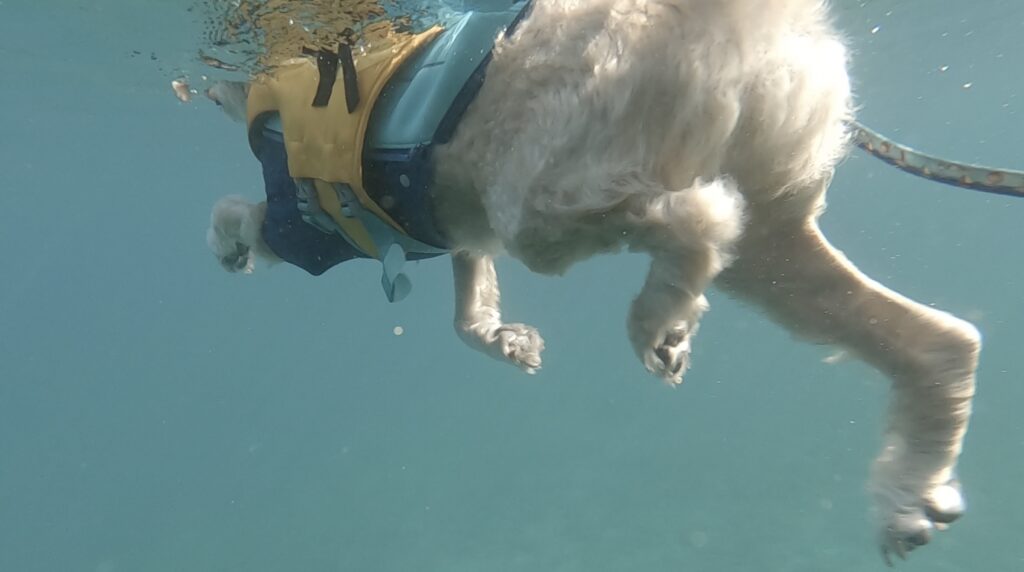
- Wading and swimming (10-15 min sessions with breaks)
- How to play with people and how to interact with other pets
- Continue basic training: commands (sit, stand, come, “No”), some tricks
- Flexibility: Downward dog can be continued
- Introduce specific muscle strengthening exercises such as waving, sit-to-stand, begging on their haunches, stair and hill climbing.
What to avoid:
- Endurance work (no long-duration outings until 9 months; ideally keep trotting or running sessions <15 min until 9 months)
- Assisted flexibility (don’t try to stretch their muscles or joints). “Downward Dog” is okay for them to do on their own.
- Repetitive, high-impact activity (including jumping down from heights greater than their elbow, or running/trotting on hard surfaces)
Think of this stage as preparing the body, not pushing it.
Early adulthood: once growth plates have closed
Once your dog’s growth plates have closed, a stage referred to as ‘skeletal maturity’, your dog is an adult and you can begin building true fitness and endurance training. Their body is now ready for strength training, endurance work and longer, sustained activity.
This is when longer outings, more demanding terrain, and structured activity become appropriate. But even here, it’s important to progress gradually and to watch for signs of overexertion.
Focus on balance and co-ordination, strength, and endurance exercises:
- Free play and natural movement, exploring (off-leash or on a long leash)
- Exploring grass, trails, and varied terrain
- Gradually longer hikes and walks, including hills. You can build up to several hours
- Walking forward and backward, and ladder work
- Longer fetch and retrieve
- Swimming (10-15 minutes, build up gradually to this duration)
- How to play with people and how to interact with other pets
- Continue basic training: commands (sit, stand, come, “No”), some tricks
- Flexibility: Downward dog can be continued
- Continue muscle strengthening exercises such as walking or trotting up hills, waving, sit-to-stand, and begging on their haunches
- Endurance training: gradually increase duration of aerobic-paced activities such as swimming and trotting. Continuous trotting for 20 minutes is a good aerobic workout to build up to.
The three biggest risks
One of the easiest ways to overdo exercise in young dogs is with repetitive, high-impact activity. To avoid this, stick to low-impact activities (swimming, walking, trotting on softer ground), build duration gradually, and ideally don’t perform the same endurance-training or strength-training activity two days in a row. 1-2 days rest allows your dog’s body to recover and adapt to the forces so they are more fit the next time the activity occurs.
Another way to inadvertently overdo it is to ignore early signs of fatigue and overexertion. These include panting with the tip of their tongue rolled up and/or slowing down. Once you see either of these signs, it’s best to stop the activity to avoid tissue injury.
Thirdly, being overweight or obese can increase a dog’s risk of joint and other health problems, so keeping your puppy slim is one of the best ways to keep them healthy and mobile.
What this means for dogpacking with puppies
From a dogpacking perspective, the above guidelines encourage you to let your puppy experience the world with you.
That might look like short trail walks with lots of stops. Letting them choose the pace. Exploring rocks, roots, and different terrain. Sniffing, pausing, and engaging.
As your dog matures, those same outings can evolve into longer and more demanding adventures.
The takeaway
If you remember one thing, let it be this:
Your puppy doesn’t need intense exercise. Your puppy needs varied experiences.
When you focus on movement quality, variety, and gradual progression, you’re supporting the development of a dog who can move well, is mentally engaged, and will share a lifetime of adventures with you.
References and related reading
- 5 Pillars of Canine Fitness: Why Every Dog Needs More than Just Walks
- How Much Can You Exercise Your Dog: Expert Conditioning Tips
- Fit for Life Puppy Exercise Guidelines
- What Is the Logic Behind Not Exercising Puppies Before the Growth Plates are Closed
- Krontveit RI, Nødtvedt A, Sævik BK, Ropstad E, Trangerud C. Housing- and exercise-related risk factors associated with the development of hip dysplasia as determined by radiographic evaluation in a prospective cohort of Newfoundlands, Labrador Retrievers, Leonbergers, and Irish Wolfhounds in Norway. Am J Vet Res. 2012 Jun;73(6):838-46. doi: 10.2460/ajvr.73.6.838.
About the author
Krista Halling is a veterinarian board-certified with the American College of Veterinary Surgeons and creator of Dogpacking.com. She is also certified in the Human-Animal Bond and in Canine Physical Rehabilitation. Krista loves travelling and adventuring with River, her mini goldendoodle sidekick.

Leave a Reply