By Krista Halling DVM DACVS
Have you and your dog have ever been on a hike, bike ride, or playing fetch and felt particularly happy, calm, or connected with each other? There’s a lot of science to explain that.
In a recent scientific paper, my colleagues and I looked into this and introduced a concept called ‘bonded green exercise’, explaining why shared outdoor adventures with your dog may often feel so rewarding – and why they may be especially beneficial for both humans and dogs in today’s ‘convenient’ lifestyle.
What is bonded green exercise?
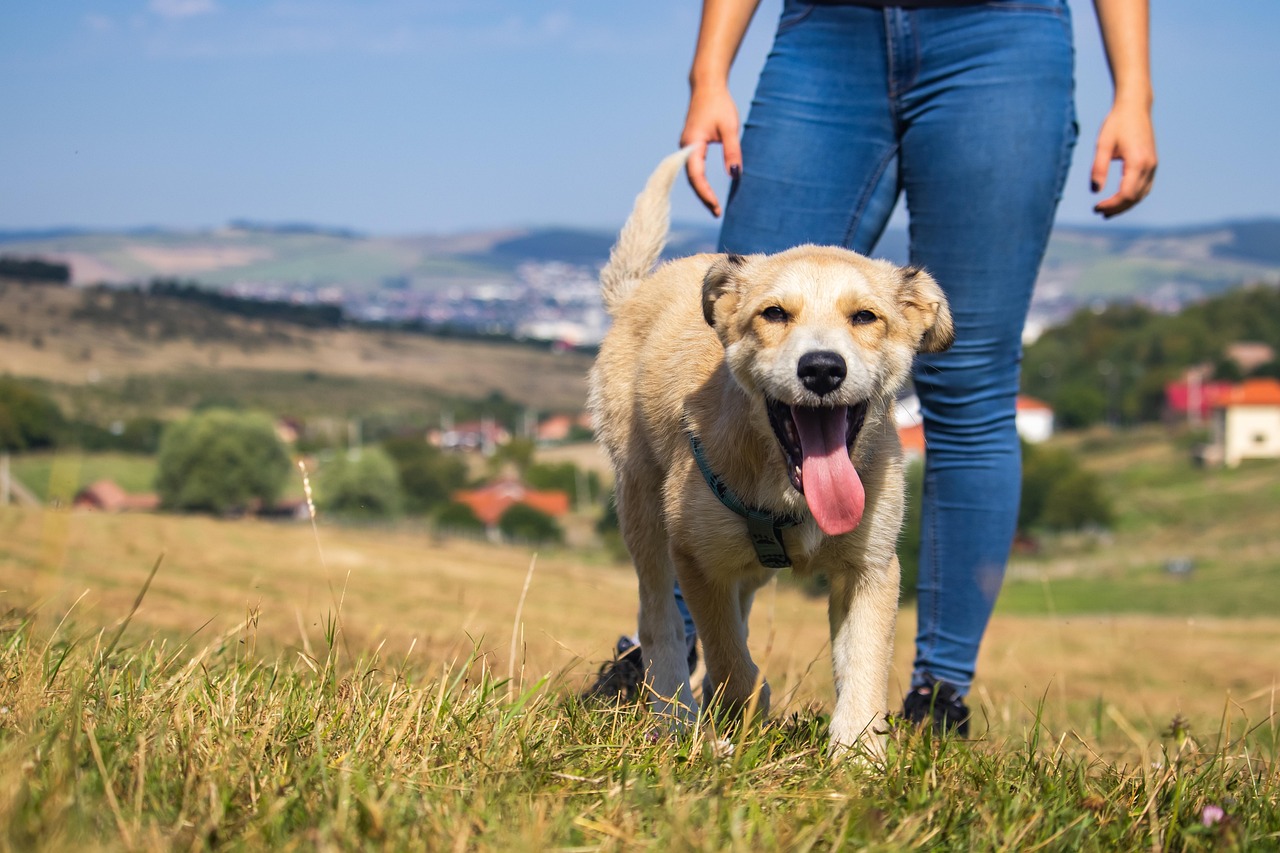
Bonded green exercise, as we defined it, refers to any intentional, shared physical activity in nature between a human and their dog.
Bonded green exercise combines three well-established health pillars: nature exposure, physical activity, and the human–animal bond. Each of these pillars has a strong body of evidence supporting independent health benefits to both humans and dogs.
1. Nature Exposure
Spending time in natural environments is associated with reduced stress, improved mood, enhanced attention, and greater emotional well-being in humans. Even brief exposure to green space can produce measurable psychological benefits.
For dogs, natural environments offer sensory enrichment, including varied smells, textures, sounds, and terrain, that support exploration, cognitive engagement, and emotional regulation.
2. Physical Activity
Movement supports cardiovascular health, musculoskeletal strength, metabolic function, and mental health in both humans and dogs. Dogs have also been shown to help motivate their human partners to exercise and get outdoors.
3. The Human–Animal Bond
The human–animal bond (and in particular the human-dog bond) is associated with emotional regulation, stress reduction, social support, and physiological co-regulation. In both humans and dogs, strong bonds are linked to measurable increases in oxytocin (a bond-reinforcing and stress buffering hormone), and decreases in cortisol (a stress hormone). The bond with your dog has been shown to be strengthened through shared experiences, especially those involving cooperation, attention, and mutual engagement.
Bonded green exercise therefore explores a simple question: What happens when humans and dogs experience all three at the same time, through shared movement in nature?

The bonded green exercise model proposes that when all three health pillars are activated at once through a shared activity, the benefits may be synergistic (not just additive) by engaging biologically conserved underlying mechanisms in both humans and dogs.
Here’s what we think happens during bonded green exercise:
Modern life: co-evolution and today’s convenience
For the past 30,000 years, humans and dogs have evolved their relationship largely through coordinated hunting, migrating, and living together in natural environments. We developed an effective alliance through shared movement in nature, and our underlying biological systems are well adapted for this.
Yet our modern industrialized life now has us predominantly sitting indoors, staring at screens with our dogs lying indoors at our feet. We suggest this is in stark contrast to what humans and dogs are adapted for – and that health consequences of what we argue is an evolutionary mismatch (such as an obesity epidemic, a mental health crises, a loneliness epidemic) are emerging.
In contrast, bonded green exercise may be a simple, low-cost way for humans and dogs to increase their health and well-being by getting back outdoors together and doing shared physical activity. This conceivably engages evolutionarily-conserved biological and physiological mechanisms in you and your dog – in other words, dogs and humans may be ‘wired’ to be active outdoors together.
Benefits of bonded green exercise
Based on existing science of its component pillars, we postulate that bonded green exercise may improve the well-being of both a person and their dog through the following:
- Physical health benefits such as weight management, cardiovascular health, musculoskeletal fitness, neurological health and balance, reduced blood pressure.
- Mental well-being such as improved mood, reduced anxiety, stress buffering, connecting with others.
- Stronger human-dog bond through intentional shared activity, confidence-building, and giving your dog agency to sniff and set the pace
- Motivation to participate in outdoor activity, by dogs acting as a catalyst to get outdoors.
We propose that these benefits don’t require epic adventures – they can be obtained locally. A joint walk in your neighbourhood park. A shared paddle on a nearby lake. A local trail where your dog can move, sniff, and explore while you stay present and engaged. These are small choices, but they may be enough to engage the physiological and behavioural systems to greatly improve well-being for you and your dog.
So next time you’re sitting on your couch wondering whether to get outdoors with your dog, think of all the health benefits you both may be able to tap into.
Want to dive deeper? You can read the full scientific paper here:
About the author
Krista Halling is a veterinarian board-certified with the American College of Veterinary Surgeons and creator of Dogpacking.com. She is also certified in the Human-Animal Bond and in Canine Physical Rehabilitation. Krista loves travelling and adventuring with River, her mini goldendoodle sidekick.



Leave a Reply