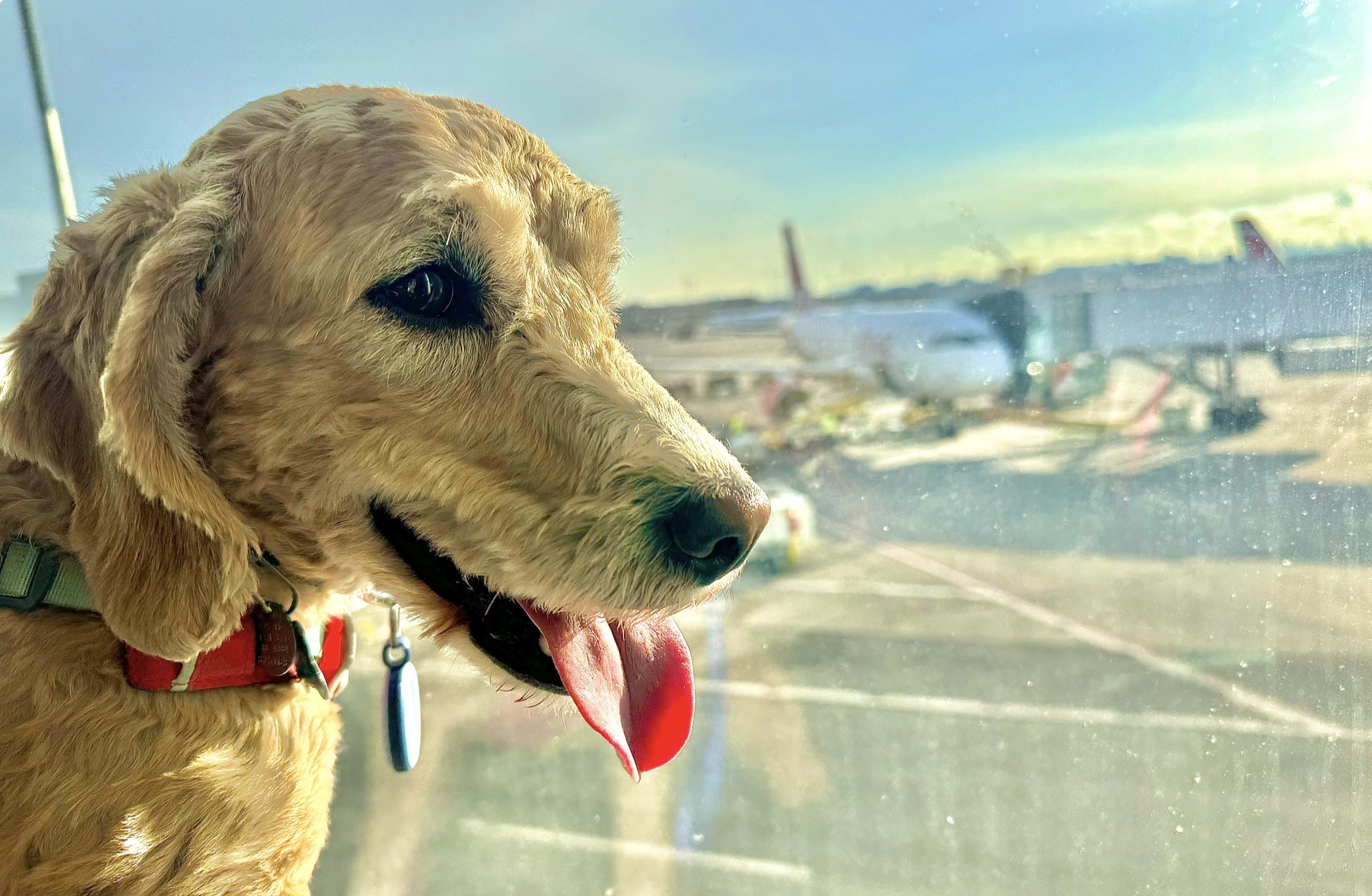
By Krista Halling DVM DACVS
If you’re planning travel with your dog to Mexico, Central and South America, or Caribbean islands — and will be entering the U.S. at any point (as a destination or just an airport layover), there’s an important new health requirement for your dog.
The U.S. Department of Agriculture (USDA) has just updated its dog import requirements due to the northward spread of New World screwworm, which is now present in northern Mexico. As a result, dogs entering the United States from Mexico or any other screwworm-positive country must meet new certification requirements.
This applies to all dogs that have been in a screwworm-positive country and are:
- Entering the U.S. for the first time
- Returning to the U.S. after travel
- Simply transiting through a U.S. airport on a layover
What is New World Screwworm?
New World screwworm (Cochliomyia hominivorax) is a parasitic fly that lays its eggs in wounds of warm-blooded animals, including dogs. Once hatched, the larvae (maggots) burrow into the wound, causing further tissue damage, which in turn attracts more flies. Infestations can have devastating health and economic implications — especially for farm animals. This is why border authorities are taking prevention seriously.
While already present in many countries on this continent and in the Caribbean, both Canada and the U.S. are currently screwworm-free. Canada’s climate is likely too cold for it, yet due to the warmer climate of its southern states, the U.S. is at risk of this fly establishing itself — either directly from Northern Mexico, or by maggots inadvertently being imported via the wound of a travelling animal.
What’s Now Required for Your Dog?
According the the USDA, dogs entering the U.S. from a screwworm-positive country must have official certification stating that:
- The dog was examined within 5 days of travel
- The dog is free of screwworm larvae, or
- The dog was treated and cleared of screwworm before travel
This certificate must be issued by an authorized veterinarian in the screwworm-positive country (this often needs to also be stamped by that country’s government agricultural department) and may be reviewed — along with a physical inspection of your dog — at the U.S. port of entry as well as upon checking in for your flight in the screwworm-positive country.
With spring approaching, many people will be traveling with their dogs — and may not realize that even a short stopover in the U.S. will trigger full import requirements.
Before You Travel
- Check whether your ’origin’ country is on the screwworm-affected list.
- Book a veterinary exam 5 days before departure from that country and let them know you need a screwworm examination and certificate (depending on the country, you may also need a general heath and vaccine certificate, but since the screwworm exam is not automatically included, make sure you request it).
- Confirm that your vet is authorized to issue the screwworm certification (a common policy is for local vets to perform the exam and create the certificate, and then send it to their government for an official stamp). In my experience, this turnaround takes 2-3 business days.
- Carry printed and digital copies of all documents when you travel. I keep River’s documents in a plastic sleeve and digital copies in a file on my phone (I use a free scanner app on my phone to scan them, and storing them directly on my phone means I can readily access them without an internet connection).
Import requirements can change quickly as disease patterns and risks shift, so always check official sources again shortly before travel.
You can find the up-to-date USDA requirements at the link below (note: if you and your dog will be returning from Mexico, scroll down on their site to read the USDA’s comment about this, as well as their link to a list of Mexican veterinarians certified to issue a screwworm certificate):
USDA Dog Import Requirements from Screwworm-Positive Countries
To learn more about this screwworm, its lifecycle, and its impact, here’s a great article:
New World Screwworm: Primer for Canadian Veterinarians – Worms and Germs Blog
About the author
Krista Halling is a veterinarian board-certified with the American College of Veterinary Surgeons and creator of Dogpacking.com. She is also certified in the Human-Animal Bond and in Canine Physical Rehabilitation. Krista loves travelling and adventuring with River, her mini goldendoodle sidekick.
Leave a Reply