By Krista Halling DVM DACVS
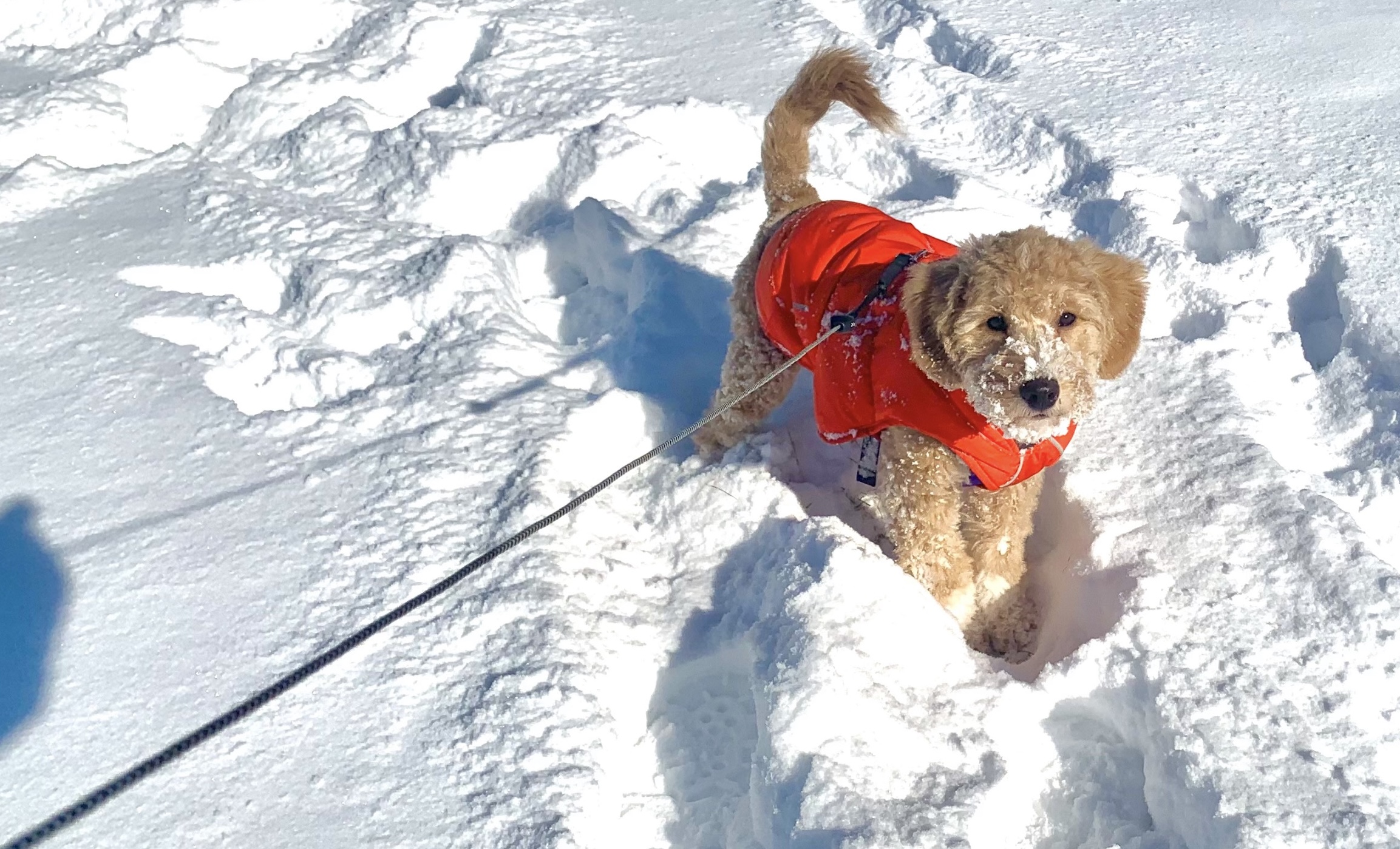
Ever wonder how your dog can enjoy running through snow in bare feet, while you’re wearing wool socks and boots? The answer lies in their anatomy. Here’s the science behind their winter-ready paws.
1. A built-in heat recycling system
You’d think that standing barefoot on snow would be a recipe for quickly losing body heat. After all, paw pads are hairless and in direct contact with the frozen ground.
But when researchers in Japan examined the microscopic anatomy of canine paw pads, they discovered a clever arrangement of blood vessels. The arteries carrying warm blood towards the paw pads are closely surrounded by veins carrying cooler blood back towards the body.
Picture three pipes running side by side, with warm blood flowing through the middle pipe and cooler blood flowing in the opposite direction through the two outer pipes. Heat from the arterial blood is transferred to the returning venous blood, allowing some of that heat to be recycled back to the body’s core rather than lost to the environment.
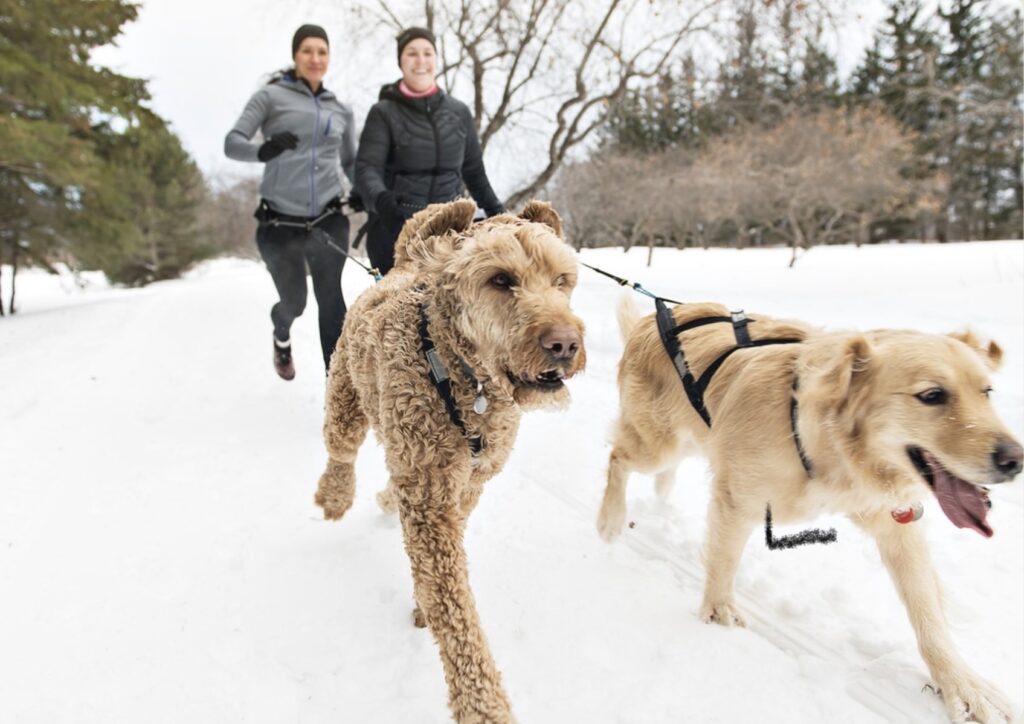
This mechanism is called countercurrent heat exchange similar to those found in the feet of penguins and the flippers of whales and seals. It’s one of several anatomical adaptations that help dogs cope with cold environments.
The result? Relatively cold paws and a warm dog. By keeping the temperature of the paws closer to that of the surrounding environment, dogs reduce the amount of body heat they lose through their feet.
2. Blood vessels that help prevent tissue freezing
Conserving body heat is only half the challenge. The tissues of the paws also need to be protected from freezing.
Canine paw pads contain numerous specialised connections between arteries and veins called arteriovenous anastomoses, or AVAs. Think of them as shortcuts that allow blood to bypass the smaller capillaries and flow directly into the venous network.
In response to cold, these vessels can dilate, allowing warm blood to flow rapidly into the network of veins within the paw pad. This mechanism is thought to help maintain tissue temperature and protect the paws from cold-induced damage.
3. A reservoir of warm blood
Within the paw pad is also an extensive network of interconnected veins called a dermal venous plexus.
This network can hold a considerable volume of blood, acting somewhat like a warm-water reservoir. Researchers believe it may play an additional role in maintaining tissue temperature and protecting the paw pads from frostbite.
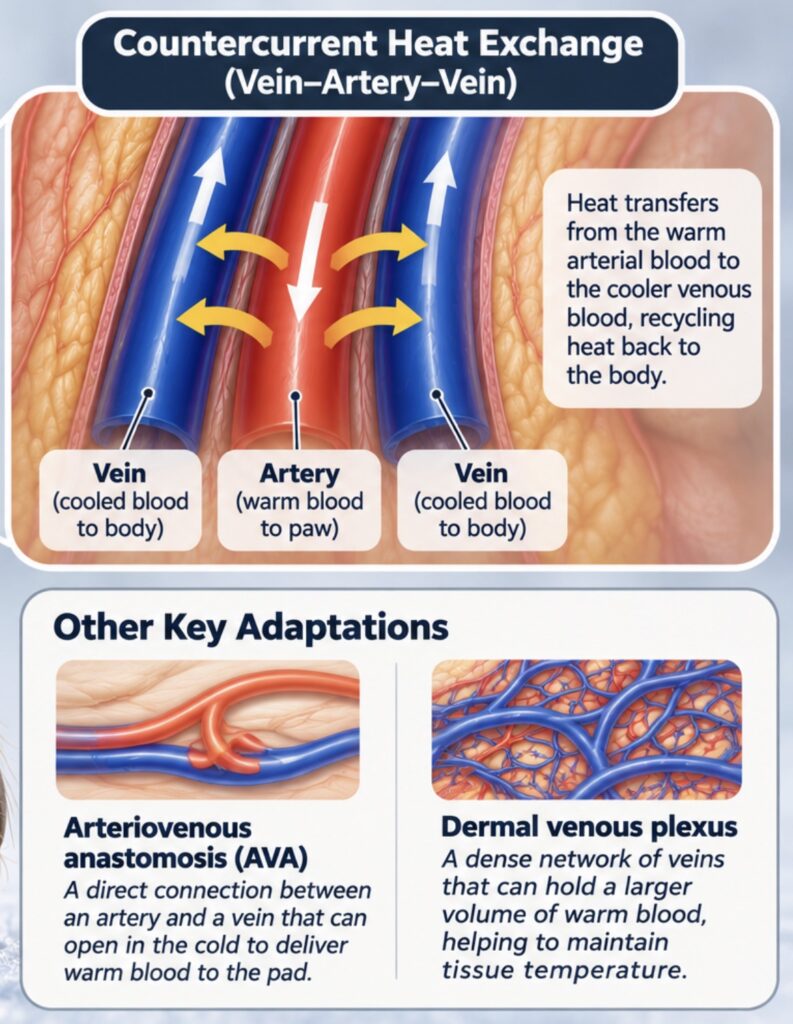
Together, these three vascular adaptations help dogs achieve a remarkable balancing act: conserving body heat while keeping their paws sufficiently warm to protect the tissues.
Does this mean dogs don’t need winter boots?
Not necessarily. Being cold-adapted isn’t the same as being cold-proof. Extreme temperatures, prolonged exposure, wet conditions and a lack of acclimatisation can all compromise a dog’s ability to cope with the cold.
There are also other winter hazards to consider. Road salt and chemical de-icers can irritate paw pads, sharp ice can cause cuts, and snow can accumulate into uncomfortable ice balls between the toes. If your dog has been walking on salted roads or sidewalks, rinse and dry their paws when you get home.
Watch for signs that your dog’s paws are uncomfortable:
- Repeatedly lifting one or more paws
- Licking or chewing at their feet
- Reluctance to continue walking
- Limping or a change in gait
Protective boots can be particularly helpful on salted roads, in extreme cold, or during prolonged winter adventures. Under favourable conditions, however, many healthy, cold-acclimatised dogs can comfortably enjoy the snow barefoot. Paw wax such as Musher’s Secret is also useful to mitigate ice ball accumulation between toes.
Nature’s clever design
The next time you’re out on a snowy trail with your dog, take a moment to appreciate what’s happening in their little paw pads. It’s a pretty remarkable piece of evolutionary engineering.
You may have noticed that I focus a lot on dog paw and footpad care. That’s because your dog’s feet are the body parts that make repetitive direct contact with the ground. So it pays to keep their paws happy and healthy!
Does your dog enjoy being barefoot in the snow? Let us know in the comments!
Related reading
About the author
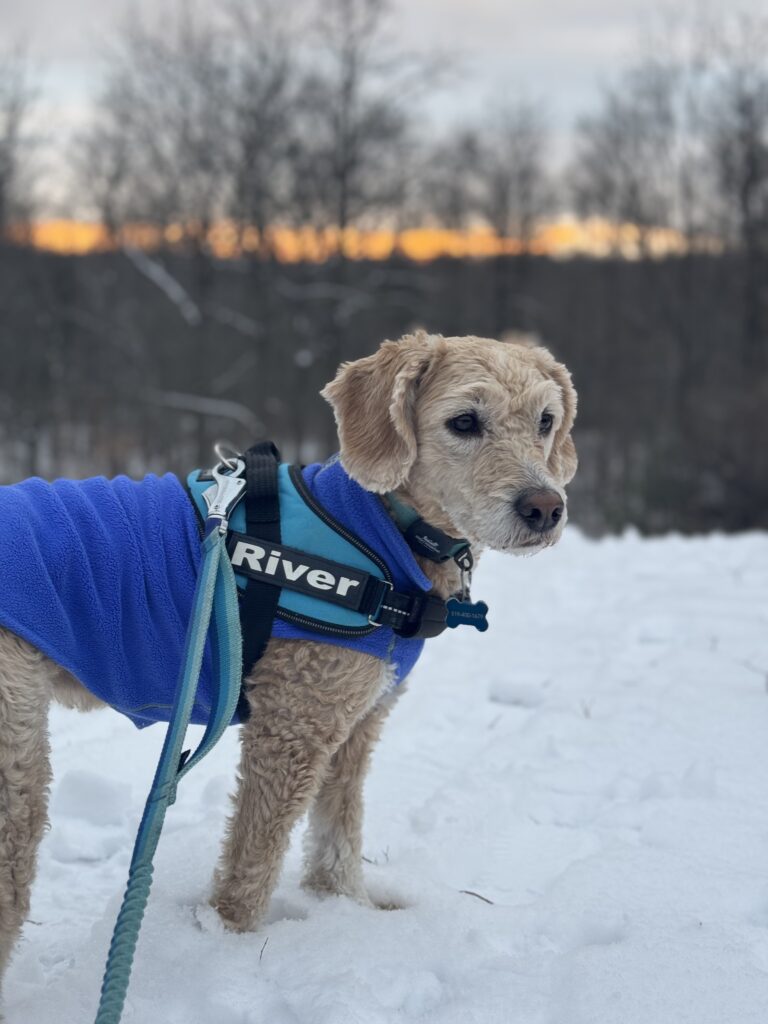
Krista Halling is a veterinarian board-certified with the American College of Veterinary Surgeons and creator of Dogpacking.com. She is also certified in the Human-Animal Bond and in Canine Physical Rehabilitation. Krista loves travelling and adventuring with River, her mini goldendoodle sidekick.
References
Ninomiya H, Yamazaki K, Inomata T. Comparative anatomy of the vasculature of the dog (Canis familiaris) and domestic cat (Felis catus) paw pad. Open Journal of Veterinary Medicine. 2013 Mar 21;3(1):11-5.
Ninomiya H, Akiyama E, Simazaki K, Oguri A, Jitsumoto M, Fukuyama T. Functional anatomy of the footpad vasculature of dogs: scanning electron microscopy of vascular corrosion casts. Veterinary dermatology. 2011 Dec;22(6):475-81.
Leave a Reply