By Krista Halling DVM DACVS
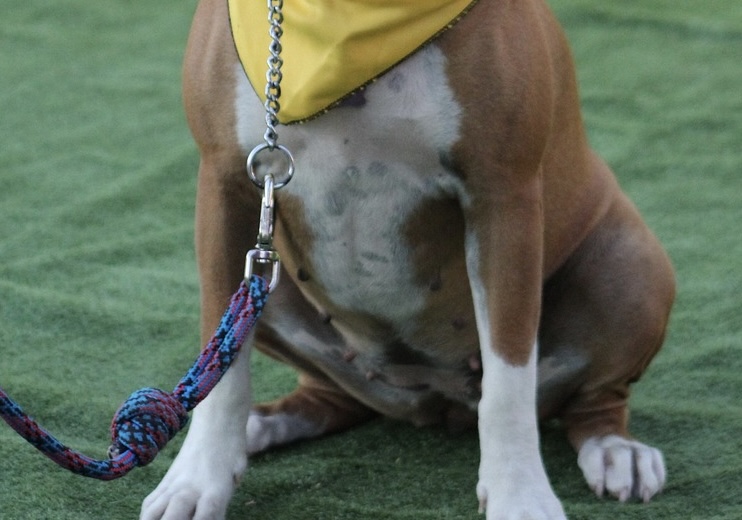
Did you know that excess fat isn’t just extra weight. It’s biologically active tissue that can affect the health of your dog’s entire body. We want our dogs to live long, healthy lives and enjoy the experiences we share with them. Yet nearly 60% of dogs are overweight or obese. What does excess fat do to your dog’s health—and what can you do about it?
Fat does more than add weight
We think of fat as stored energy. And yes, fat cells (also called adipose cells) do store fat for energy. But fat cells aren’t sitting there inert —they’re biologically active…and not in a good way! They produce hormones and other chemical messengers called adipokines, which influence how your dog’s body functions.
As a dog’s body fat increases, the production of these adipokines can become dysregulated, contributing to chronic, low-grade inflammation and metabolic changes. Unlike the temporary inflammation associated with an injury, which is part of the body’s normal healing response, these inflammatory mediators are maladaptive and persist.
And because these chemical messengers circulate throughout your dog’s body, the effects of obesity aren’t limited to where the fat is stored. That’s one reason that, as we’ll see, excess body fat can affect so many of your dog’s body systems.
It causes metabolic dysfunction
Excess body fat also interferes with a dog’s normal physiology and metabolic processes. The metabolites produced by adipose tissue can affect insulin resistance, glucose metabolism, and kidney function. Additionally, systolic blood pressure is also often high in obese dogs, causing stress on their heart.
This chronic inflammation can also impact your dog’s immune system, as well as predispose them to certain types of cancer.
It affects joint health—not just because they’re heavier
Imagine carrying a weighted backpack all day, every day. Every time you stand up, climb stairs, run, or jump, your muscles and joints have to work harder. That’s only part of what happens when a dog carries excess weight. There’s more to this joint story.
The inflammatory mediators associated with obesity may also contribute to joint disease and inflammation. So your dog’s joints experience both increased mechanical loading and biological effects.
In a landmark lifetime study involving 48 Labrador Retrievers, dogs fed 25% less food than their paired counterparts developed osteoarthritis later in life. Other studies have shown that weight loss in overweight dogs with osteoarthritis can improve mobility and reduce signs of pain.
That’s right—in dogs with osteoarthritis, weight loss alone can improve their signs of arthritis. My triad of recommendations in dogs with osteoarthritis are: pain management, exercise, and weight loss.
Being overweight also predisposes a dog to tearing their cranial cruciate ligament tear (CCL), one of the most common and debilitating orthopedic conditions in dogs. It results from the degeneration of a stabilizing ligament in their knee.
I’ve performed several thousand surgeries on dogs to stabilize their torn-CCL knee joint and I’d say that 90% of those dogs were moderately overweight. (If severely overweight, we’d often need to postpone the surgery since they were at too high a risk for complications during general anaesthesia and for problem healing from orthopedic surgery).
Breathing and exercise is harder
Extra body fat in the chest and abdomen affects how efficiently the respiratory system works, increasing the effort required to breathe.
This is particularly concerning for dogs that already have breathing difficulties, including brachycephalic breeds such as Bulldogs and Pugs.
Obesity also makes the same activity harder work. For an active dog, that can mean becoming tired sooner, having more difficulty keeping up, or being less comfortable during activities they previously enjoyed.
Greater risk of heatstroke
Dogs already have a limited ability to cool themselves compared with humans, since they rely primarily on panting rather than sweating to dissipate heat.
Carrying excess body fat insulates the body and makes heat dissipation more difficult, particularly during physical activity or in warm weather. Studies have supported that being overweight or obese increases a dog’s risk of heat-related illnesses.
For anyone who enjoys walking, hiking, or exploring outdoors with their dog, this is an especially important consideration.
Keeping your dog lean won’t eliminate their risk of heatstroke, but it avoids a big risk factor (the other risk factors for heatstroke being high ambient temperature, high humidity, and being a brachycephalic breed).
Excess weight can affect quality of life
In a study of obese dogs undergoing a weight-loss program, owners of dogs that successfully lost weight reported improvements in vitality, reduced pain, and fewer signs of emotional disturbance.
In other words, losing weight didn’t just improve a number on the scale. It improved aspects of how those dogs felt and functioned.
Obesity can also reduce a dog’s lifespan
Remember that lifetime Labrador Retriever study? The dogs in the diet-restricted group lived a median of 13 years, compared with 11.2 years in the comparison group. That’s almost two additional years.
A much larger study involving more than 50,000 dogs across 12 breeds also found that overweight dogs had shorter estimated lifespans than dogs in normal body condition. The difference varied by breed, ranging from approximately five months to more than two years.
Different studies, different breeds, same message: leaner dogs lived longer.
So why do dogs become overweight?
At its simplest, weight gain occurs when a dog consistently consumes more calories than they expend.
There are several root causes of this intake-expenditure imbalance. Genetics, older age, neutered status, sedentary lifestyle, feeding habits, and certain medical conditions (e.g. hypothyroidism) can all play a role.
The most common contributing factor to canine obesity is, by far, excessive consumption of calorie-dense food. Sound familiar? Yep—that’s us humans too! Even when a dog’s meals are calorically measured and controlled (“I only feed him two cups a day”), most owners don’t realize how many calories are also packed into dog treats and table scraps!
It’s easy to inadvertently feed your dog more calories than they burn off in a day. A habit of just a few extra calories a day sets your dog sailing to the land of obesity.
How to tell if your dog is overweight
Rather than relying on a just number on the scale, it’s important to look at your dog’s body composition: what’s that extra weight made of? (spoiler alert: it usually isn’t muscle;)
Veterinarians use a combination of body condition score (BCS) (here’s a link to dog BCS chart), muscle score, and physical examination (e.g. skin fold thickness) to assess whether your dog is underweight, overweight, or at an ideal condition.
For most dogs at a healthy body condition, you should be able to:
- Feel their ribs easily (not “If I press hard enough”)
- See a waist when looking down from above (not “If I squint”)
- See an abdominal tuck when viewing them from the side
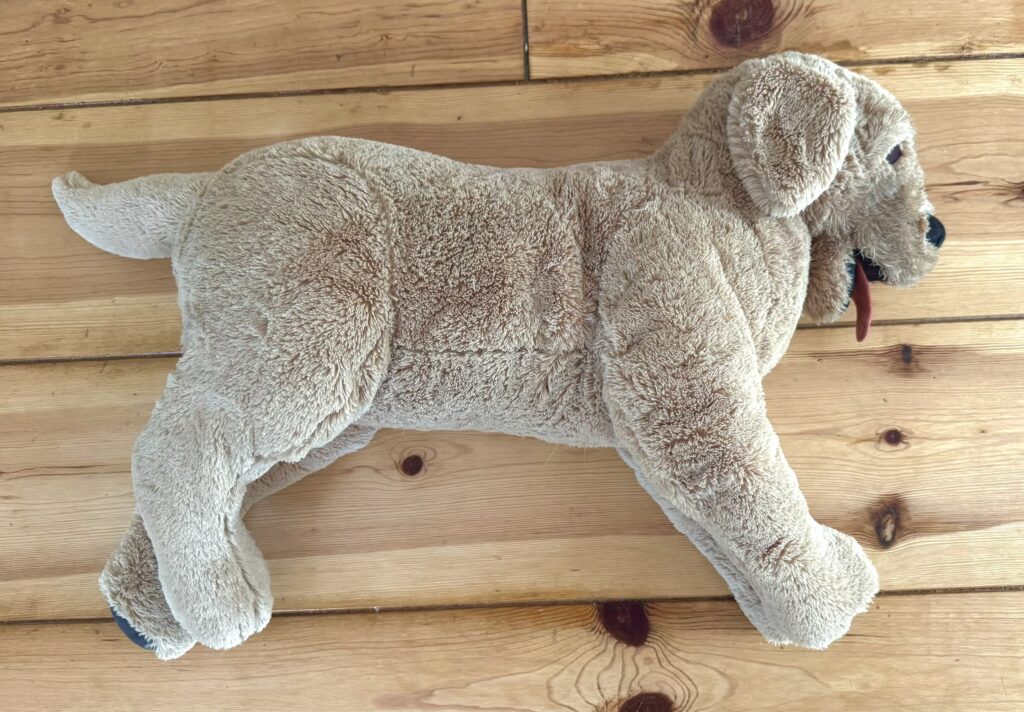
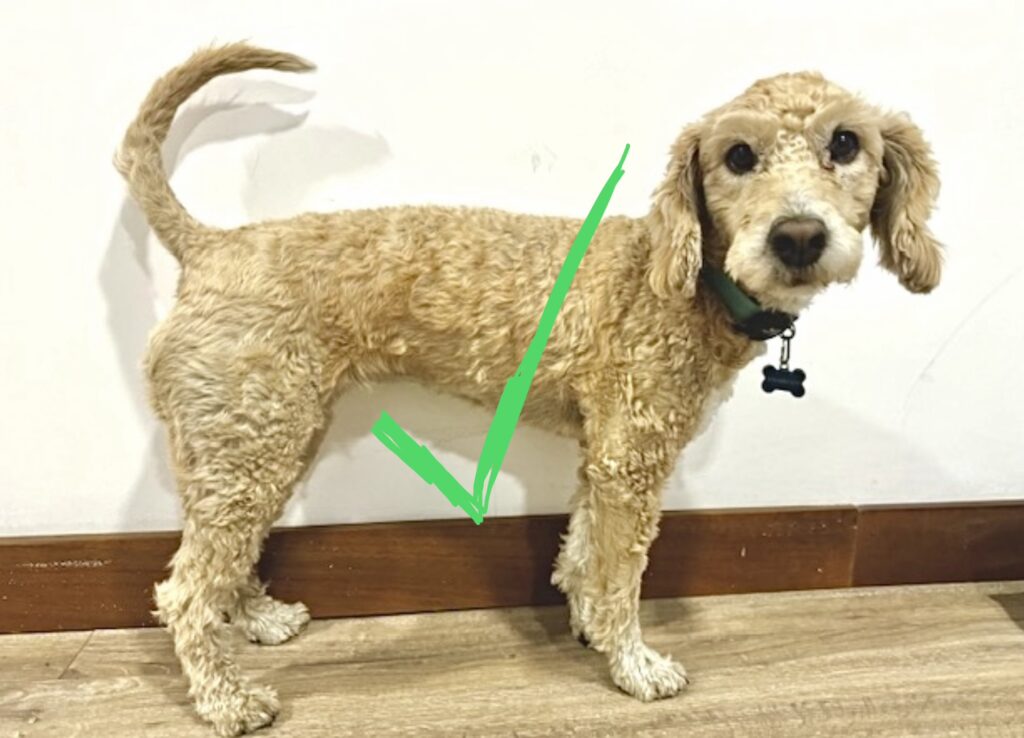
A healthy body shape does vary by breed, so ask your vet to help determine your dog’s body condition and ideal weight.
How to reduce your dog’s body weight
While it’s much easier to prevent weight gain than to reduce excess weight, that advice doesn’t help most people since many dogs are already overweight. So let’s look at ways to reduce your dog’s body weight.
- Start with your vet. They can check for underlying metabolic conditions (e.g. hypothyroidism) and help determine an ideal body weight for your dog (for instance, 80% of your dog’s current weight) and the targeted caloric intake.
- Feed for the dog you want, not the dog you have. A daily caloric intake based on their ideal body weight is the cornerstone of dog weight loss. Weight reduction diets for dogs can also be helpful because they are less calorically dense—-so you’re tricking your dog into not noticing that you’re feeding them less. Recent research also supports the benefit of a slow feeder to help your dog feel satiated.
- Add exercise—for muscle and metabolism! Increasing your dog’s physical activity certainly helps. The biggest health benefit of physical activity in an overweight dog isn’t to burn calories – it’s to increase their lean muscle mass and improve their metabolic and cardiac health. This is because it’s hard to exercise a dog enough to make up for overfeeding them. For instance, you’d need to walk your dog briskly for 20 minutes just to burn off that medium-size Milkbone you gave them. But this exercise (while, of course, reducing their caloric intake) will support their joints, their metabolic health, and their heart health.
The skinny
Excess body fat can affect not only how long your dog lives, but how well they live.
Whether it’s a game of fetch, a hike in the forest, a bikepacking trip, or a neighbourhood walk, maintaining a lean body condition helps protect your dog’s ability to keep doing the activities you both love.
That’s why my number one health tip is:
Keep your dog lean.
Related articles
About the author
Krista Halling is a veterinarian board-certified with the American College of Veterinary Surgeons and creator of Dogpacking.com. She is also certified in the Human-Animal Bond and in Canine Physical Rehabilitation. Krista loves travelling and adventuring with River, her mini goldendoodle sidekick.
Selected references
Salt, C., et al. (2019). Association between life span and body condition in neutered client-owned dogs. Journal of Veterinary Internal Medicine, 33(1), 89–99. https://doi.org/10.1111/jvim.15367
German, A. J., et al. (2012). Quality of life is reduced in obese dogs but improves after successful weight loss. The Veterinary Journal, 192(3), 428–434. https://doi.org/10.1016/j.tvjl.2011.09.015
Halling, K. B., Bowden, M., Pretty, J., & Ogeer, J. (2026). Bonded Green Exercise: A One Health Framework for Shared Nature-Based Physical Activity in the Human–Dog Dyad. Animals, 16(2), 291. https://doi.org/10.3390/ani16020291
Kealy, R. D., et al. (2002). Effects of diet restriction on life span and age-related changes in dogs. Journal of the American Veterinary Medical Association, 220(9), 1315–1320. https://doi.org/10.2460/javma.2002.220.1315
Vendramini THA, Gomes Olivindo RF, Zafalon RVA, Rentas MF, Zanini LD, Amaral AR, Pedrinelli V, de Oliveira VV, Risolia LW, Teixeira FA, Brunetto MA. Profile qualitative variables on the dynamics of weight loss programs in dogs. PLoS One. 2022 Jan 12;17(1):e0261946. doi: 10.1371/journal.pone.0261946.
Heys, M., Lloyd, I., & Westgarth, C. (2024). ‘Bowls are boring’: Investigating enrichment feeding for pet dogs and the perceived benefits and challenges. Veterinary Record, 194(4).
Frye, C. W., Shmalberg, J. W., & Wakshlag, J. J. (2016). Obesity, exercise and orthopedic disease. Veterinary Clinics: Small Animal Practice, 46(5), 831-841.

Leave a Reply