By Krista Halling DVM DACVS
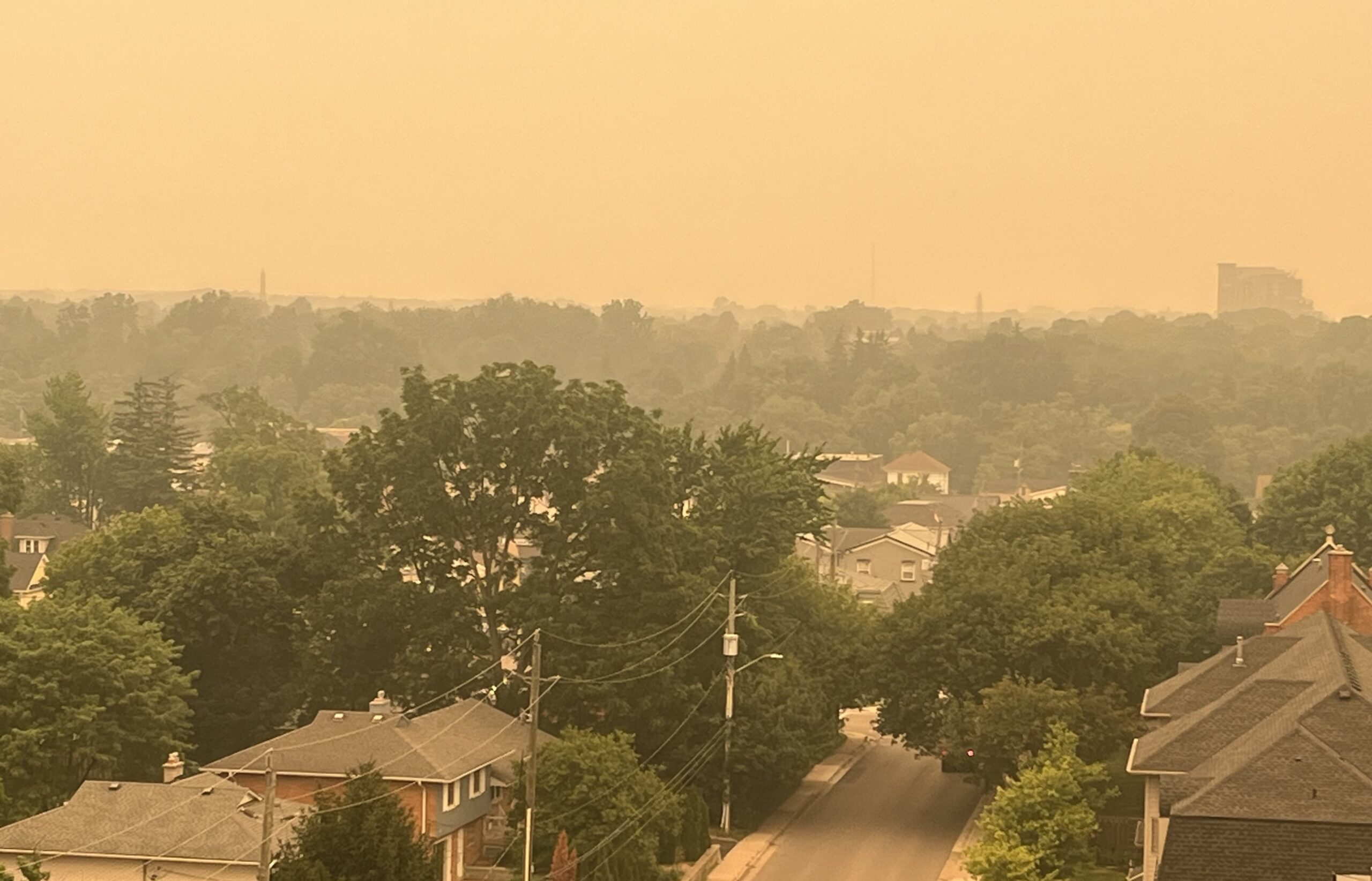
Wildfires and their resulting smoke have tragically become a part of summer across much of North America, greatly impacting the health of people and animals – even those living far away from the fire. Here’s what every dog owner should know to keep their dog safe.
Why is wildfire smoke so harmful?
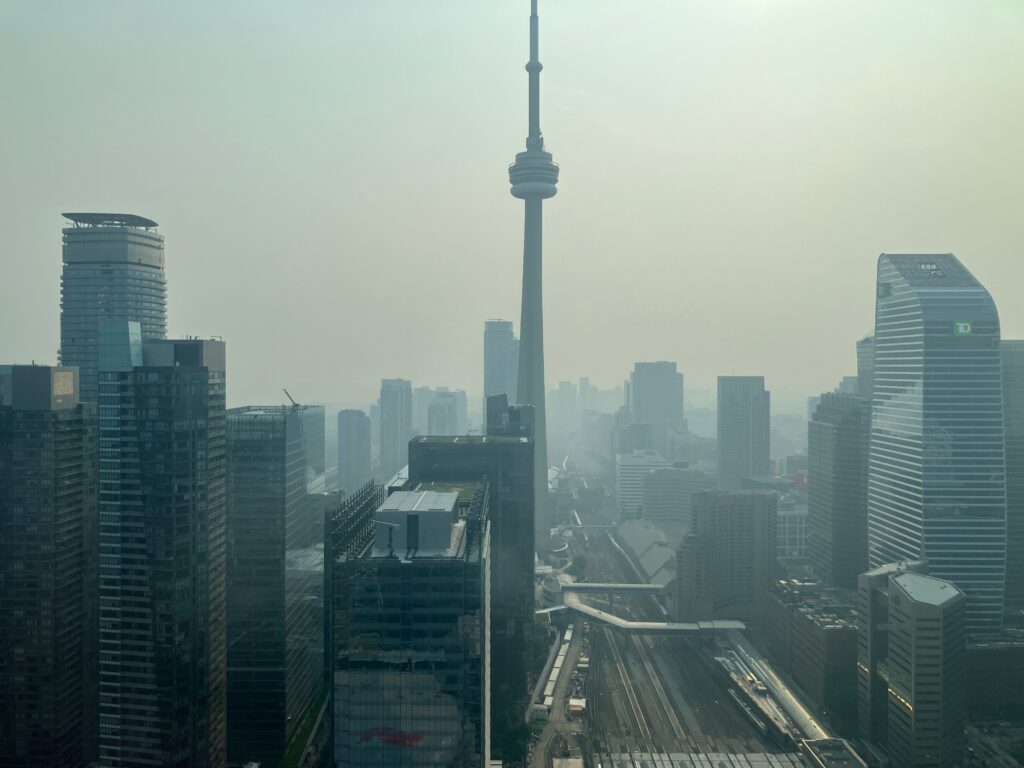
Wildfire smoke is a mixture of toxic gases and microscopic particles. One of the most serious health concerns from wildfire smoke is from PM2.5 – particulate matter less than 2.5 micrometres in diameter. These tiny airborne particles can travel hundreds or even thousands of kilometres, affecting air quality far from the fire itself.
These particles are so small that they can bypass the body’s normal airway defenses, travel down the airways and deep into the lungs. They can also get into the bloodstream, travelling to other tissues. PM2.5 and gases in the smoke can cause severe tissue damage from acute and chronic irritation, inflammation, and oxidative damage.
Health effects in humans and dogs
In humans, air pollution from wildfire smoke has most notably been linked to heart and lung disease. While wildfire research in dogs is less extensive, many of the same effects are expected because dogs, like us, are mammals and breathe the same air we do. If the air isn’t healthy for you, it isn’t healthy for your dog either.
Indeed, studies examining the effects of wildfire smoke and air pollution in dogs have reported numerous health issues including eye irritation and corneal ulcers, respiratory issues, cardiovascular conditions, cognitive decline, and behavioural problems including increased aggression.
Which dogs are most at risk?
Any dog can be affected by wildfire smoke, but extra caution is warranted for:
- Puppies and senior dogs
- Flat-faced (brachycephalic) breeds such as Pugs, Bulldogs, French Bulldogs, and Boston Terriers
- Dogs with pre-existing heart, lung, or eye conditions
- Dogs with collapsing trachea or other upper airway disorders
- Very active dogs that run or play hard when outdoors
Signs your dog may be affected
If your dog is experiencing any of the above signs, contact your veterinarian:
- Coughing or gagging
- Sneezing or nasal discharge
- Red, watery, or squinting eyes
- Pawing at their face or eyes
- Increased breathing rate
- Open-mouth breathing when your dog isn’t hot or exercising
- Wheezing or noisy breathing
- Fatigue or weakness
- Reduced appetite
Protecting your dog at home
When wildfire smoke is affecting your area:
- Keep windows and doors closed as much as possible.
- Run your air conditioning if available.
- Use a HEPA air purifier if you have one.
- Vacuum regularly to reduce indoor particles.
- Have an evacuation bag ready, including items your dog may need (food, water, medications, medical record/vaccination certificate)
Check the air before you head outside
Before Walking, hiking, running, or spending any time outdoors with your dog, check your local air quality. In Canada, use the Air Quality Health Index (AQHI). In the United States, use the Air Quality Index (AQI).
As air quality worsens, reduce the duration and intensity of outdoor activities for both you and when air quality is very poor, keep your dog indoors except for bathroom breaks.
Wildfire smoke and the risk of exercise to your dog
During exercise, dogs breathe faster and deeper, allowing more smoke particles to reach the deepest parts of their lungs. So when air quality is poor, it’s best to reduce your dog’s outdoor exposure and keep exercise to a minimum.
Instead of exercising do this:
- Limit outings to bathroom breaks if smoke is heavy and/or air quality index is poor.
- Use dog goggles to help protect eyes when outdoors.
- Skip exercise, especially anything strenuous.
- Choose indoor enrichment, training games, or food puzzles instead.
Should your dog wear a mask?
No. Masks designed for people don’t fit dogs properly, and there is currently little evidence that commercially available dog masks provide meaningful protection from wildfire smoke. Some may even make breathing more difficult.
Reducing your dog’s exposure to smoke, by staying indoors and keeping your household air clean is far more effective than trying to use a mask on your dog to filter the air they’re breathing.
The takeaway
If the air quality isn’t safe enough for you to be outdoors, it’s not safe enough for your dog either. Choose indoor enrichment today and save the adventure for clearer skies.
- Check the reported air quality before heading outdoors.
- Reduce outdoor exercise when air quality is poor.
- Keep indoor air as clean as possible.
- Watch your dog for coughing, breathing changes, or unusual fatigue.
- Contact your veterinarian promptly if your dog develops difficulty breathing.
Your next adventure can wait. Protecting your dog today will help ensure you’re both ready to enjoy the trails when the smoke finally clears. How have you been keeping your dog entertained indoors? Leave your comments below.
About the author
Krista Halling is a veterinarian board-certified with the American College of Veterinary Surgeons and creator of Dogpacking.com. She is also certified in the Human-Animal Bond and in Canine Physical Rehabilitation. Krista loves travelling and adventuring with River, her mini goldendoodle sidekick.
References
AVMA website: Wildfire Smoke and Animals
Bersenas A. Smoke & carbon monoxide inhalation. In Mathews KA et al (Ed): Veterinary Emergency and Critical Care Manual, 4th Edition (in press).
Leave a Reply