By Krista Halling DVM DACVS
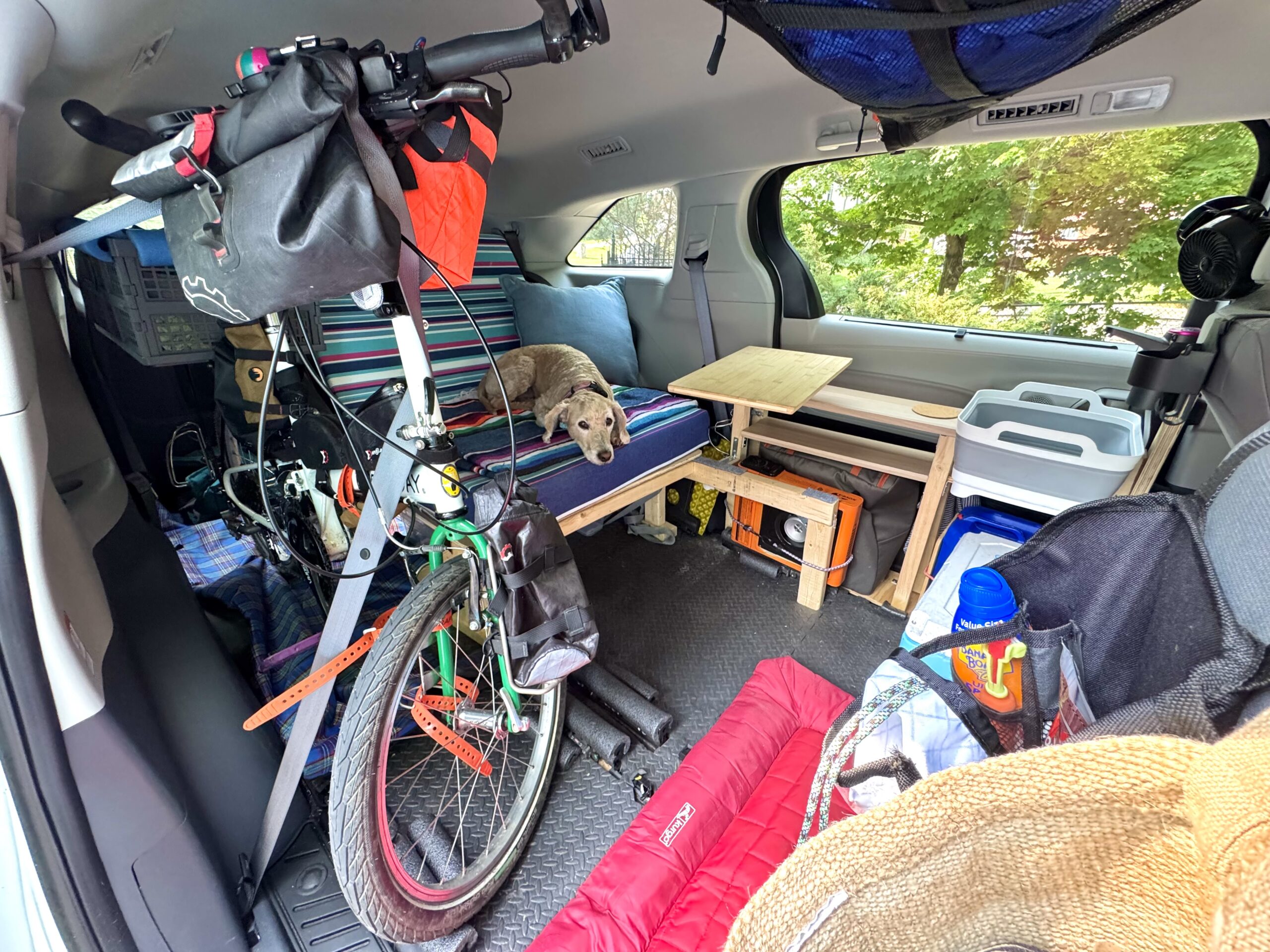
I converted my 2023 Toyota Sienna into a camper for adventures with my dog, River. This DIY design includes a kitchen, sofa bed, work and lounge areas, and space for our 20-inch folding bike. In this final article of our three-part minivan camper series, discover how the camper turned out:
Sofa bed
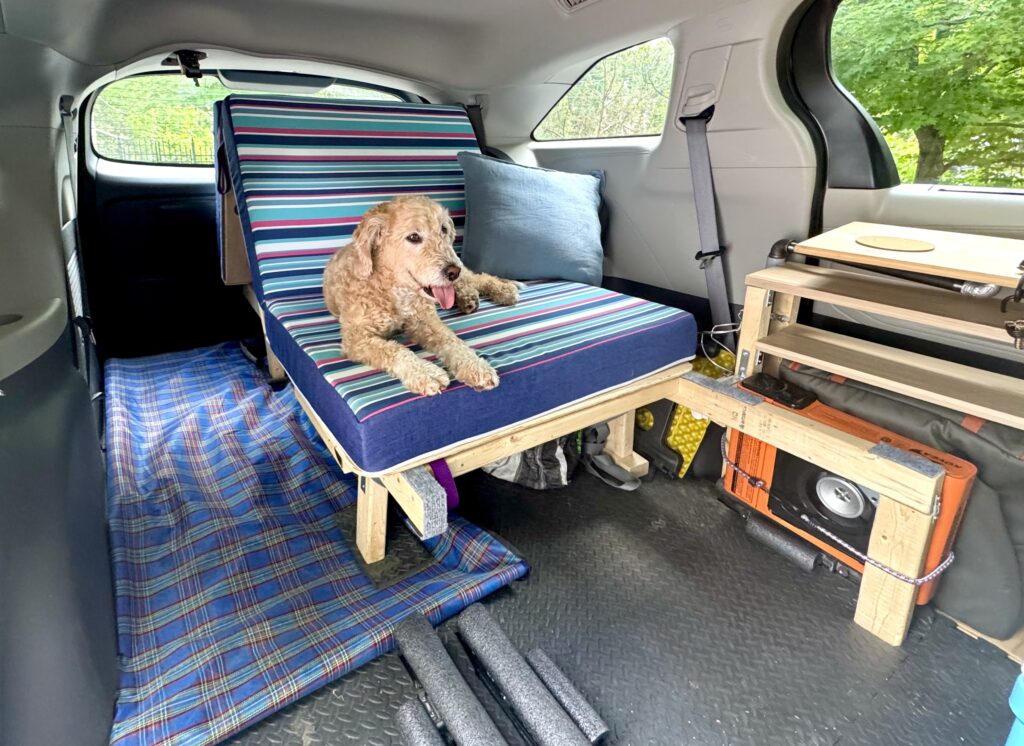
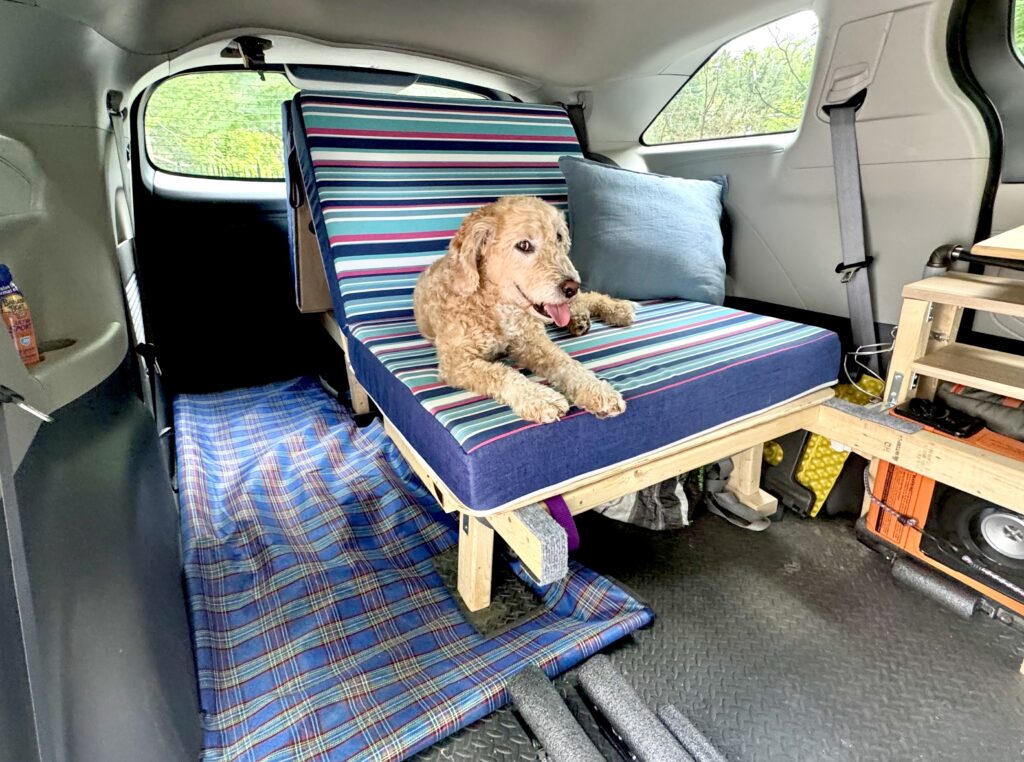
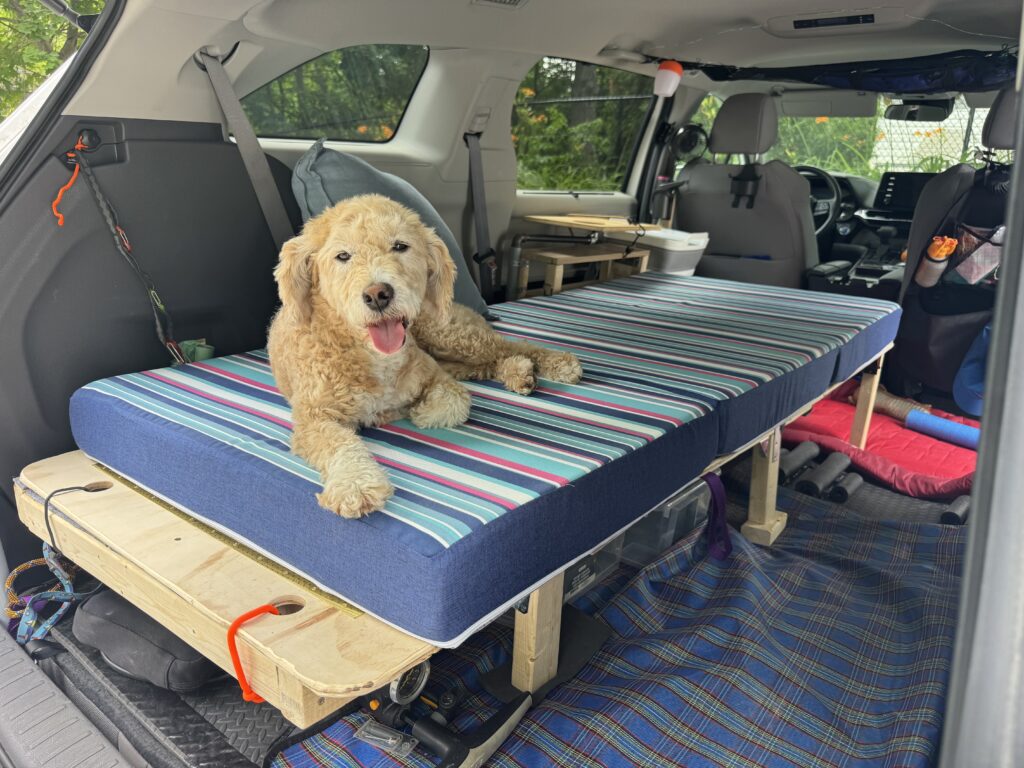
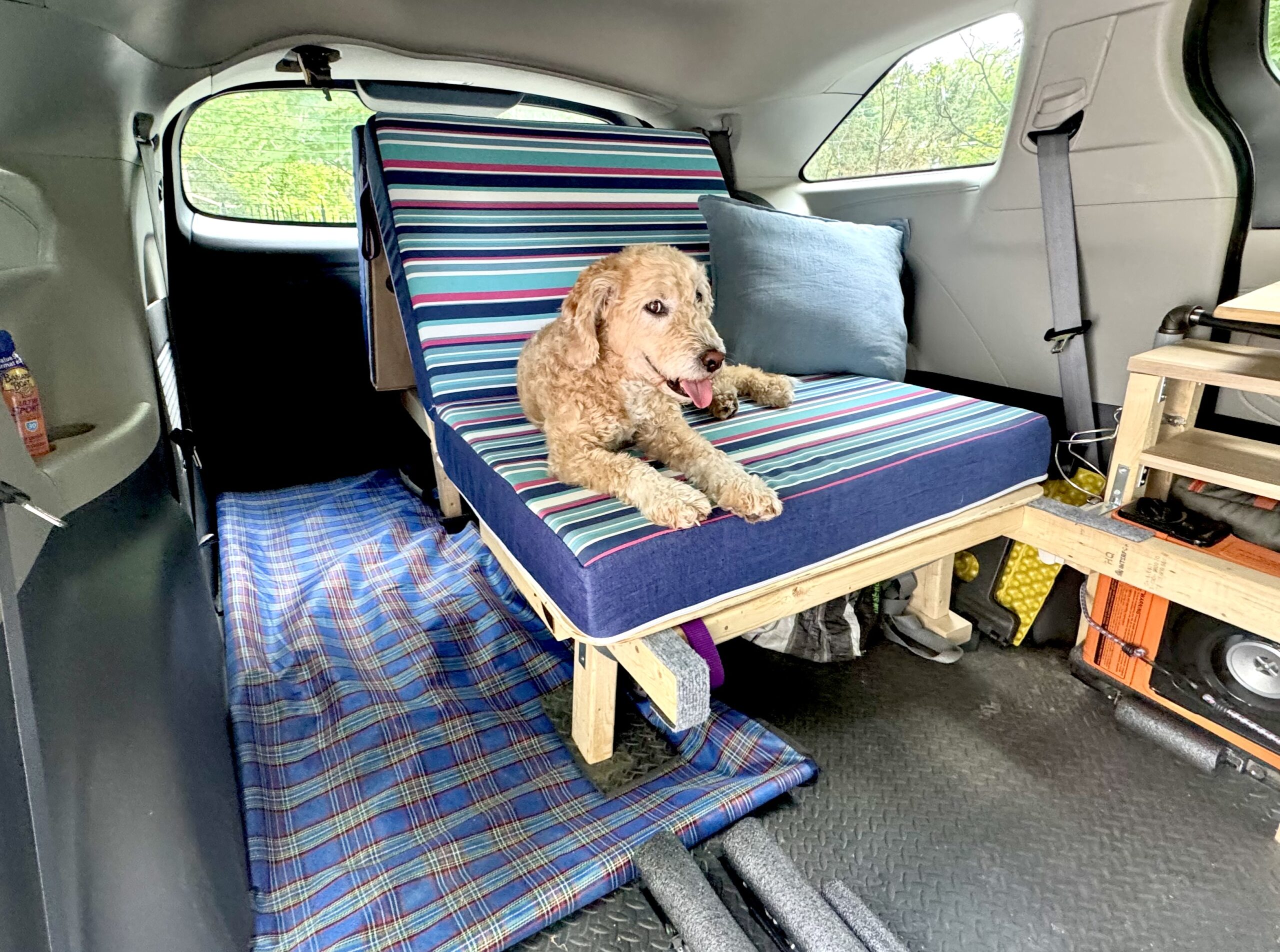
We made a folding bed that easily converts to a sofa, leaving enough room on the right side for our bike, and on the left side for a kitchen. For details on that build, check out this article.
Kitchen
In order to have the option of cooking both inside and outside the van, minivan kitchens are usually located either along the driver-side sliding door or at the back of the van.
I decided to place ours beside the passenger door since that maximizes the amount of room inside the van. Had the kitchen been placed at the back of the van, the sofa bed would have been close to the driver and passenger seats. A side kitchen let me push the sofa bed all the way to the back of the van, leaving plenty of space in front of the sofa.
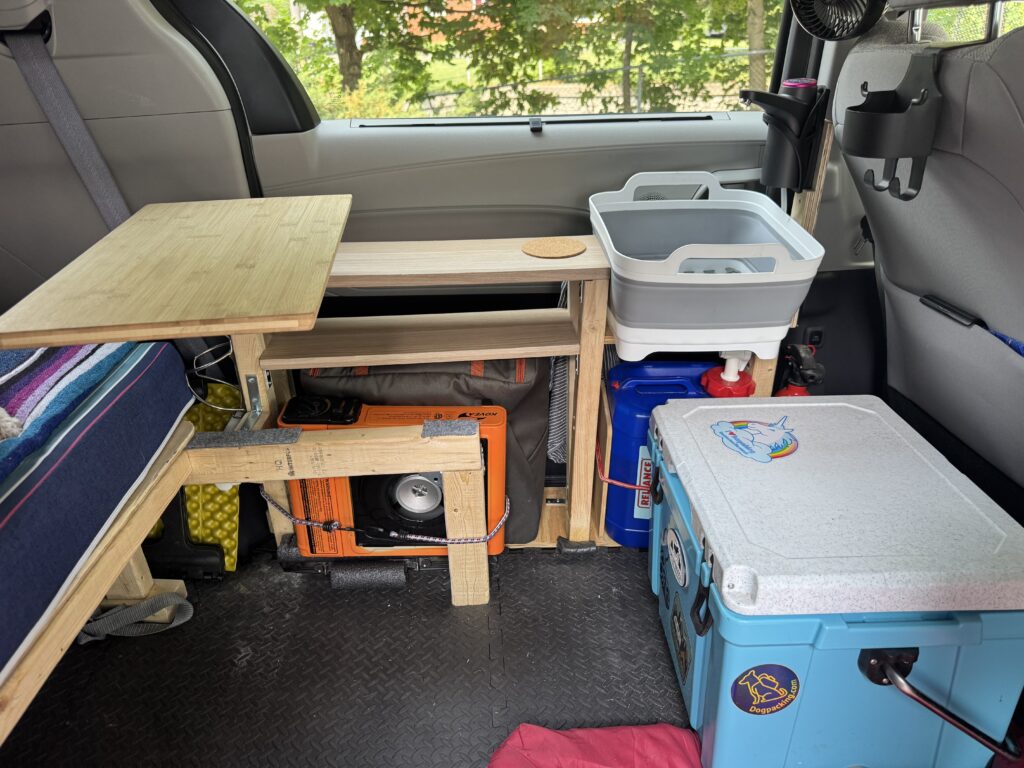
Since we left space for the bicycle to the right of the sofa bed, that left only 8 inches for our kitchen. Despite being narrow, the design is quite functional.
It’s made pretty simply using shelves from IKEA’s as-is department, leftover 3/4 inch plywood, and pieces of 2×2.
Faucet and sink
This is a simple combination of a USD-rechargeable water pump faucet and a collapsible sink. The faucet fits nicely in a bicycle water bottle cage, allowing it to swivel for use both inside and outside the van. The faucet’s silicone tubing goes into a fresh water storage container.
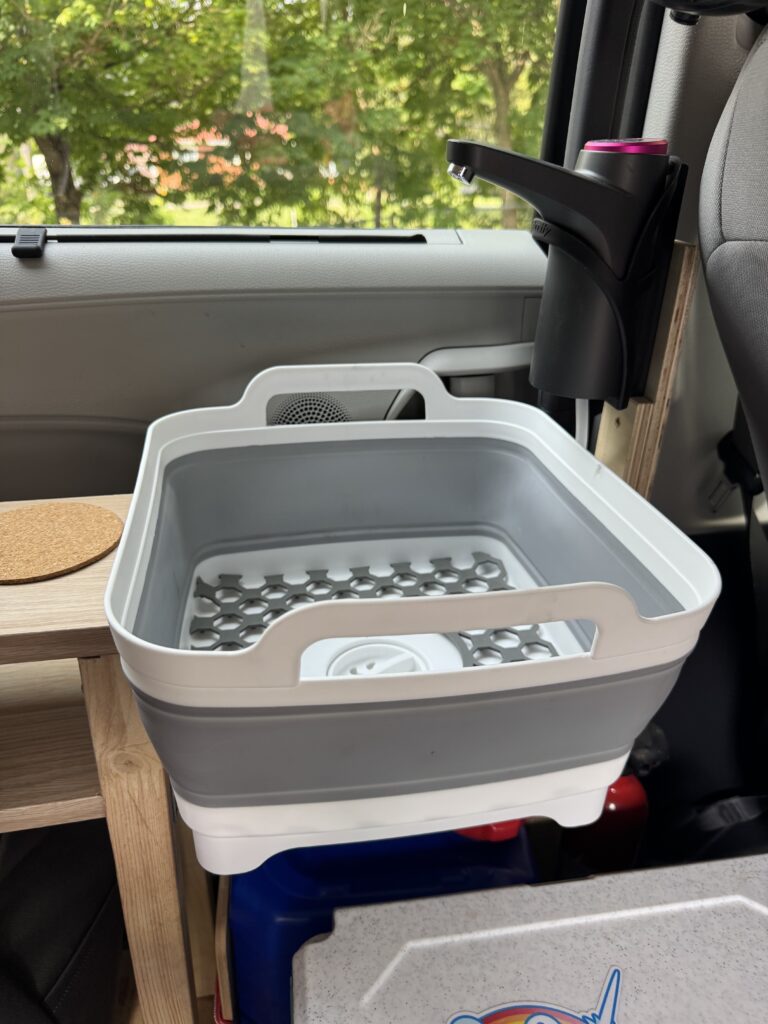
The sink simply sits on the shelf under the faucet. I can easily remove it to dump the grey water or to use it elsewhere.
Another option for a sink is to recede a stainless steel bowl into a large hole drilled in the countertop, and then connect corrugated tubing from the sink to a grey water container. Again, in the spirit of simplicity, I chose not to add a drainage system at this point.
Pots and utensils
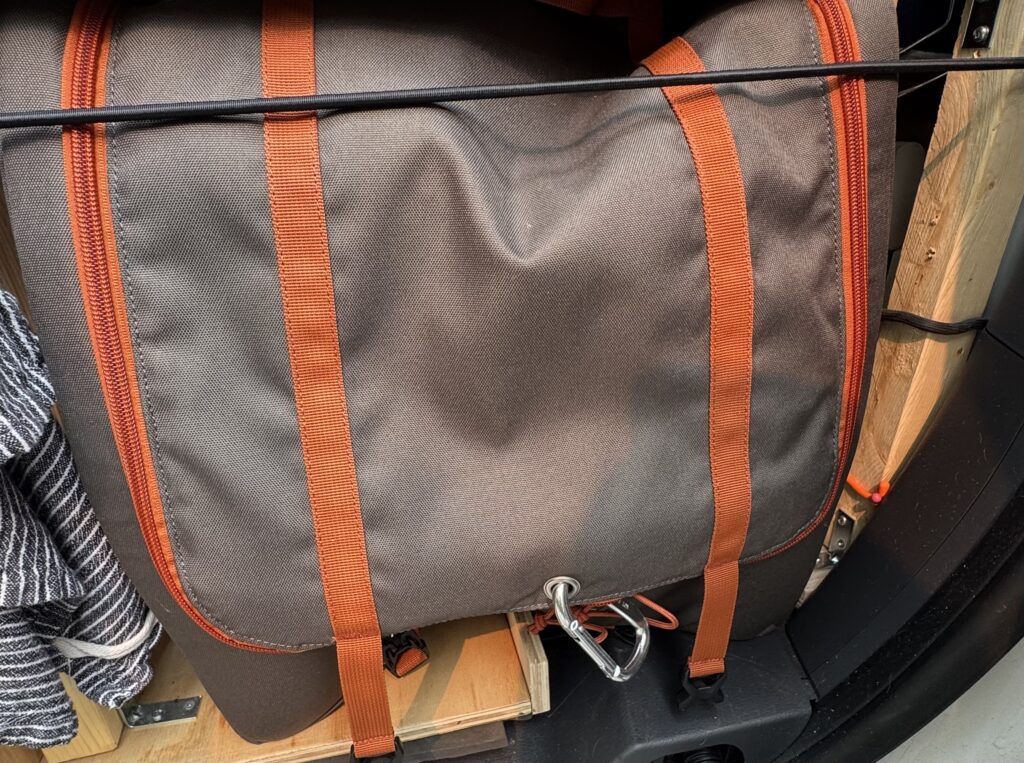
I store all of these in this Kelty camp kitchen organizer. It unzips to convert into a vertical organizer with various pockets, and hangs on the coat hook located above the sliding door.
Stove
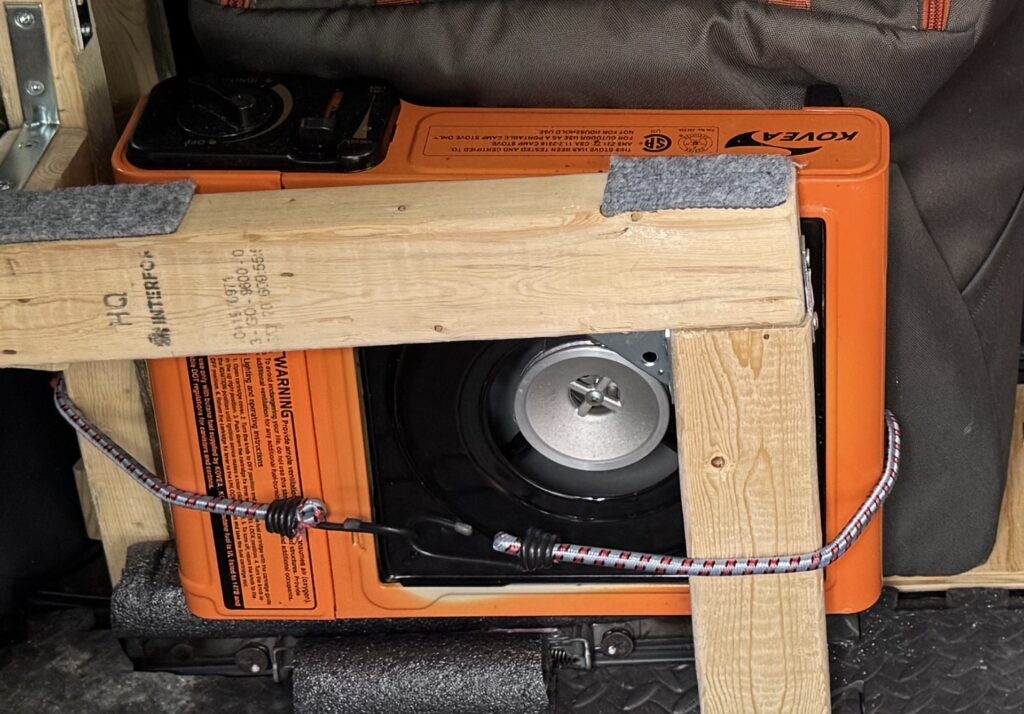
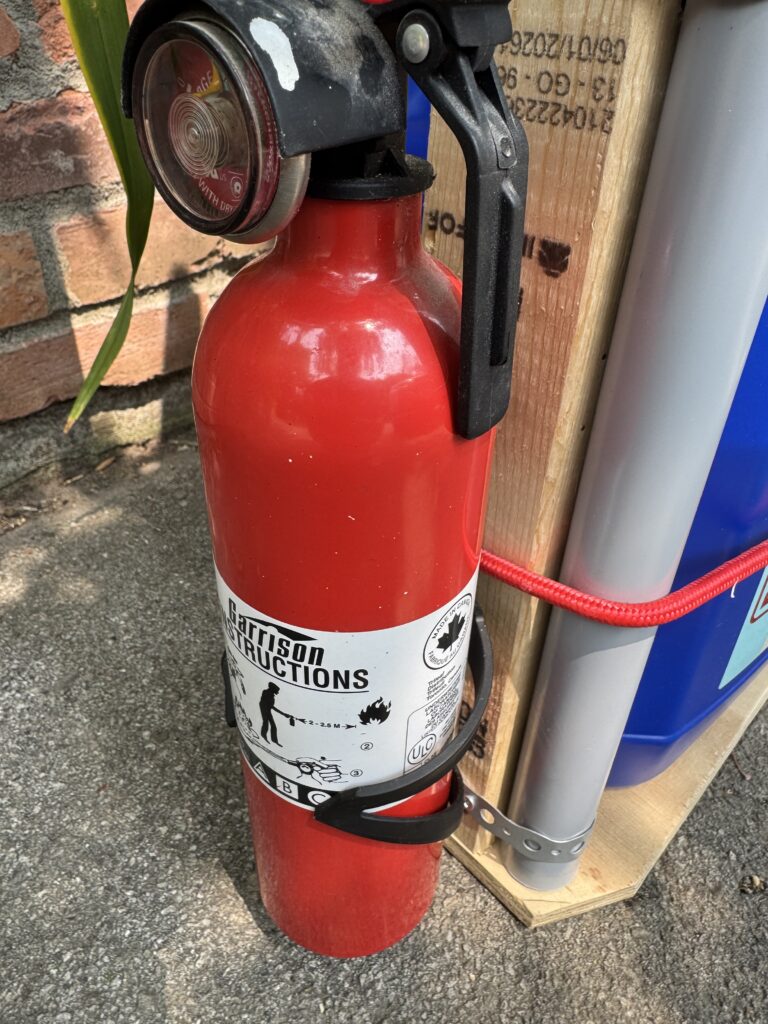
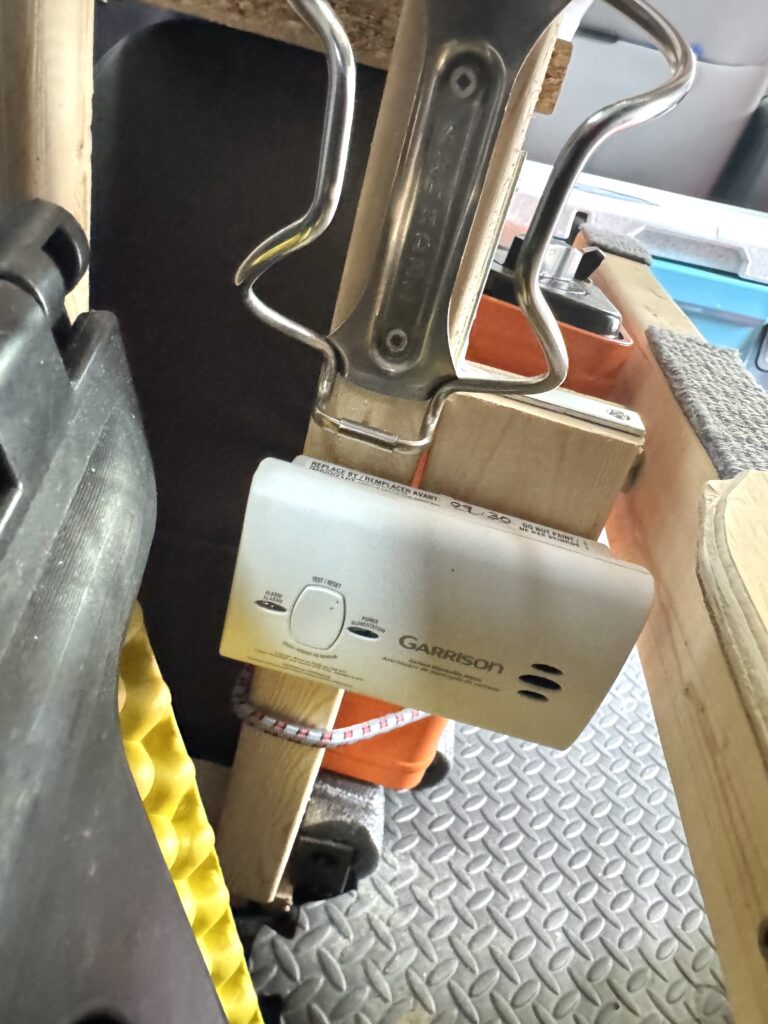
The portable butane one-burner stove fits well between the sofa bed and the kitchen shelving. It can be used to cook either outside or inside the van, as long as the windows are open. I’ve also secured a battery-operated CO and smoke detector to the side of the kitchen shelving.
Cooler
This has multiple uses: as food storage, as a bench, and as an ottoman. At some point I might upgrade to a 12 volt RV fridge, but for now this works well.
No-spill water bowl
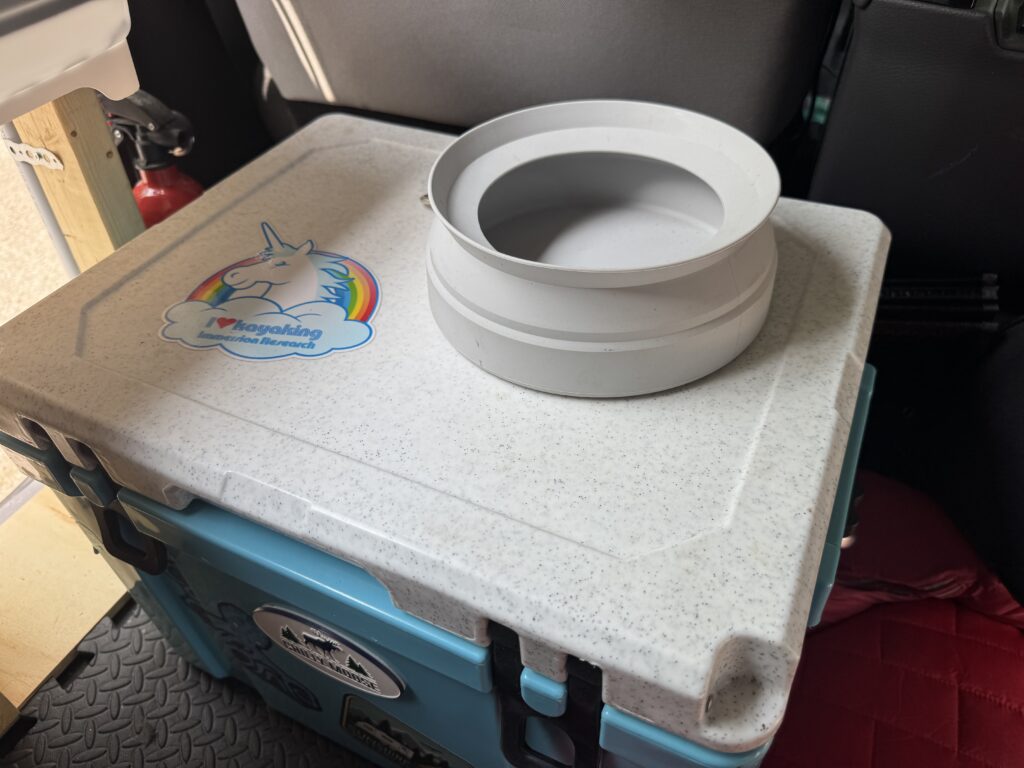
This is great for preventing water from escaping while driving. And since it’s made from silicone, it doesnt slide around.
Swivel table
This is where the narrow space is a bit limiting for prep and cooking, so we built a swivel table which can be used inside and outside the van.
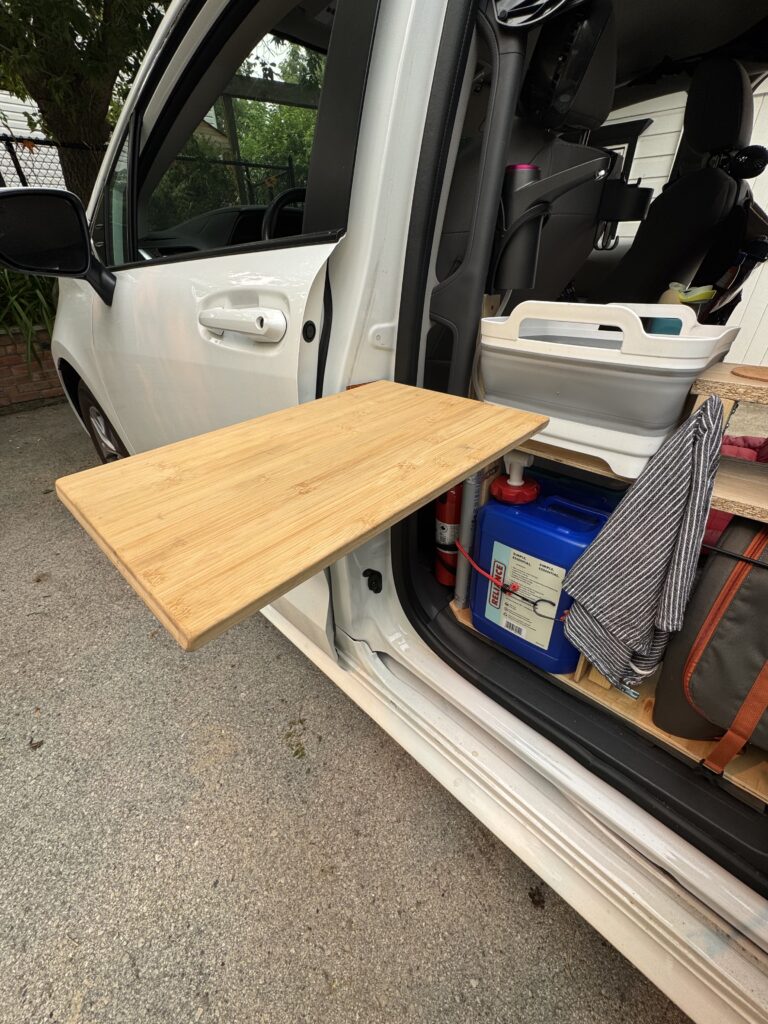
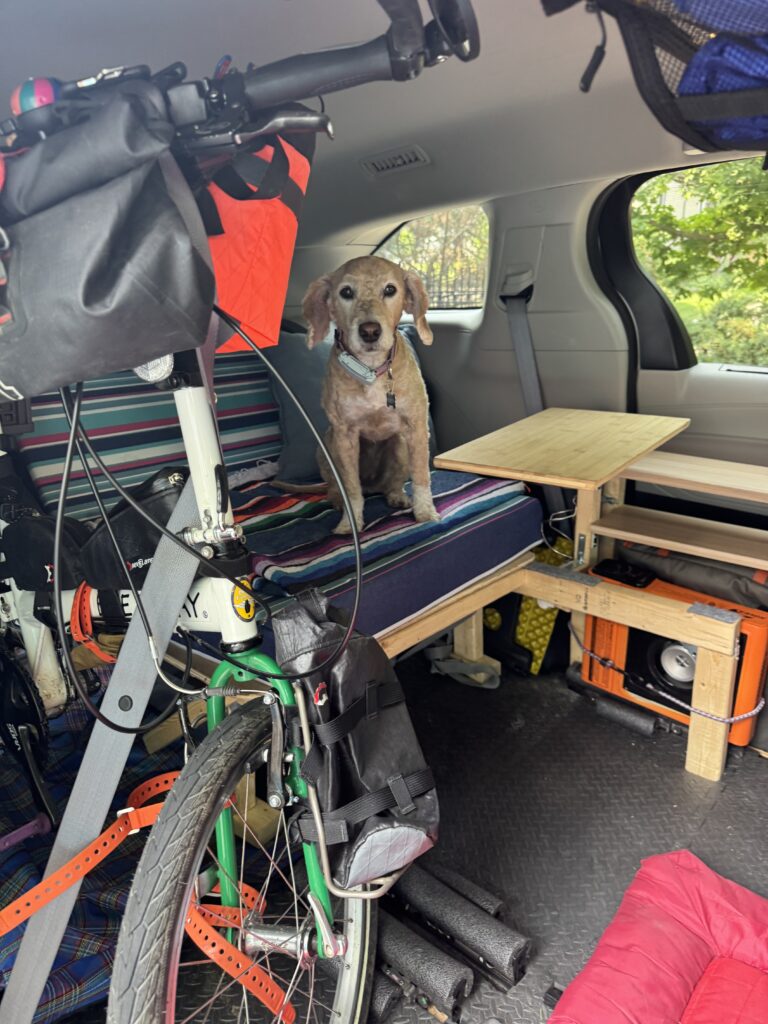
The table is made using 3/4-inch plumber’s pipe pieces:
- 2x 12 inch straight sections
- 2 x 90-degree elbow
- 1 x 3/4 inch floor flange
Plus a table top. I used IKEA’s bamboo cutting board (11”x17”). Before committing on a table top, I suggest assembling the table using a cardboard mock-up of your chosen table top size. This will let you test whether there’s enough clearance for your chosen size to swivel in your van.
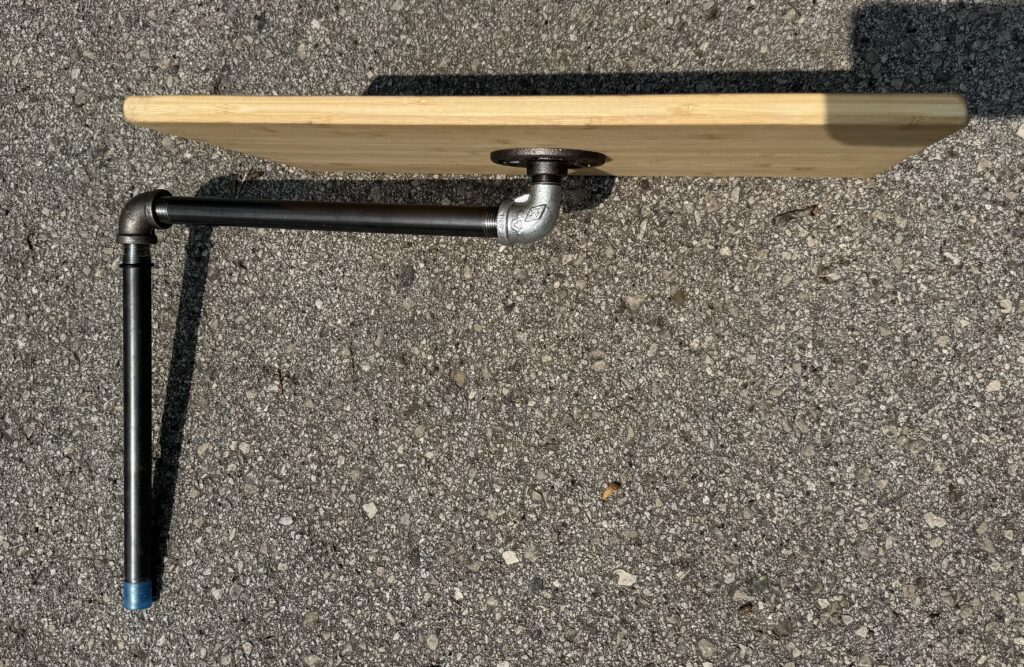
The base is made from 1-inch dia PVC tubing (think of an umbrella stand), anchored to the shelving using plumber’s strap. To create several locations for the table, I placed a section of PCV pipe near the front of the sliding door, at the back of the kitchen shelving, and near the rear hatch. The length of the PVC pipe reflects the desired height of the table.
Finally, I slid an O-ring onto the vertical piece of piping to stop the wiggle that was created since there’s a little bit of space between the three-quarter inch piping and the 1 inch diameter PVC pipe.
Portable table
For a larger work surface, I added a portable table. This was kept simple and made using a leftover piece of 3/4 in plywood and a telescoping monopod. One end of the table is supported by the kitchen counter, and the other end by the monopod.
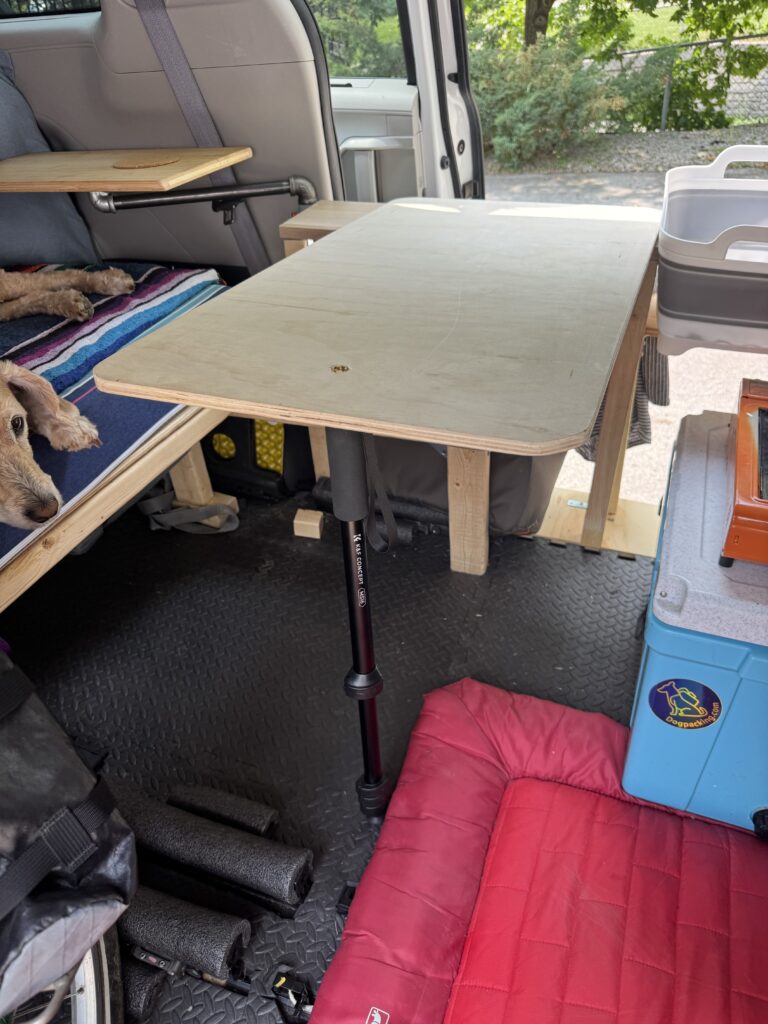
Since the monopod telescopes, the table can be used at various heights – both inside and outside the van. When not in use, the tabletop and monopod are stored between the sofa bed and the side of the car.
Our Bicycle
While our bike could be transported in a rear-hatch or roof-top carrier, I much prefer the convenience and security of it being inside the van. Since it’s a 20-inch folding bike, that wasn’t a problem. It wheels into the van fully assembled!
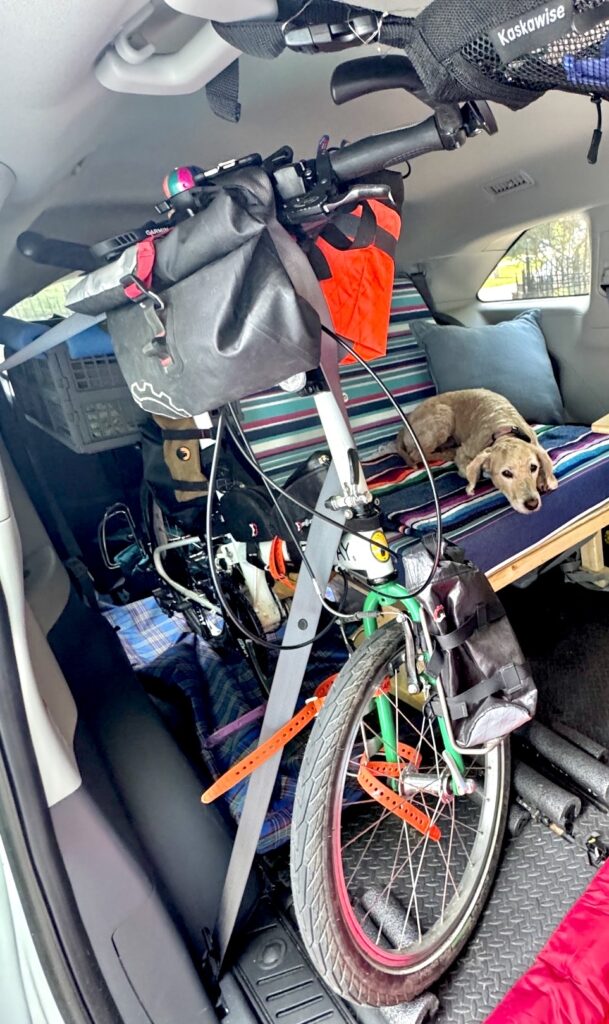
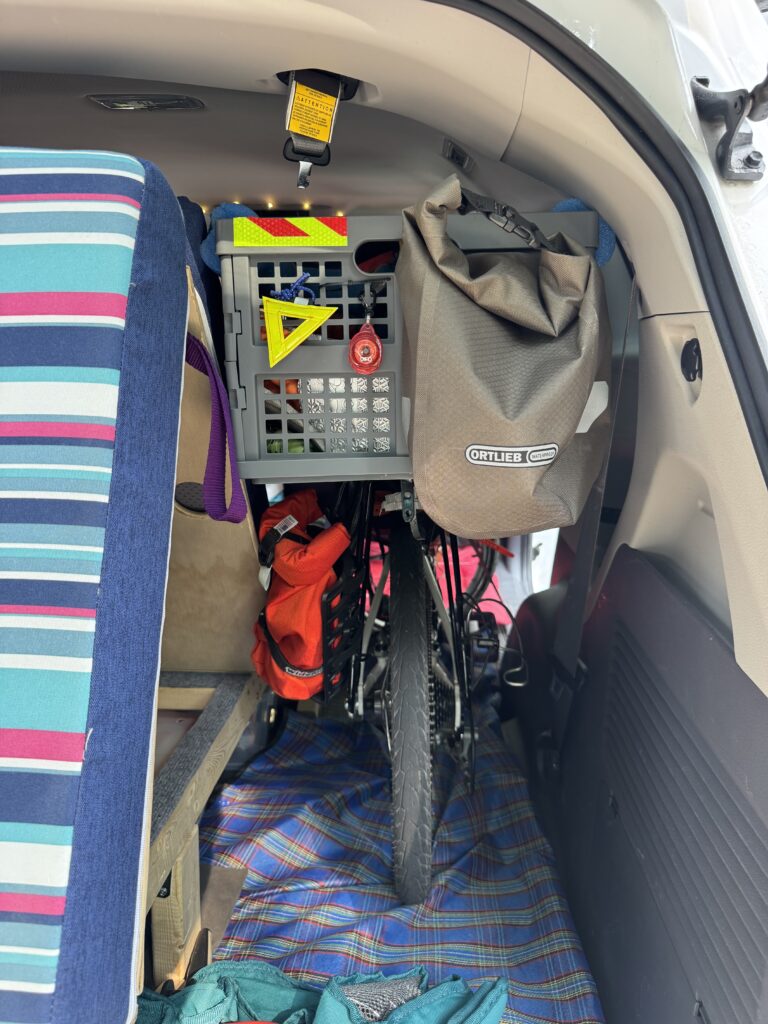
I secure it using the existing 2nd row seatbelt (looped around the bike) and some cargo straps.
Storage
Under-bed storage
In small campers, it’s great to use all available space. The footprint under a sofa bed is a perfect place for totes and larger loose items. Since the under-bed area is easy to access, it’s terrific for storing clothes, food, bike pump, camp chair, and other frequently-used items.
Our minivan floor naturally rises from front to back, making the under-bed storage height greater at the front compared to the back of the van. Having said that, I still have over 6 inches of clearance at its lowest point. To learn more about our sofa bed build and leg height, see this article.
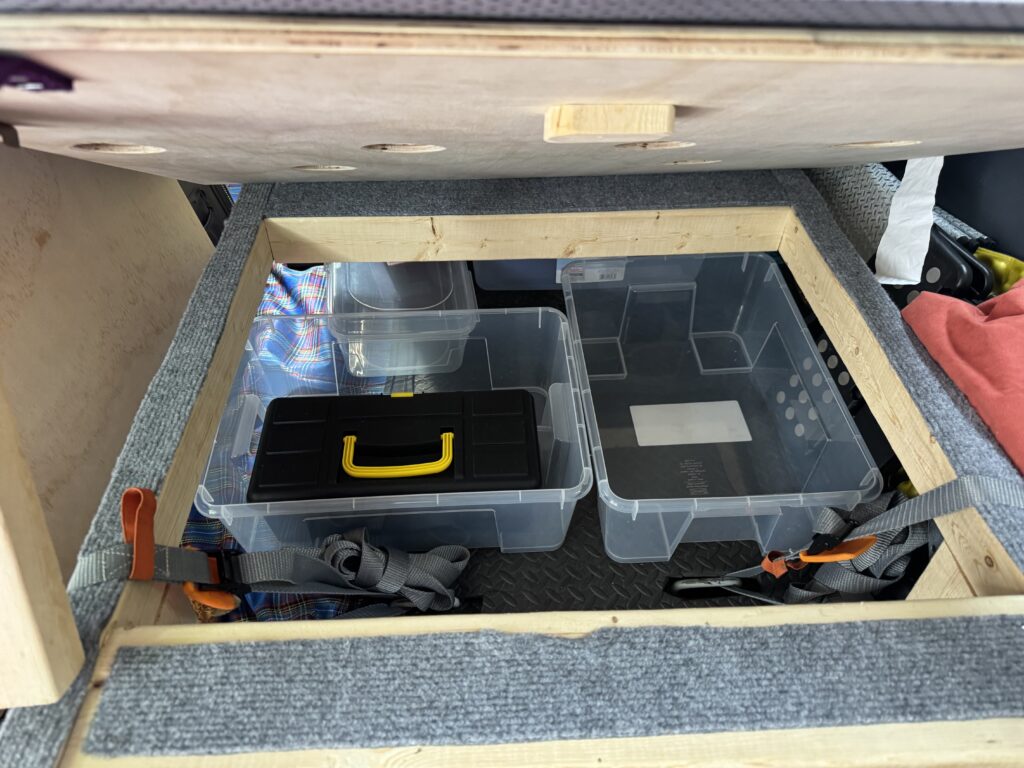
I wanted the under bed area to contain a combination of large and small totes. To select the totes, I drew the bed’s footprint to scale on a piece of paper and then looked online (Canadian Tire and Wal-Mart) for the largest tote that would fit lengthwise, and drew that on the paper. Next I figured out what sizes of smaller totes would fit in the remaining space.
Behind-seat storage
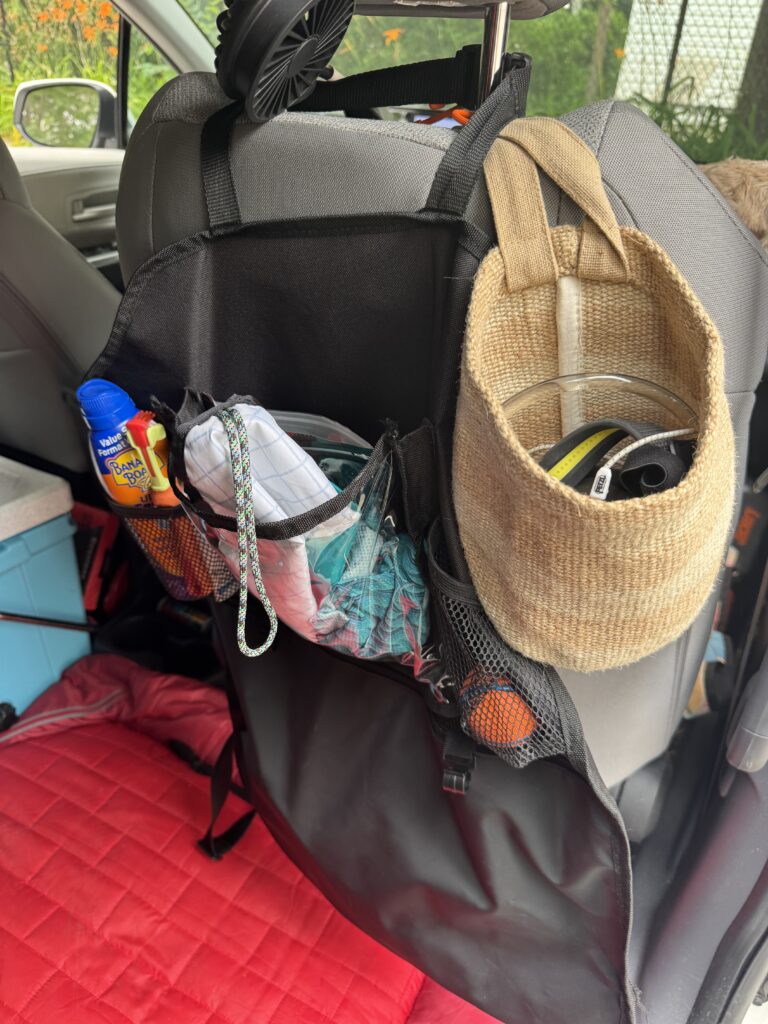
I moved over this car seat organizer and IKEA fabric storage bin from my previous car. Together they’re great for storing sunscreen, bug spray, headlamps, and River’s food, toys, treats, and travel bowl.
Ceiling cargo net
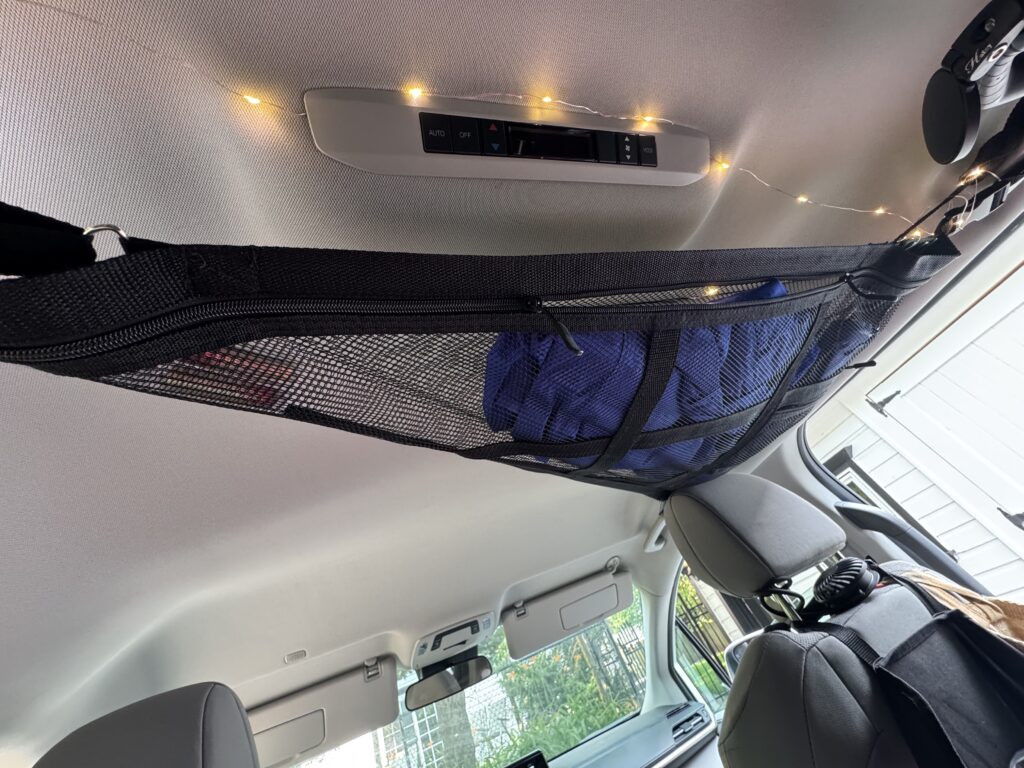
This net contains River and my rain gear so we can grab it in a pinch.
Sofa cushion cover
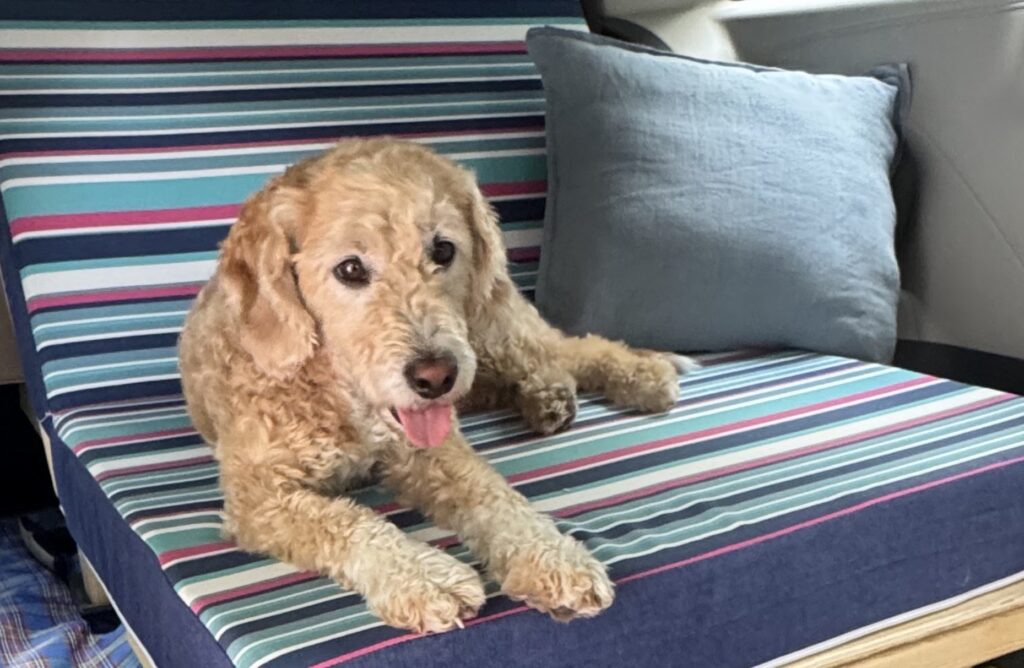
Want a great place to store your puffy coat and other warm clothes? Toss them in an empty cushion cover – and voila! You’ve got yourself a soft throw cushion that doubles as coat storage.
Water bottle cages: not just for water bottles!
I’ve found that bicycle water bottle cages are fabulous for holding and securing all sorts of cyclindrical items in the van: fire extinguisher, water pump faucet, insulated coffee mug, water bottle. They’re inexpensive, easy to secure to wood, and secure items while also making them grab-and-go.
Accessories
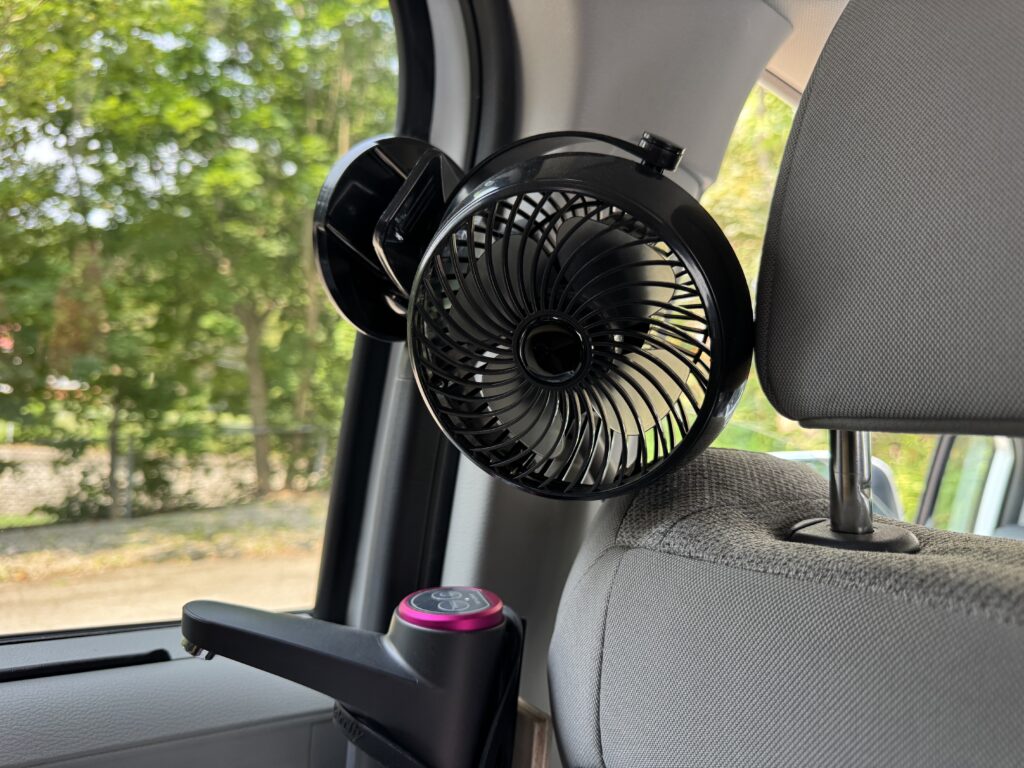
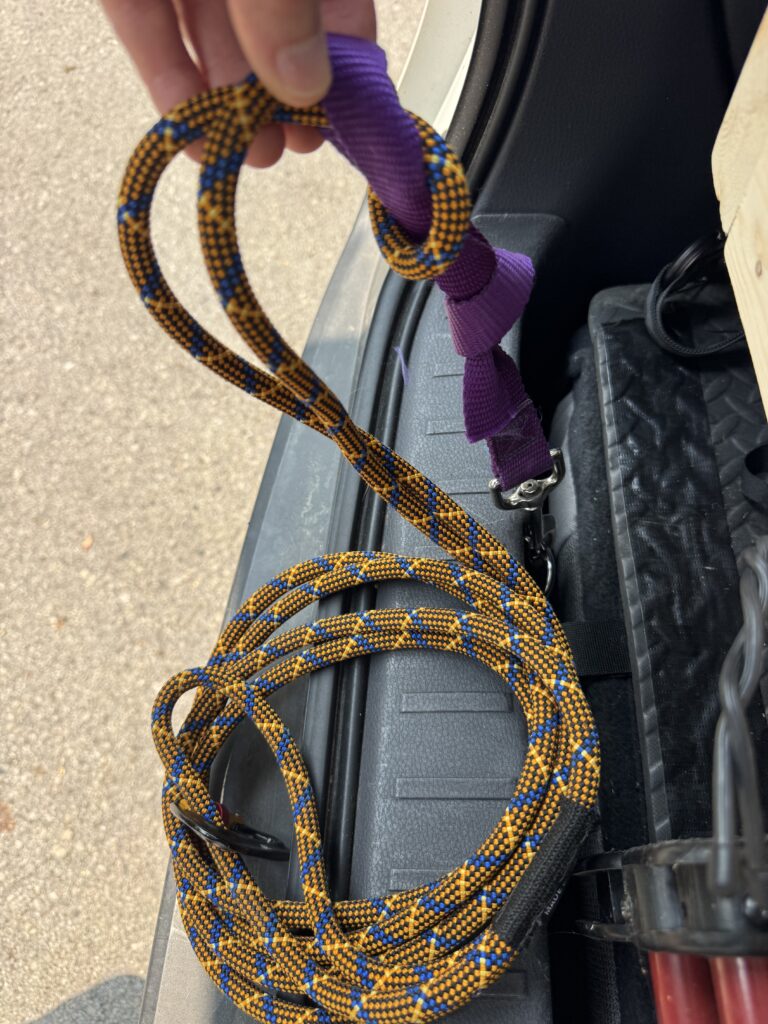
Other very useful items include a large battery pack, a rechargeable fan, a long tie-out for River, mesh window covers, and warm fairy lights for a nice evening ambiance.
Work and lounge areas
There are a few options for working on my laptop, reading a book, or streaming a movie:
- on the sofa, using the swivel table
- on the sofa, using the folding table
- on a mat on the cooler, using the folding table
- on a camp chair using the folding table at the back of the van
Doggy lounge areas
River also has lotsa options for hanging out:
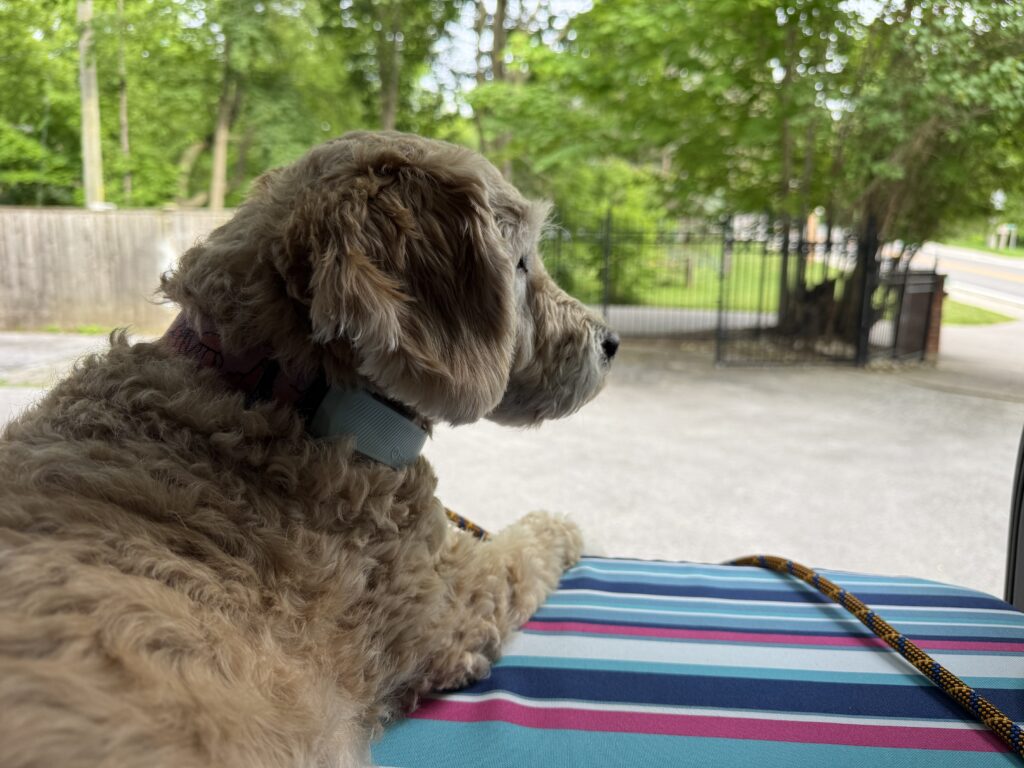
- on the bed, especially for looking out the rear hatch
- on the sofa
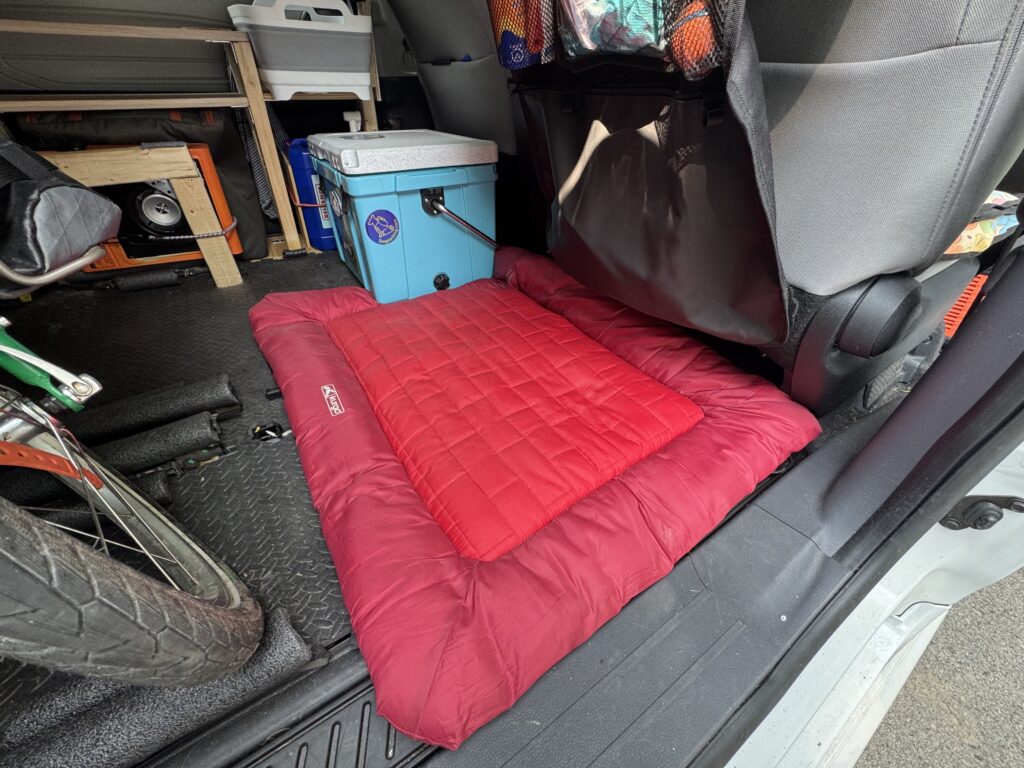
- on her dog bed, in the van
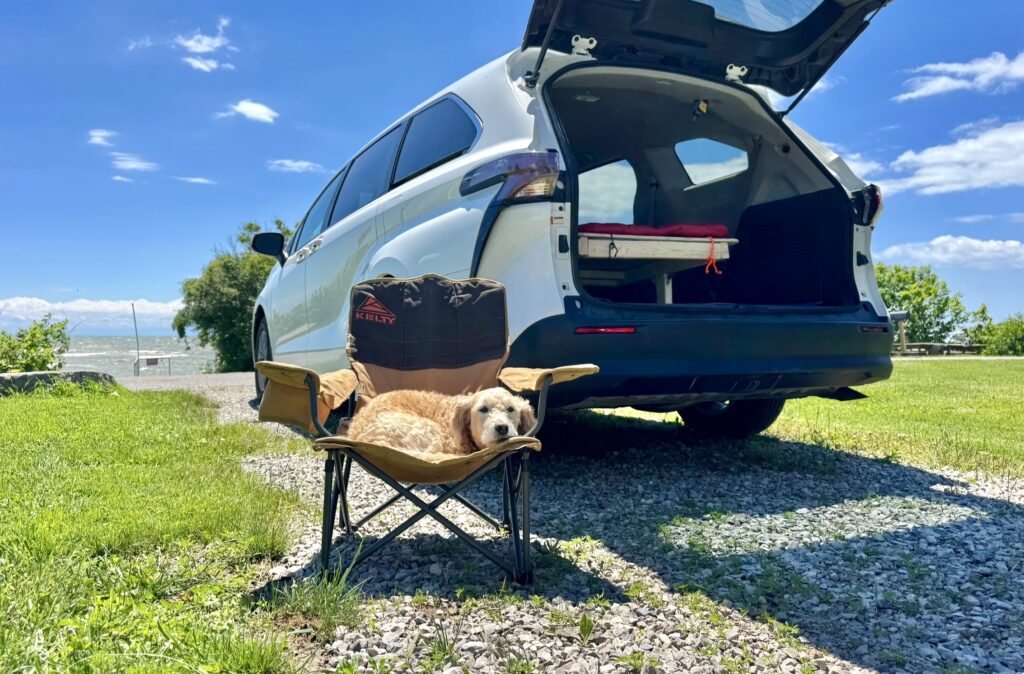
- on grass or her dog bed, beside the van
- on a camp chair, beside the van
Dog-specific camper van features
If you’re considering building a dogpacking camper, here are some key features your dog would enjoy for their comfort, safety, and enjoyment:
- hybrid engine providing A/C when ignition off
- portable fan
- mesh window covers, a mosquito-free way of allowing ventilation
- no-spill water bowl
- dog bed
- favourite toys
- dirt-resistant sofa bed fabric
- back-of-seat organizer for dog items
- long tie-out leash
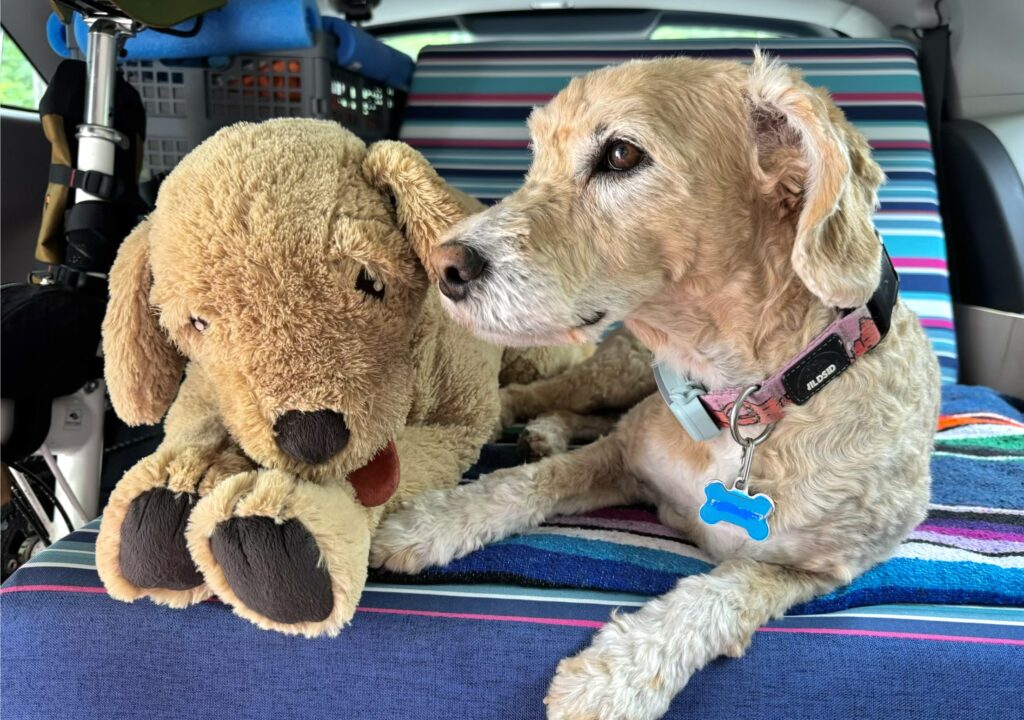
River’s bestie is Barnaby. Huge as he is, I always make sure to bring him along.
Related reading
Enjoy the other two articles in this 3-part series:
- Part 1: Building a DIY camper van in a Toyota Sienna minivan: the design and the floor
- Part 2: How we built a $220 sofa bed for our minivan
What camper van build tips do you have for awesome dog adventures? Drop them in the comments.
About the author
Krista Halling is a veterinarian board-certified with the American College of Veterinary Surgeons and creator of Dogpacking.com. She is also certified in the Human-Animal Bond and in Canine Physical Rehabilitation. Krista loves travelling and adventuring with River, her mini goldendoodle sidekick.

Leave a Reply