By Krista Halling DVM DACVS
According to social media*, more and more people are bringing their dogs along on bike rides. Literally on the bike, not just running beside it. Whether your dog is big or small, there are lots of ways to bring your best friend along.
*personal observation but pretty sure it’s true, let’s be honest
Before jumping on two wheels with Mocha, it’s important to consider which bike configuration will work best for you and your dog. Here are five ways to transport your dog by bike, along with pros and cons of each.
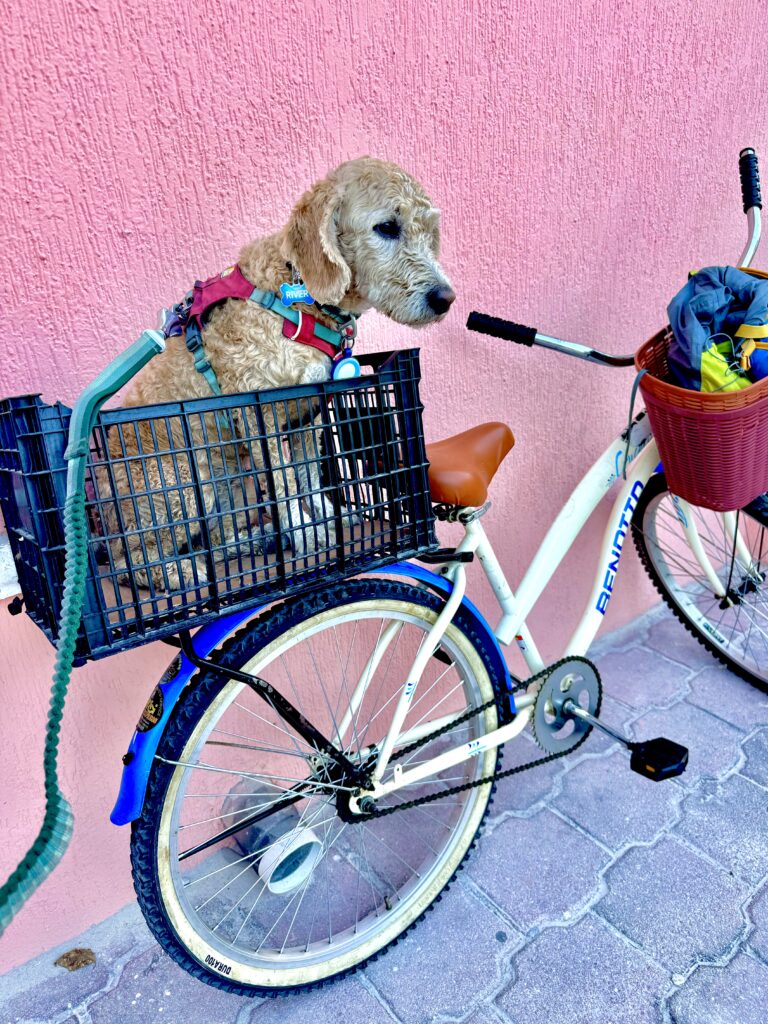
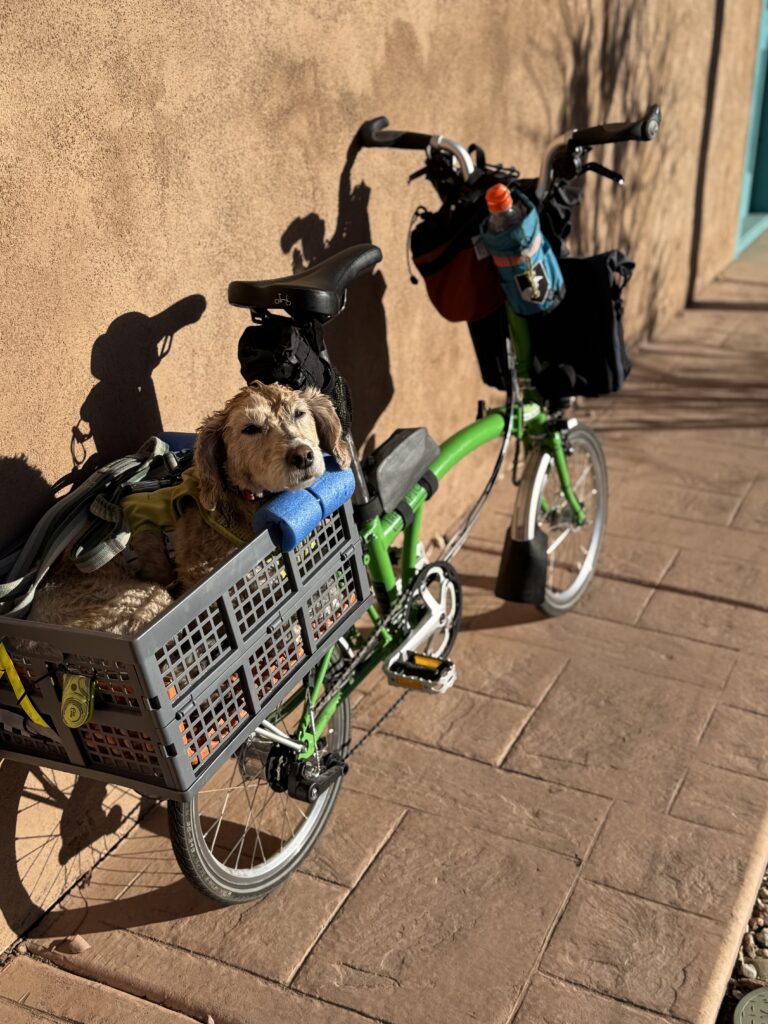
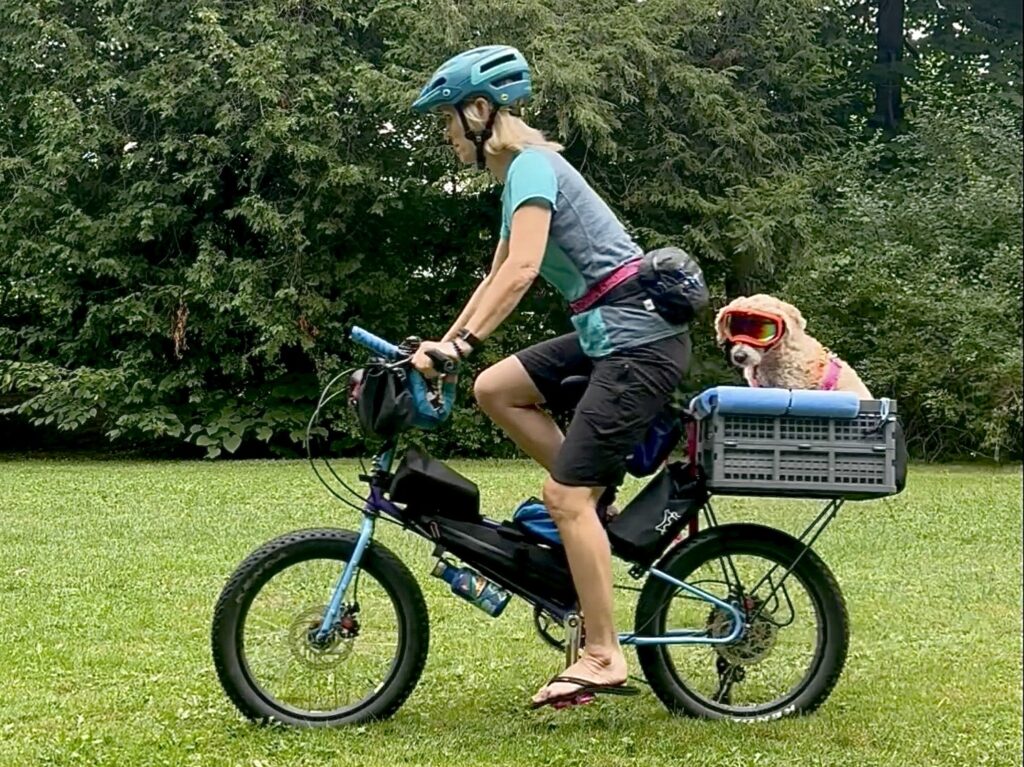
1. Rear rack on a standard bike
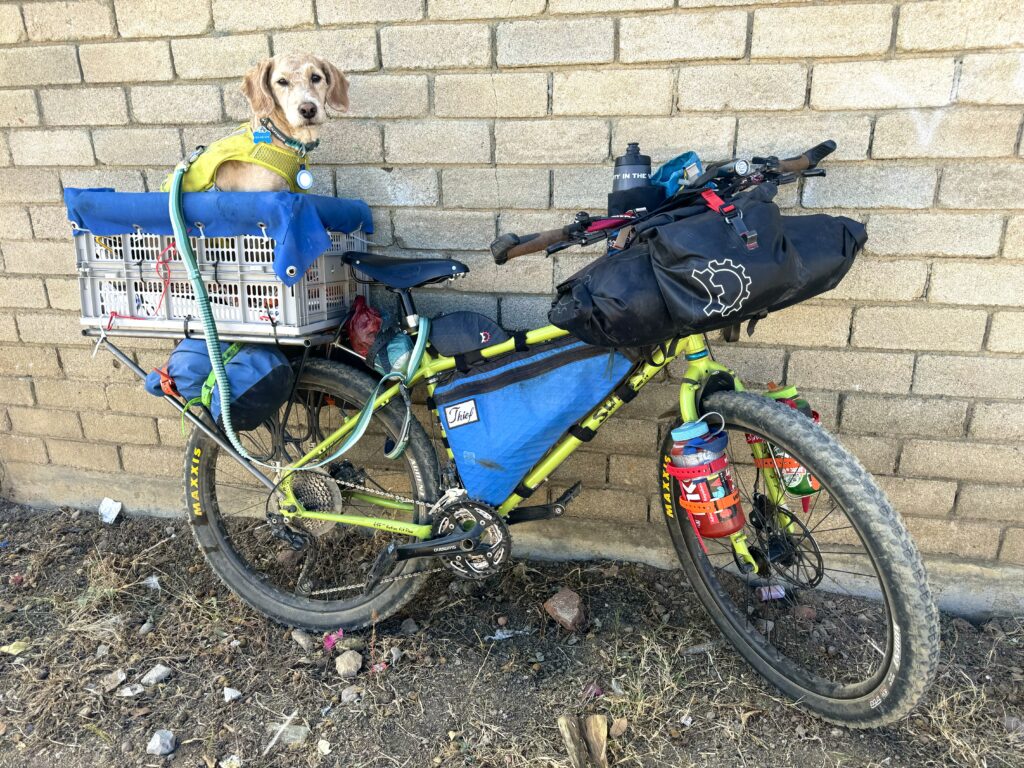
If your bike accommodates a rear rack, small to medium dogs can ride in a plastic crate (usually a rectangular open-style crate) mounted and secured to the rack. This is an easy and inexpensive way to turn an existing bicycle into dog-friendly transportation, provided the rack and bicycle can safely support the combined weight of your dog and their crate.
Pros
- Can be added to many existing bicycles.
- Less expensive than purchasing a cargo bike.
- Keeps the handlebars and front wheel area visually clear, and makes the bike handling easier.
- You can easily reach behind you and pet your dog.
- Pretty easy to assist your dog in and out of crate if needed.
Cons
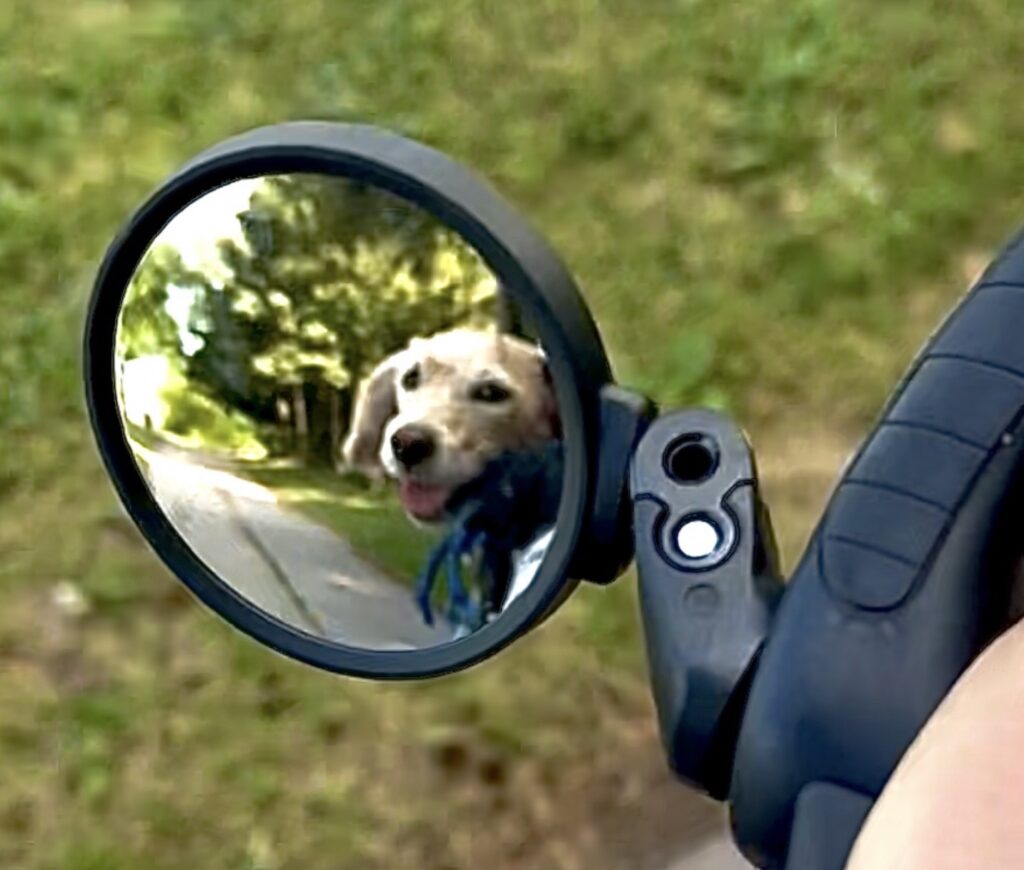
- You can’t easily see or monitor your dog while in motion (but side mirrors help with that)
- Your dog’s weight is carried relatively high, potentially affecting the bike’s balance and handling.
- Getting your dog into and out of the crate may be a challenge, particularly for small dogs and less-fit dogs.
- Weight limits and rack platform footprint restrict suitability to small and medium (<15kg) dogs.
Best suited for: Small to medium (<15kg) dogs that are well behaved (i.e. to be comfortable riding in an open carrier) and cyclists who want to adapt a bicycle they already own.
2. Front basket on standard bike
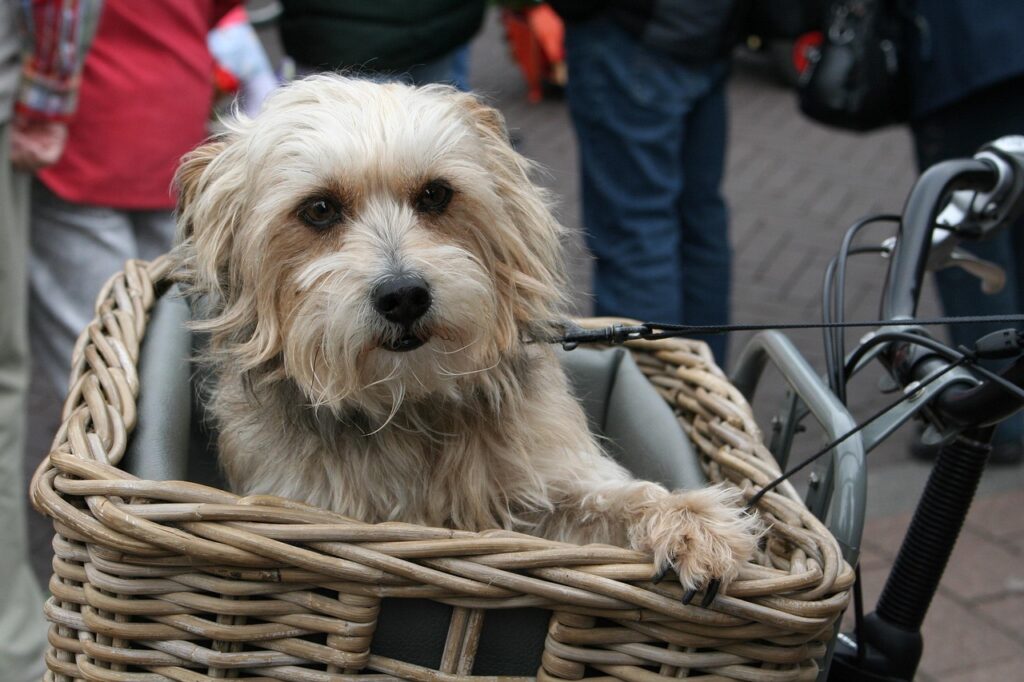
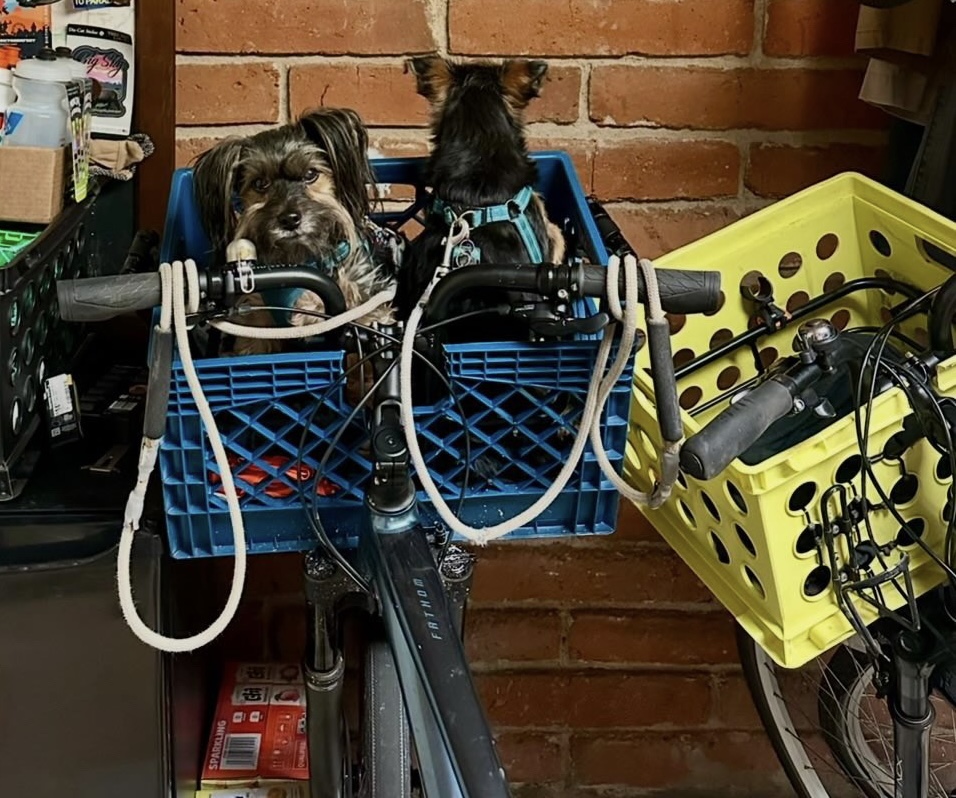
Front baskets position your dog ahead of you, where you can easily see them throughout the ride. They may attach to the handlebars or to a frame-mounted front rack.
Pros
- You can easily see and interact with your dog.
- Inexpensive.
- Dog has a front-row view of the scenery and where you’re going.
Cons
- Suitable only for smaller dogs (check manufacturer’s limits)
- Handlebar-mounted baskets and front rack-mounted crates can significantly affect the bike’s steering and handling. Especially handlebar-mounted baskets because of the high centre of gravity and being attached to the steering column.
- Getting your dog in and out may be tricky.
Best suited for: Small dogs and cyclists who enjoy having their companion directly in front of them.
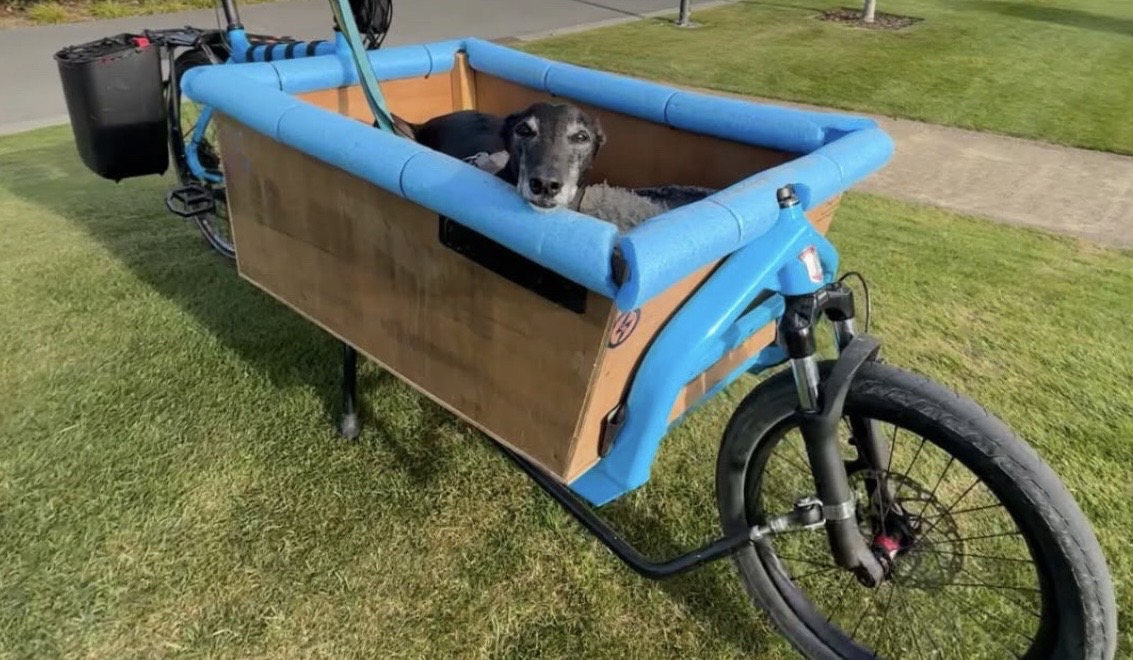
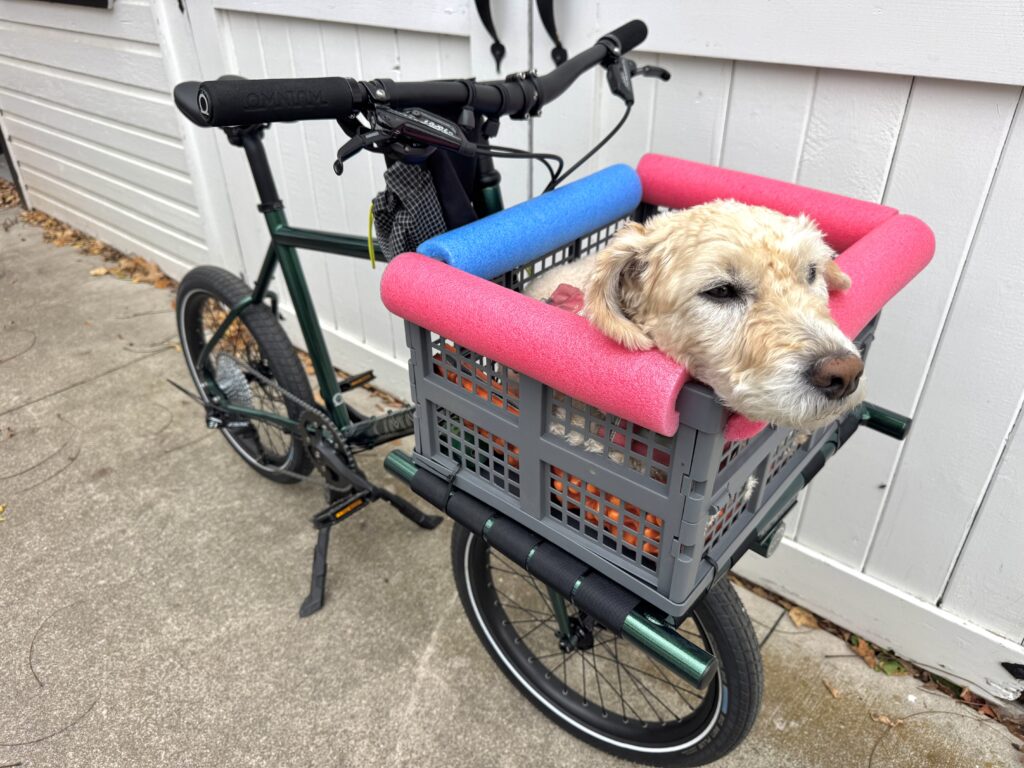
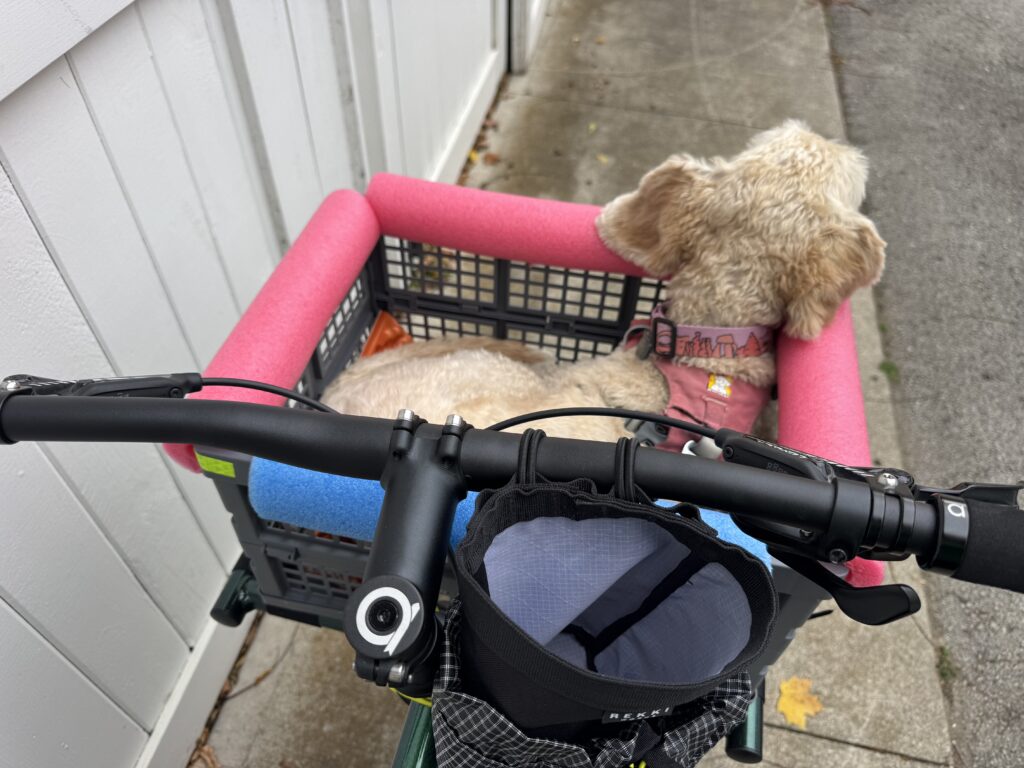
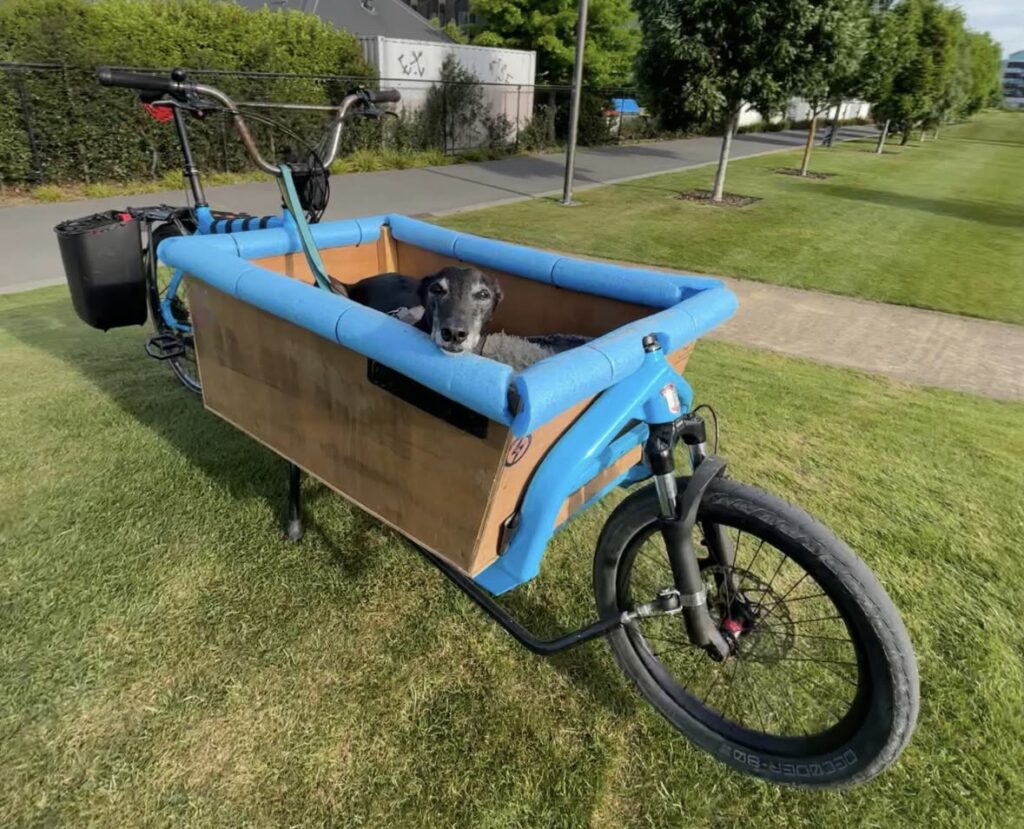
3. Crate on cargo bike
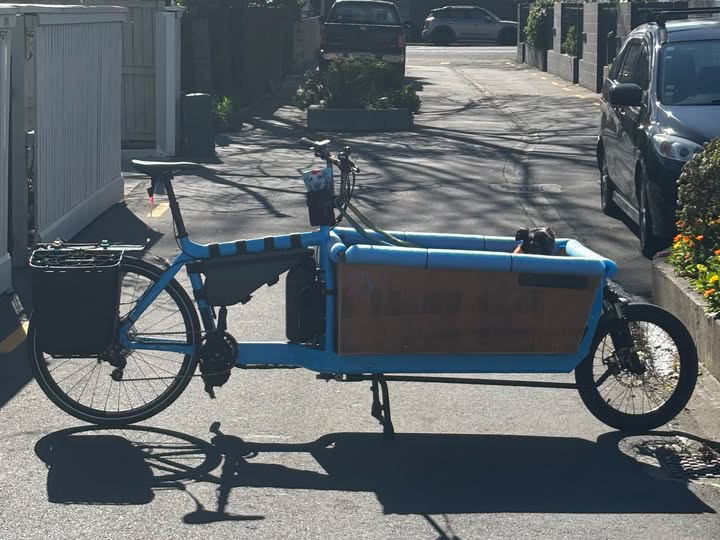
Cargo bikes have platforms integrated with the frame, and thus are designed to carry heavy loads and bulky items—whether that’s groceries, children, equipment, or dogs. This means they’re also stable to handle when loaded. They come in a variety of configurations, including compact cargo bikes, longtails, and front-loading models.
Pros
- Designed to accommodate heavier or bulkier loads.
- Can comfortably accommodate medium or large dogs.
- Can also be used for groceries, camping gear, and bulky items.
- Front-loading designs allow you to keep your dog in view.
- Some front-loading platforms are low to the ground, making the bike easier to handle and easier for your dog to get on and off.
Cons
- More expensive than standard bikes or trailers.
- Heavier and larger than standard bicycles.
- Requires additional storage space.
- Often doesn’t fit in a car-mounted bike carrier; and might not fit in your car.
- Some models handle quite differently from a standard bicycle.
- Large dogs may still need a ramp or assistance getting aboard.
Best suited for: People who want to accommodate a larger dog, multiple dogs +/- kids, or do multiday bike tours with their dog.
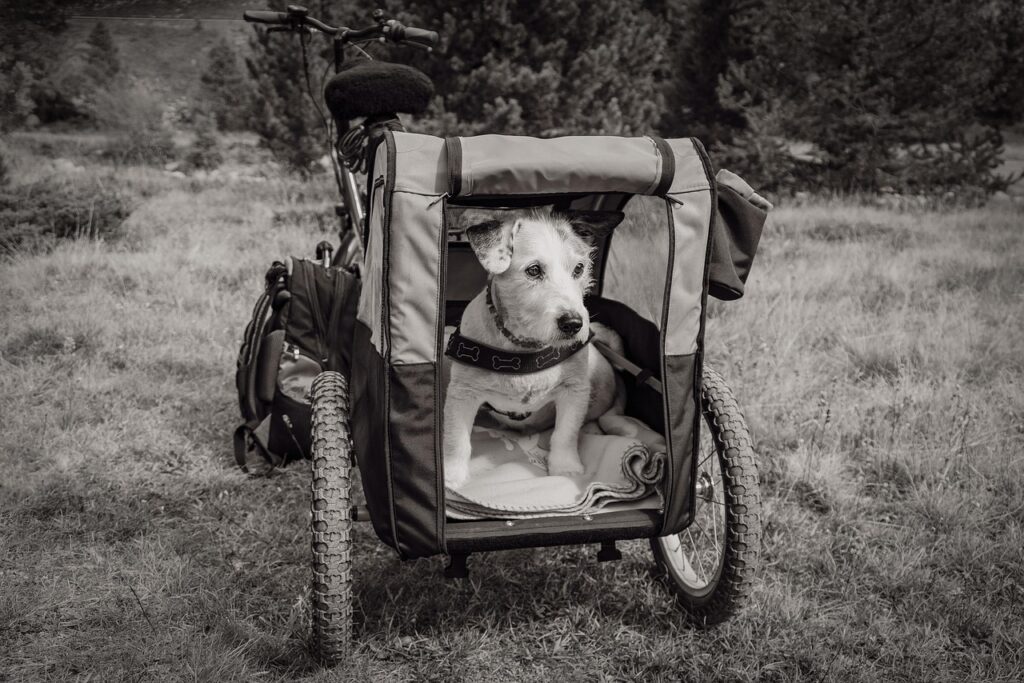
4. Bicycle Trailers
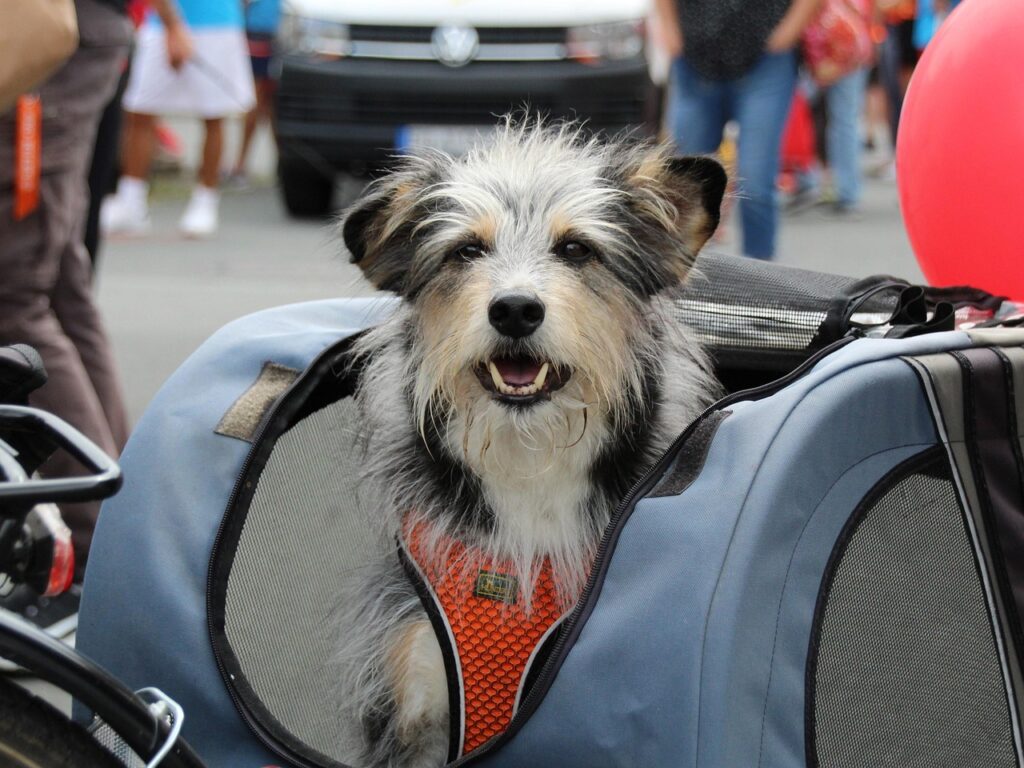
Dog bicycle trailers attach behind your bike and provide a separate compartment for your dog to ride in. Trailers for kids can also work well for dogs, except the dog-specific trailers have some helpful features including the entrance at the back.
Many trailers enclosed with mesh panels for ventilation and visibility, and some include weather covers, padded floors, or low entry points.
Pros
- Available in sizes suitable for small to large dogs.
- Low centre of gravity compared with elevated bicycle carriers.
- Dogs may have more room to sit, turn around, or lie down.
- Some have low entrances that are easier for dogs with mobility limitations.
- Can be detached when you want to ride without your dog or have a partner trail the dog.
- Can be used with almost any bicycle.
Cons
- Interior can get very hot on sunny day!
- Your dog is behind you and harder to monitor.
- Adds considerable length to your bicycle setup.
- Requires extra consideration for turning, manoeuvring.
- Additional weight and rolling resistance can make hills more demanding.
Configuration notes: a trailer with two wheels is quite bumpy on single track and uneven terrain because the two wheels arent always touching the ground. A single-wheel trailer is a smoother ride for your dog (on uneven terrain), but harder to balance.
Best suited for: Dogs of all sizes, particularly those who benefit from a spacious, low-riding compartment, and cyclists who want to use their existing bike as well as those who want to detach their dog from their bike.
5. Sidecar
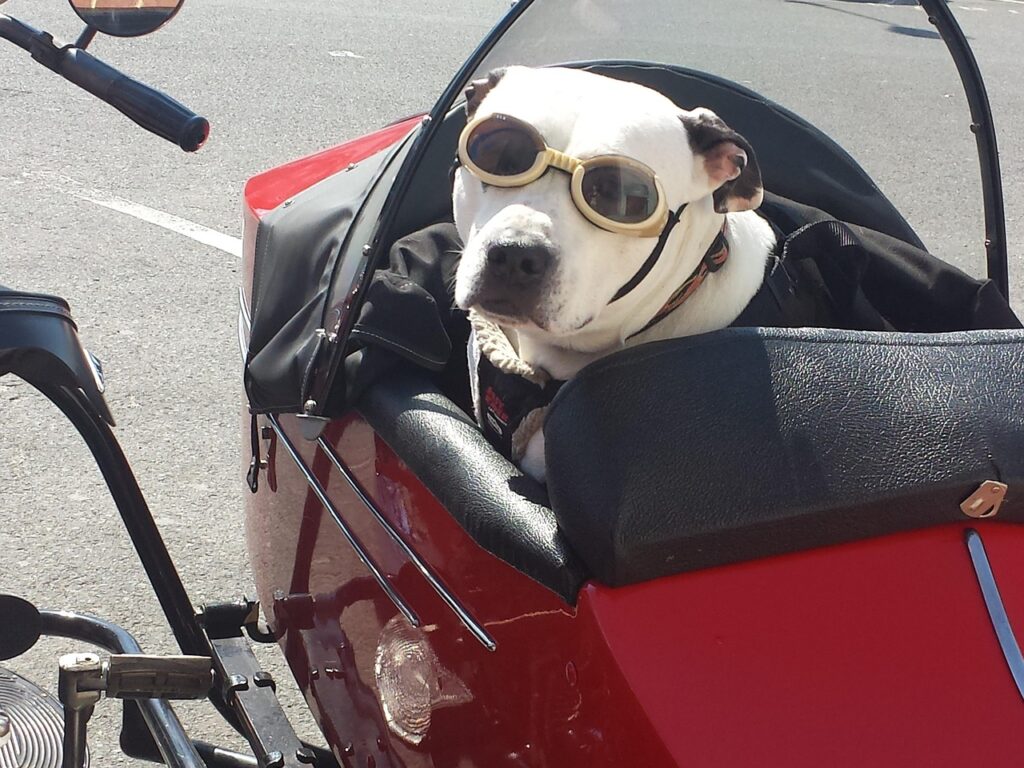
A bicycle sidecar is a separate compartment mounted alongside your bike, giving your dog a front-row seat to the adventure! Unlike a trailer, which follows behind (in line), a sidecar keeps your dog beside you and within easy view. Although less common than other options, purpose-built dog sidecars are available, and some cyclists build their own.
Pros
- Your dog rides beside you, making it easy to keep an eye on them.
- Can accommodate larger dogs, depending on the design and weight capacity.
- Some models have a low entry point, making access easier for dogs with mobility limitations.
Cons
- Adds considerable width to your bike, making narrow paths and tight spaces challenging.
- Changes the bike’s steering, balance, and cornering characteristics.
- Limited availability and often more expensive than conventional carriers.
- May require a compatible bicycle or specialized mounting hardware.
- Can be bulky to transport and store.
Best suited for: Cyclists wth large dogs who prefer to have their dog located beside them, and have the space, budget, and willingness to adapt to a wider, asymmetrical bicycle setup.
6. Dog backpacks
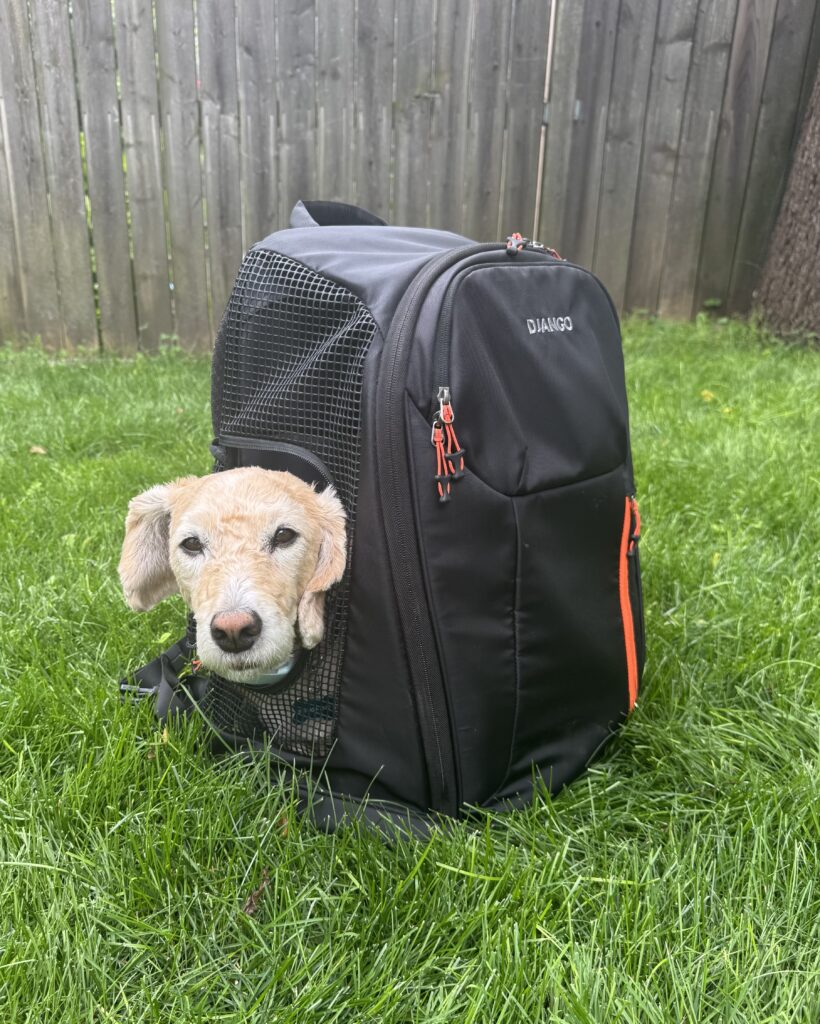
Dog carrier backpacks allow you to transport your dog on your back while riding a bike. Unlike regular backpacks, purpose-built dog carriers are designed to support a dog’s body and provide ventilation, with openings or restraints to help keep them securely positioned.
Pros
- No modifications to your bicycle are required.
- Easy to switch between cycling and walking.
- Compact and convenient for storage and travel.
- Can be used with different bicycles.
- Keeps your dog close to you.
Cons
- Only for smaller, lighter dogs.
- Limited room for your dog to move or change position.
- Hard to monitor your dog while riding.
- The dog’s weight is carried by the cyclist, potentially affecting balance and comfort.
- Can become uncomfortable for both dog and cyclist on longer rides.
- Can’t get your dog in and out without dismounting from bike.
Best suited for: Small, lightweight dogs and cyclists who want a portable option for short outings.
Safety considerations
Whatever transportation method you choose, your dog’s safety and comfort should come first.
Secure your dog appropriately. Use a properly fitted harness and an appropriate restraint when required by the carrier design. Avoid attaching restraints to a collar, and ensure they cannot become tangled in moving bicycle parts. Enclosed trailers may use a different restraint system, so follow the manufacturer’s instructions.
Check weight limits. Consider the combined weight of your dog, the carrier, and any additional gear. Both the carrier and the bicycle must be rated to support the load.
Introduce riding gradually. Allow your dog to investigate the carrier while stationary. Reward calm, voluntary participation before progressing to walking the bicycle and eventually taking short rides in quiet, familiar surroundings.
Consider your dog’s physical needs. Dogs with orthopedic problems, balance difficulties, or reduced mobility may benefit from a low entry point, stable footing, supportive padding, and enough room to reposition comfortably.
Watch the weather. Dogs riding in carriers aren’t generating the same heat as dogs running beside a bicycle, but they can still overheat, particularly in direct sunlight or poorly ventilated compartments. Wind exposure and cold temperatures are also considerations.
Practise riding with the extra load. Added weight changes how a bicycle accelerates, brakes, corners, and balances. Practise in a safe area before taking your dog into traffic or onto busy trails.
Which option Is right for you and your dog?
There’s no single best way to transport a dog by bicycle—although I love having River on my bike and within reach. Think about how often you’ll ride, where you’ll go, how much weight you’re comfortable carrying, and whether your dog can safely and comfortably use the setup.
Most importantly, give your dog time to become familiar with their new ride. With the right equipment and a gradual introduction, cycling can open up a whole new world of shared adventures.
What set-up do you prefer? Let us know in the comments.
Related reading
- Krista and River: How I trained my dog to ride a bike basket
- How to bike with your dog: a guide for new dogpackers
- Edis and Oscar: How my dog transformed my cycling adventures
- Brad and Henry’s life on two wheels
Acknowledgements
Many thanks to Liam, Pico and Otto for their inspawration and their parent’s photo contributions 🐾
About the author
Krista Halling is a veterinarian board-certified with the American College of Veterinary Surgeons and creator of Dogpacking.com. She is also certified in the Human-Animal Bond and in Canine Physical Rehabilitation. Krista loves travelling and adventuring with River, her mini goldendoodle sidekick.

Leave a Reply