By Krista Halling DVM DACVS
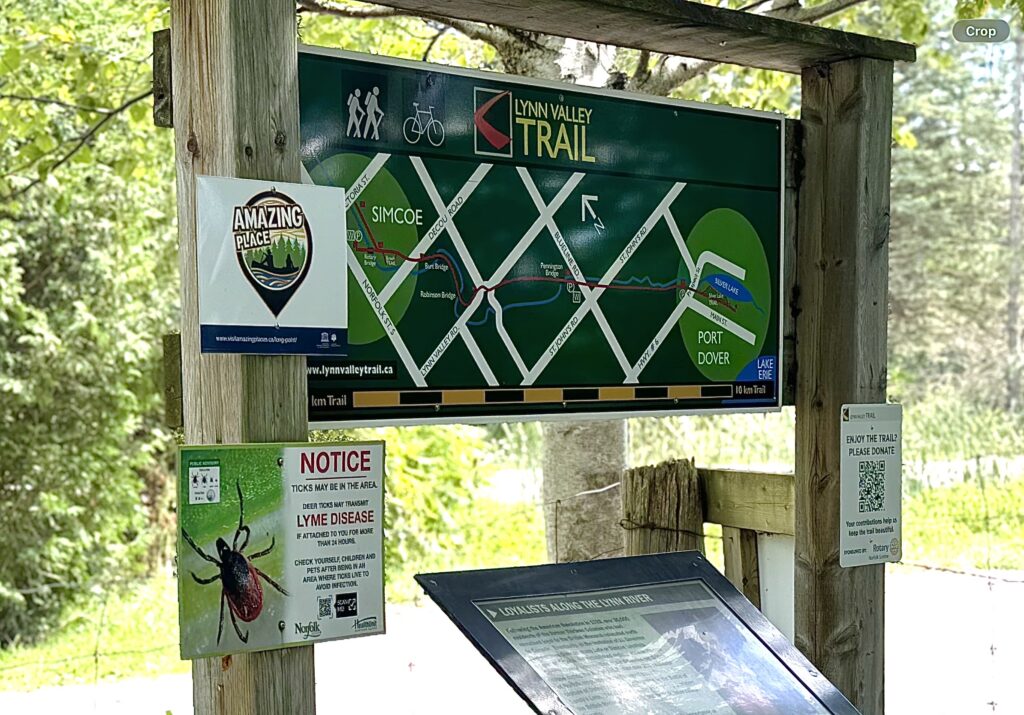
Ticks are an important health concern for both dogs and people. In Ontario, Canada, this is one of the worst years for ticks, largely due to recent climate changes. For dog owners who spend time hiking, trail walking, camping, running, or simply enjoying parks and backyards, tick prevention is essential. Here’s a guide to understanding ticks and to keeping your dog safe this season.
The lowdown on ticks
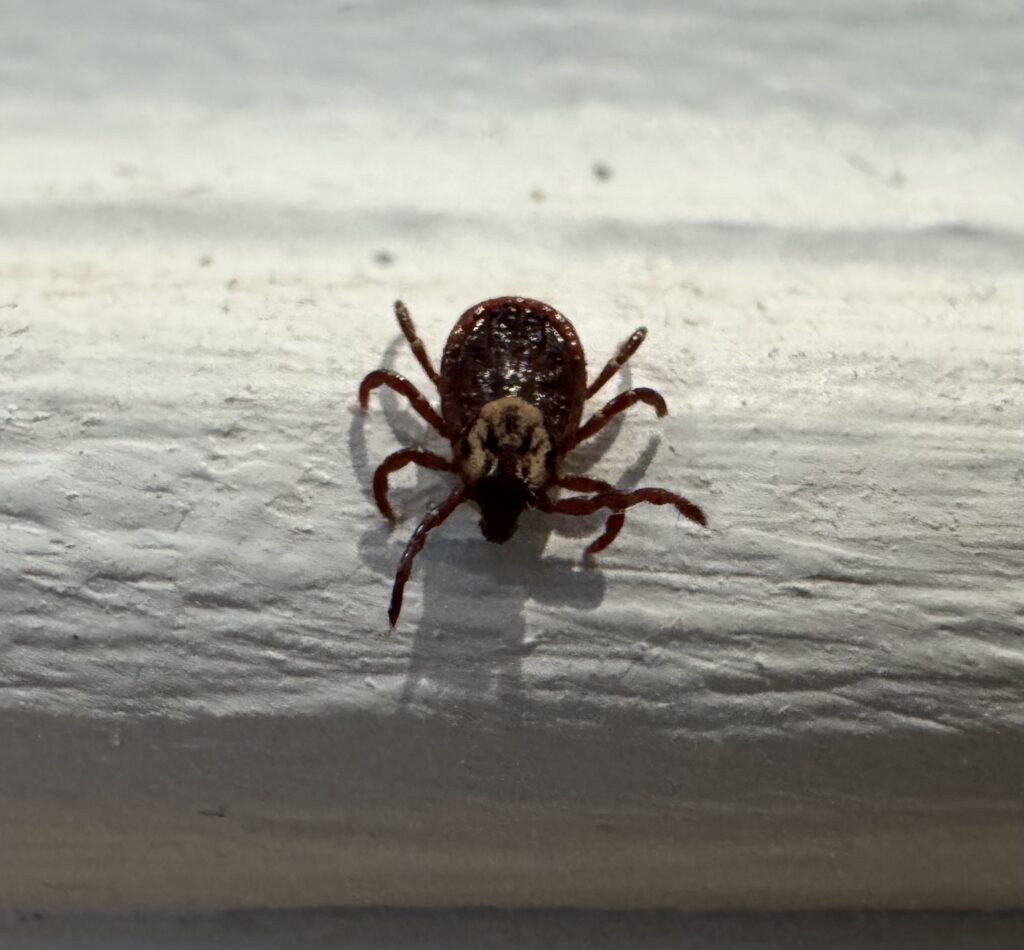
Unlike fleas, ticks aren’t insects – they’re arachnids, related to spiders, scorpions, and mites. Feeding entirely on animal blood during various stages of their life cycle, ticks are considered external parasites (ectoparasites).
Unable to run, jump, or fly, ticks wait with outstretched arms on vegetation and attach to an animal (human and non-human) when they brush past. This host-seeking ambush behaviour is called “questing.”
Ticks are remarkably good at remaining unnoticed. Their sophisticated saliva contains substances that help reduce their host’s pain and inflammation at the bite site, allowing them to feed for hours or even days without detection. There is further evidence that the tick’s saliva also facilitates transmission of pathogens to and from their host animals.
How do dogs get ticks?
Speaking of host animals, your dog is most likely to pick up ticks while moving through environments where ticks live, including:
- Tall grass
- Forest edges
- Leaf litter
- Brushy trails
- Wetlands
- Overgrown fields
- Urban parks, especially with mammalian wildlife
- Backyards visited by deer, rodents, rabbits, or birds
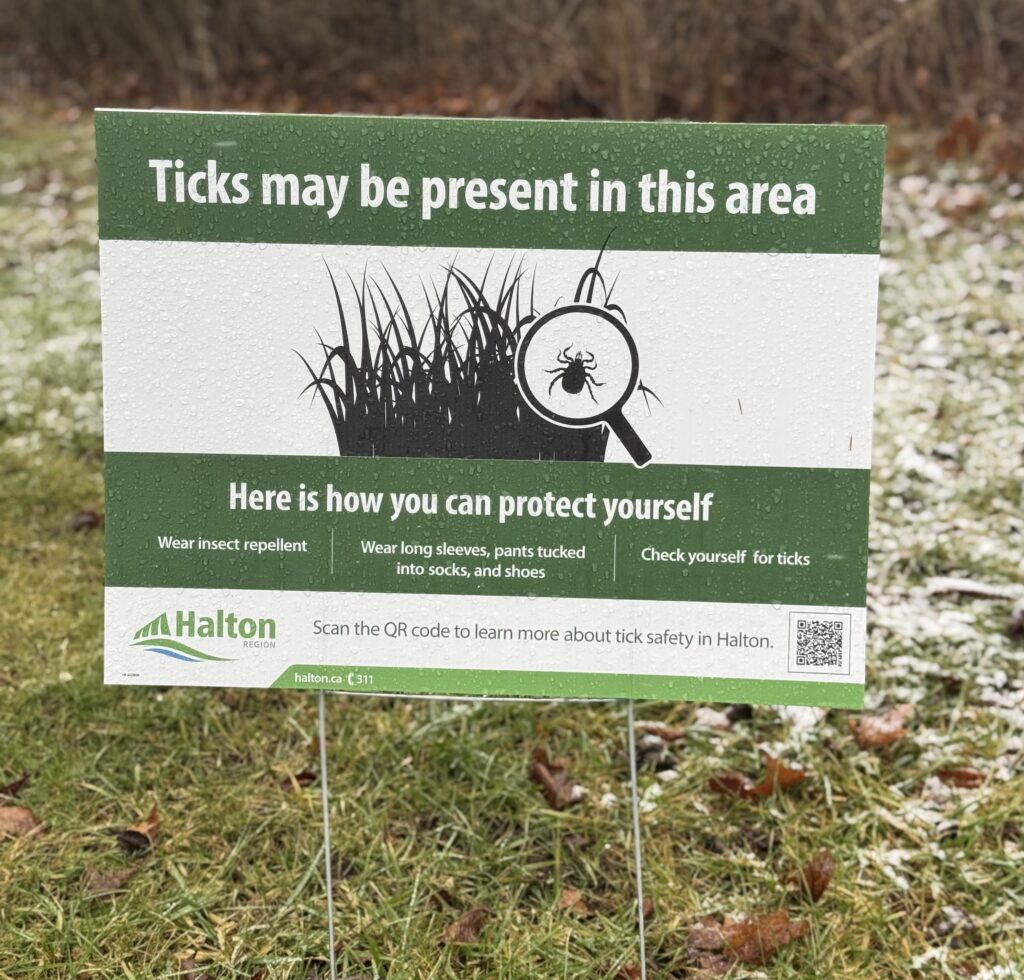
Note that your dog doesn’t need to be deep in the wilderness to encounter ticks. Many tick exposures occur in urban and suburban parks, backyards, and hiking trails.
Ticks often transfer onto dogs when vegetation brushes against the dog’s face, chest, legs, or belly. Once on your dog, ticks may crawl around for several hours before settling into a preferred feeding location.
Where to check your dog for ticks?
Ticks prefer warm, protected areas. Common places to find ticks on dogs include:
- Around and inside the ears
- Around the eyes and eyelids
- Under the collar or harness
- Between the toes
- In the groin and armpits
- Around the lips and chin
- Under the tail
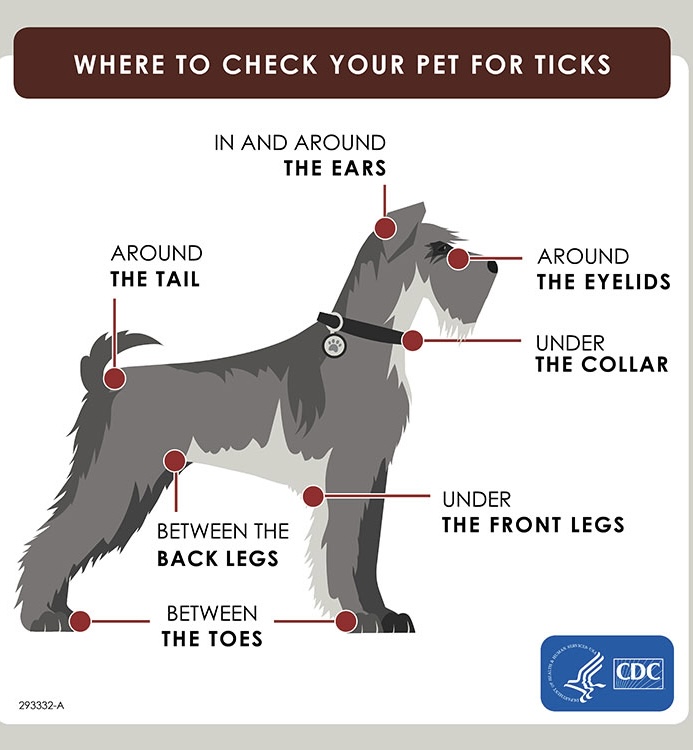
After outdoor activity, it’s a great idea to slowly run your hands or over your dog’s body, feeling for small bumps. Some ticks can initially be no larger than a poppy seed, particularly immature stages called nymphs. Dogs with long or dense coats may require especially careful checks.
An adhesive lint roller is also useful for picking up ticks hiding on your dog. It’s surprisingly effective, especially in shorter-haired dogs.
Why are ticks a concern?
Ticks can transmit life-threatening infectious diseases while feeding. In most cases, the tick itself isn’t the primary concern — it’s the disease agents (bacteria, protozoa, or viruses) carried within the tick that create health concerns.
Transmission often requires the tick to remain attached and feeding for a period of time (hours to days), although this timing varies depending on the organism involved. Not every tick carries disease, and not every tick bite results in infection. However, reducing tick exposure and tick attachment time remains important.
Common Tick-Borne Diseases in Dogs
Lyme Disease
Lyme disease, a bacterial infection cause by Borrelia burgdorferi, is transmitted primarily by blacklegged ticks (also called deer ticks). Dogs exposed to Lyme disease may develop: feveR, lethargy, joint pain, shifting leg lameness, reduced appetite, swollen lymph nodes
Some infected dogs never show clinical signs, while others may develop more serious complications, including kidney disease in rare cases. Lyme disease is also a serious disease affecting humans.
Anaplasmosis
Anaplasmosis is caused by bacteria in the genus Anaplasma. It is also commonly transmitted by blacklegged ticks. Clinical signs can overlap with Lyme disease and may include: Fever, joint pain, lethargy, bruising or bleeding abnormalities, reduced appetite.
Some dogs may be co-infected with Lyme disease and anaplasmosis simultaneously because the same tick species can carry multiple pathogens.
Ehrlichiosis
Ehrlichiosis is caused by bacteria in the genus Ehrlichia, transmitted by certain tick species including the brown dog tick and lone star tick. Signs may include: Fever, weight loss, enlarged lymph nodes, bleeding tendencies.
Babesiosis
Babesiosis is caused by microscopic protozoal parasites in the genus Babesia that infect red blood cells. Dogs with babesiosis may develop: Anemia, weakness, pale gums, fever.
Rocky Mountain Spotted Fever
Despite the name, Rocky Mountain spotted fever occurs in many regions beyond the Rocky Mountains. It is caused by the bacterium Rickettsia rickettsii and may cause: Fever, lethargy, neurologic signs, joint pain, gastrointestinal signs.
Ticks and human health
Ticks are not just a concern for dogs. Humans sharing outdoor environments with dogs may also be exposed to ticks and tick-borne diseases.
Dogs can occasionally bring unattached ticks into homes, vehicles, tents, or sleeping areas. For this reason, protecting dogs from ticks may also help reduce tick exposure for people.
Prompt removal of ticks is important for both dogs and humans.
Tick prevention for dogs
There is no single perfect tick prevention strategy. Instead, prevention works best when multiple approaches are combined:
- Reduce exposure to ticks in the environment
- Prompt tick removal
- Preventive medications
Your veterinarian can help you determine which of the following tick preventatives is best for your dog. Do NOT use DEET products on your dog. DEET is highly toxic to dogs.
Tick collars
Certain tick collars slowly release active ingredients over time. Some work primarily by killing ticks after contact, while others may also repel ticks before they attach. Effectiveness can vary depending on proper fit, duration of use, and the specific ingredients involved.
Topical tick preventatives
Topical products are fluid-based and applied directly to the skin, usually between the shoulder blades, where your dog is unlikely to lick.
Depending on the product, the medication may spread across the skin and hair coat through skin oils, repelling ticks before attachment or killing them after contact
Your dog’s bathing and swimming frequency, and grooming habits can influence effectiveness depending on the product used.
Oral tick preventatives
Some tick preventatives are formatted as chewable medications. These products work systemically, meaning the active ingredient circulates in the dog’s bloodstream. When a tick bites and feeds, it ingests the medication and dies.
For these medications to work, the tick must attach and begin feeding. However, this is an effective gatekeeper and many products kill ticks rapidly enough to significantly reduce disease transmission risk.

Many oral and topical tick preventatives include ingredients effective against others parasites such as fleas, heartworm, and intestinal parasites. Different oral products use different active ingredients and belong to different drug classes, which your veterinarian can outline for you.
Injectable preventatives
Preventive medications are also becoming available in the form of long-lasting injections, such as Bravecto Quantum.
Environmental management
Reducing tick habitat around the home and avoiding tick-prone areas can help decrease your dog’s exposure. Helpful measures include:
- Keeping grass short
- Removing leaf litter
- Creating separation between wooded areas and lawns
- Discouraging deer and rodent activity
- Staying on trails
- Avoiding dense brush when possible
- The app eTick is useful for identifying tick geographic hotspots
How to safely remove a tick from your dog
If you find a tick attached to your dog:
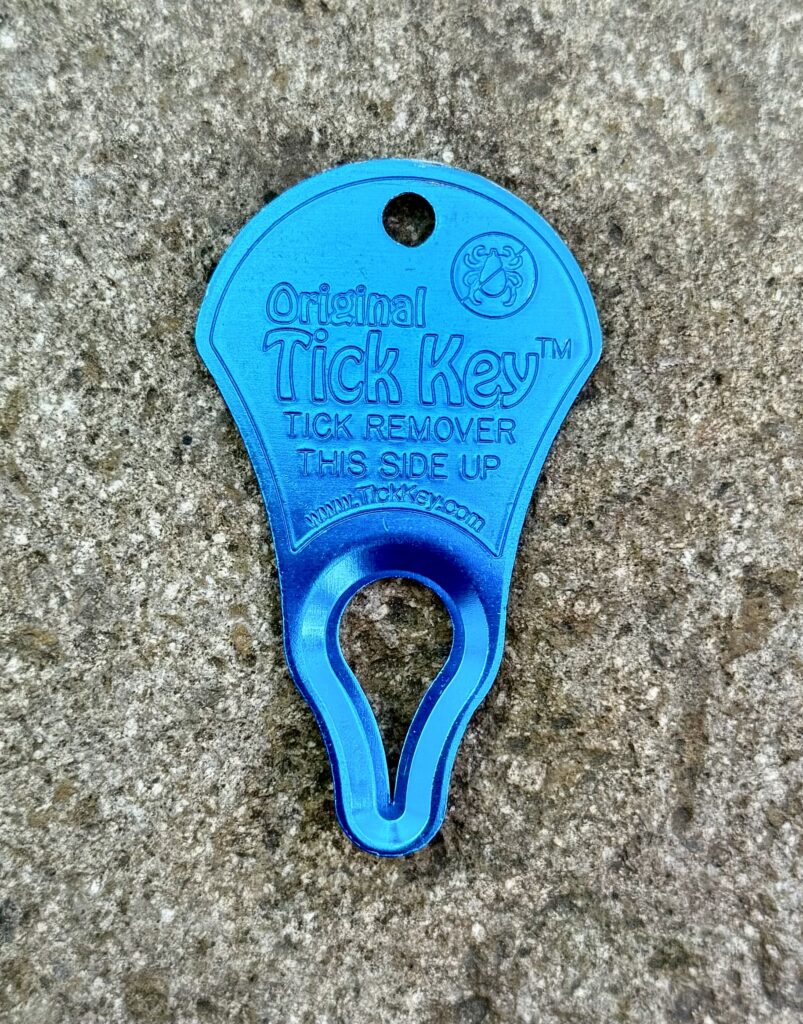
- Use fine-tipped tweezers or a tick removal tool such as Tick Key.
- Grasp the tick as close to the skin as possible. Do not grasp or squeeze the engorged body – that might expel bacteria-laden fluid.
- Pull upward steadily without twisting.
- Avoid crushing the tick with bare fingers. Place it in a container for identification by your veterinarian and/or submit photos to the app eTick
- Clean your hands and the affected area of your dog’s skin with antibacterial soap.
When should you contact your vet?
You should contact your veterinarian if:
- Your dog develops lethargy, fever, or lameness after tick exposure
- You find numerous ticks on your dog
- You are unable to remove a tick
- The bite site becomes very inflamed
- Your dog appears ill after traveling to a tick-endemic area
Your veterinarian can help determine whether testing, monitoring, or treatment for tick-borne disease is appropriate.
Regular tick checks, awareness of high-risk environments, and appropriate prevention strategies can dramatically reduce risk while still allowing your dog to enjoy the enrichment, movement, and connection that outdoor life provides. After researching for this article, I’m sure not going to let River play in leaf piles anymore!
Related reading
- AVMA website: Lyme Disease
- Pubmed article: Tick saliva and its role in pathogen transmission
- Ontario Veterinary College: Tick-Borne Illnesses in Dogs and Cats
- Tick Talk – Educational website for pet owners and veterinary professionals
About the author
Krista Halling is a veterinarian board-certified with the American College of Veterinary Surgeons and creator of Dogpacking.com. She is also certified in the Human-Animal Bond and in Canine Physical Rehabilitation. Krista loves travelling and adventuring with River, her mini goldendoodle sidekick.


Leave a Reply